Roller Shade Fabric Guide for Alliston Homes
A west-facing living room can look completely different at 3 p.m. than it does over morning coffee. That is why this roller shade fabric guide Alliston homeowners can use starts with performance, not just colour. The fabric you choose determines how much daylight enters, how much privacy you keep, how your view looks, and how comfortable the room feels through changing seasons.
Roller shades have a clean, tailored profile that suits everything from contemporary kitchens to quiet bedrooms and polished commercial spaces. The right material makes that simple design work harder for your home. At Millhaüs Blinds, custom roller shades are made around the window, the room’s use, and the level of light control you actually need.
Roller Shade Fabric Guide for Alliston Homes
The best roller shade fabric is not necessarily the darkest, thickest, or most decorative option. It is the one that solves the main problem at that window without making the room feel less useful. A bright family room may need glare reduction while preserving its outdoor view. A bedroom may need meaningful darkness and full evening privacy. A street-facing office may call for a more balanced option that softens daylight without closing the room off.
Before choosing a swatch, consider when the room is used, which direction the window faces, how close neighbouring homes are, and whether the shade will be raised often or left down through much of the day. These details affect the fabric choice more than a small difference in colour ever will.
Light-filtering fabric for soft, usable daylight
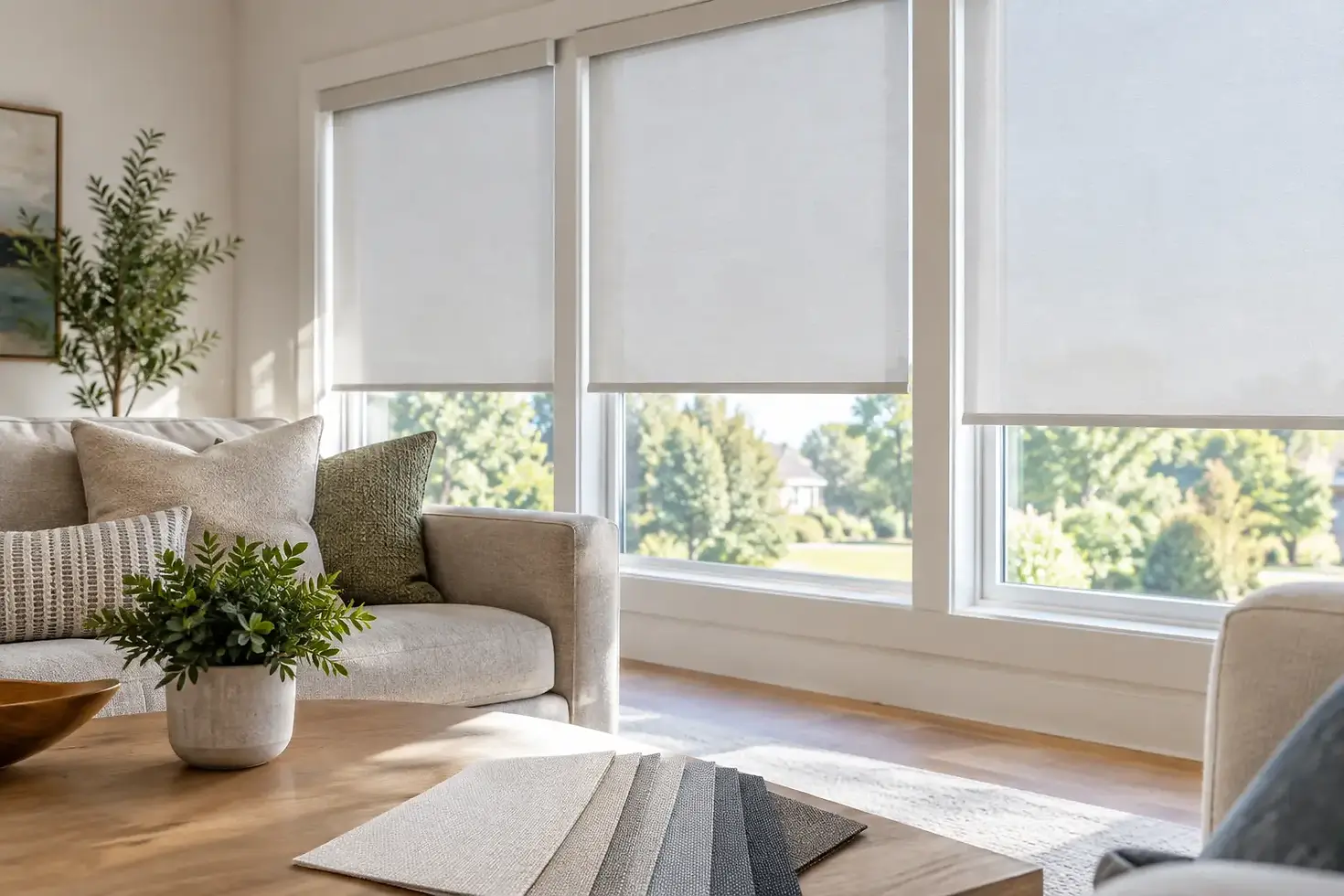
Light-filtering roller shade fabrics diffuse the sun rather than blocking it completely. They reduce harsh brightness and create a calm, even glow, making them a strong choice for living rooms, kitchens, dining areas, and home offices that benefit from daytime light.
These fabrics work especially well where privacy is needed but a darkened room is not. During the day, they limit direct views into the space while allowing the room to feel open. At night, however, interior lighting can make silhouettes more noticeable from outside. If the window faces a nearby driveway or another home, light-filtering fabric may be better paired with drapery or another privacy layer.
Colour changes the result. White and soft neutral fabrics keep a room bright and work naturally with lighter interiors. Grey, taupe, charcoal, and warmer woven shades can offer a more grounded look while helping reduce glare further. Viewing samples against your own walls, flooring, and window light is much more reliable than choosing from a small online image.
Sunscreen fabric for views and glare control
Sunscreen roller shade fabric is designed for windows where the view matters. Its woven construction filters sunlight, cuts glare, and helps reduce the intensity of heat from direct sun while maintaining a degree of visibility outside during daylight hours.
The key specification is openness factor. A lower openness factor, such as 1% or 3%, has a tighter weave. It provides more privacy and stronger glare control, but the outward view is more muted. A higher openness factor, such as 5% or 10%, allows a clearer view and more natural daylight, though it offers less daytime privacy and less protection from bright sun.
For an Alliston home with wide patio doors, a sun-filled great room, or an office facing the afternoon sun, a 3% to 5% sunscreen fabric is often a practical middle ground. It can make screens easier to see, reduce the need to squint, and preserve the feeling of a connected indoor-outdoor space. It is not a blackout solution, though, and it does not provide the same nighttime privacy as an opaque fabric.
Blackout fabric for bedrooms and media spaces
Blackout roller shade fabrics are built for rooms where darkness and privacy take priority. They are a reliable option for bedrooms, nurseries, media rooms, shift-worker spaces, and any room with strong exterior lighting nearby. Unlike light-filtering and sunscreen materials, blackout fabric does not allow light through its face.
There is an important distinction between blackout fabric and a fully darkened room. Light can still appear around the sides of the shade, above the roller, or below the hem bar depending on the window shape and installation approach. For the highest possible level of darkness, accurate measurements, thoughtful mounting, and appropriate side coverage matter as much as the material itself.
Blackout does not have to mean heavy-looking. Modern collections include clean whites, textured neutrals, linen-inspired finishes, deeper tones, and subtle patterns. A white-backed fabric can also present a consistent exterior appearance, which is useful where a uniform look is preferred from outside.
Choose Fabric by Room, Not by Trend
A single fabric across every window can create a cohesive appearance, but it is not always the most functional decision. Bedrooms and media spaces often need blackout performance. Main-floor living areas may benefit more from light filtering or sunscreen fabric. Bathrooms need privacy first, while an office may need glare control that still lets in daylight.
For open-concept spaces, consistency can come from coordinating colours and finishes rather than using the exact same fabric everywhere. For example, a soft warm-grey light-filtering roller shade in the dining area can sit comfortably beside a similar-toned blackout shade in an adjacent bedroom. The overall result feels intentional while each room gets the performance it needs.
Motorization also changes how fabric performs day to day. A large sunscreen shade is far more likely to be used consistently when it can lower at the touch of a button. Scheduled operation can help manage morning glare, afternoon heat, and privacy after dark without asking you to adjust several windows individually.
Texture, Colour, and Cleaning Considerations
Roller shade fabrics are often treated as a purely technical choice, but their texture has a noticeable impact on the room. Smooth fabrics suit minimal interiors and modern condos. Woven or linen-look fabrics add warmth where hardwood, stone, and painted walls could otherwise feel stark. Subtle texture can also make a larger shade feel more like part of the room than a plain window covering.
Colour should be chosen in the actual room whenever possible. A pale fabric may look crisp in a bright showroom but pick up warm wall tones at home. Darker fabrics can add definition to a large window wall, but they generally absorb more visual weight and may make a smaller room feel more enclosed when lowered.
Most roller shade fabrics are easy to maintain with gentle dusting or a soft vacuum brush. In kitchens, kids’ spaces, clinics, and commercial environments, it is worth asking about washable, antibacterial, or fire-retardant material options based on the needs of the space. Premium fabric is not only about appearance. It should suit the way the room is lived in and cleaned.
Why Custom Fit Matters to Fabric Performance
Even an excellent fabric will disappoint if the shade is not properly sized for the opening. Too narrow, and privacy gaps become more noticeable. Too short, and the bottom of the window remains exposed. On large windows, the roller system, fabric weight, and mounting method must work together so the shade hangs cleanly and operates smoothly.
A professional consultation helps identify these details before the order is placed. It also lets you compare fabric samples in real light, assess privacy from the exterior, and decide whether inside or outside mounting will give the better result. Factory-direct custom manufacturing and free professional installation keep the process focused on correct fit, durable quality, and an accurate quote rather than a one-size-fits-all solution.
For property managers and commercial buyers, fabric selection also needs to account for repeated use, cleaning requirements, sunlight exposure, and a consistent look across multiple rooms or units. A fabric that is attractive in one boardroom may not be the right answer for a row of south-facing offices.
The most satisfying roller shades rarely call attention to themselves. They simply make the room more comfortable at the times it matters most. Book a free consultation to compare fabrics where they will be installed, and choose a solution that looks considered, controls light properly, and continues to suit your space long after the first impression.


Comments