
Window Treatment Consultation Stouffville Guide
The right window covering can make a bright Stouffville room feel private, comfortable, and finished. A window treatment consultation Stouffville homeowners book should do more than compare fabric swatches. It should answer practical questions about glare, privacy, insulation, cleaning, child safety, daily use, and the way each treatment will sit within the window and the room.
That is where a professional, in-home approach earns its value. Custom blinds, shades, drapery, and curtains are not one-size-fits-all purchases. Window dimensions, trim depth, furniture placement, light direction, and the purpose of the room all affect which option will perform well over time.
What Happens During a Window Treatment Consultation in Stouffville
A productive consultation begins with how you live in the space. A bedroom may need near-total darkness and dependable privacy. A kitchen often benefits from a material that is easy to maintain and gives daylight without excessive heat. In a living room, the priority may be soft light, a polished look, or a motorized solution for tall and hard-to-reach windows.
The consultant should look at more than the glass itself. They will assess window openings, surrounding trim, depth for an inside mount, clearance for handles, door swing, ceiling height, and the position of nearby furniture. Accurate measurements are essential, but so is understanding the installation surface. A beautiful treatment only works when it is properly fitted and securely installed.
This is also the time to discuss preferences that are easy to overlook when shopping from a screen. Do you want the treatment to disappear into the room or become a design feature? Is filtered daylight enough, or do you need blackout performance? Would you rather adjust each shade manually, or control multiple coverings from a remote or smart-home setup? Clear answers help narrow a large catalogue into a few strong choices.
Start With the Room's Real Job
Window treatments should match the way a room is used, not just the colour of its walls. That distinction helps prevent costly compromises.
Bedrooms: darkness, privacy, and quiet visual comfort
Blackout roller shades and blackout blinds are practical for bedrooms, nurseries, and media spaces where light control matters most. However, no shade can eliminate every trace of light if the installation leaves side gaps. A consultation is the right time to discuss mounting style, fabric opacity, and whether layering a blackout shade with drapery would give the result you expect.
For homeowners who want a softer finished look, Roman shades or custom drapery can add texture while maintaining function. Drapery also gives more flexibility with fullness, length, and the way it frames a window. The best choice depends on the desired level of darkness, the available space around the window, and how often the treatment will be opened and closed.
Living rooms: daylight without the glare
South- and west-facing rooms can be beautiful in the afternoon, but direct sun may make screens difficult to see and cause furnishings to fade over time. Sunscreen blinds are a practical option when you want to preserve a view while reducing glare and UV exposure. The openness factor of the fabric matters: a more open weave maintains a clearer view, while a tighter weave offers more privacy and sun control.
Zebra blinds are another popular choice for spaces where light needs change throughout the day. Their alternating sheer and solid bands allow you to shift between filtered light, privacy, and a more open view without fully raising the blind. They offer a clean, contemporary appearance, though a roller shade may be better for homeowners who prefer a simpler profile or need a specific blackout fabric.
Kitchens, bathrooms, and busy family spaces
In high-use rooms, performance and maintenance deserve equal weight with appearance. Roller shades, selected blinds, and carefully chosen fabrics can provide a clean finish that stands up well to daily routines. For spaces where hygiene is a major consideration, antibacterial window-covering options may be worth discussing.
Bathrooms present a separate challenge. Privacy is essential, but moisture and limited mounting surfaces can affect the best product and installation method. A professional measurement avoids assumptions and makes sure the selected treatment suits the window's placement and the room's conditions.
Choosing Between Blinds, Shades, Drapery, and Motorization
There is no single premium option for every window. The goal is to choose a treatment that delivers the right balance of light control, privacy, style, and value.
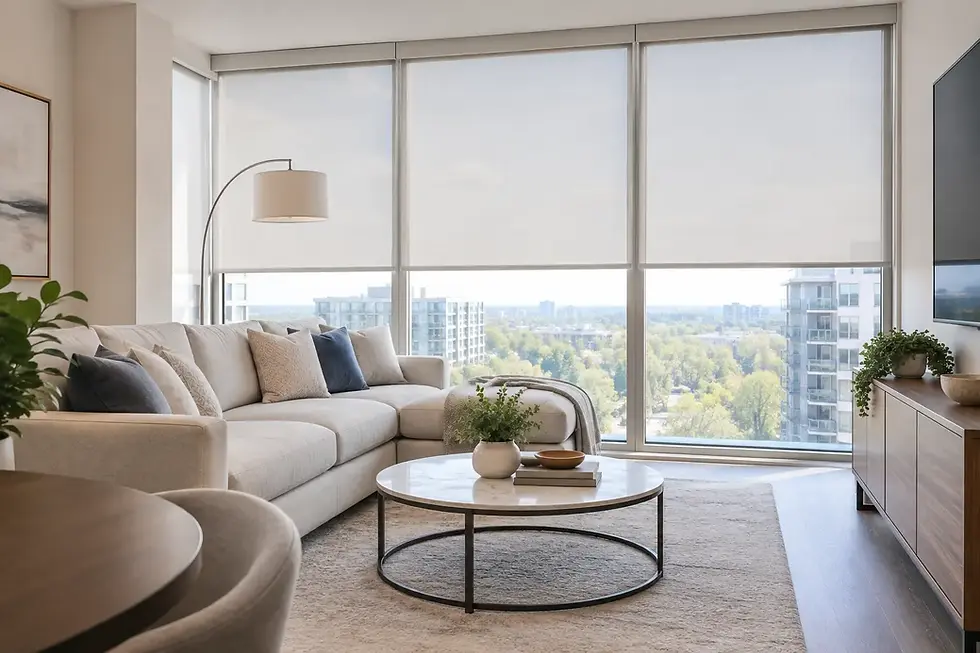
Roller shades are streamlined and versatile. They work well in contemporary homes, condos, offices, and rooms where a minimal look is preferred. With sunscreen, light-filtering, and blackout fabric choices available, the same basic format can serve very different needs.
Roman shades bring more softness and fabric character to a room. They are often selected where homeowners want a tailored appearance without the full width or movement of drapery. The trade-off is that fabric shades may require more consideration around texture, folds, and how much visual space they occupy when raised.
Drapery and curtains can add warmth, improve light control when layered with shades, and create an intentional finish for large windows or patio doors. They are especially effective when ceiling height and wall space allow for a properly proportioned installation. Hardware, heading style, fabric weight, and lining all influence the final look and performance.
Motorized blinds are particularly useful for high windows, wide banks of glass, bedrooms, and rooms where several shades are adjusted every day. They improve convenience, but they should be selected with practical control preferences in mind. Some clients want simple remote operation, while others want programmed schedules or integration with an existing smart-home system. Discussing these details early helps create a system that feels easy rather than overcomplicated.
Why Measurement and Installation Should Be Part of the Plan
A custom order is only as reliable as the information behind it. Small measurement differences can affect privacy, light gaps, operation, and the overall appearance of the treatment. This is why accurate site assessment matters, especially for bay windows, oversized openings, patio doors, and windows with unusual trim.
Professional installation also protects the investment. Treatments need to be level, secure, and aligned with the window's architecture. When several coverings are installed in one open-concept area, consistency in height and spacing makes a noticeable difference.
Millhaüs Blinds provides factory-direct custom window treatments with professional installation included, helping clients avoid the added markup and uncertainty that can come with a retail middleman. The advantage is not simply price. It is a more controlled process from consultation and accurate quoting through to a tailored fit in the finished space.
Questions Worth Asking Before You Approve a Quote
A clear quote should describe the product, fabric or material selection, operating system, mounting approach, and installation scope. If a treatment has a specific performance goal, such as blackout, glare reduction, fire-retardant requirements, or antibacterial properties, ask how that goal is being addressed by the selected product.
It is also wise to ask what will happen on installation day. Confirm access requirements, whether furniture should be moved away from windows, and how long the work is expected to take. For condo owners, it may be necessary to coordinate elevator access, loading arrangements, and any building rules before the appointment.
For property managers, developers, and commercial buyers, the conversation should go further. Consistency across units, durability, code-related requirements, lead times, and scalable supply can matter as much as colour selection. Commercial blinds and specialized materials need to suit the demands of the project, not just look appropriate in a sample book.
Bring a Few Decisions to Your Appointment
You do not need every detail decided before a consultation, but a little preparation makes the meeting more efficient. Think about the main frustration at each window: too much sun, a lack of privacy, difficult access, unwanted warmth, or an unfinished look. Take note of any furniture that limits access and save a few images that reflect the style you like.
Most importantly, be honest about where you want to invest. It can make sense to prioritize motorization for difficult windows, blackout solutions for bedrooms, and decorative drapery for the rooms where you entertain. Other areas may only need a clean, durable shade. Custom does not mean every window must receive the same treatment.
A thoughtful consultation gives each window a purpose and gives you confidence before production begins. When you are ready to improve privacy, light control, and the finished look of your Stouffville home or project, book a professional consultation and let the details be measured before the decisions are made.


Comments