
Drapes vs Shades in Richmond Hill: What Fits?
A bright Bayview Hill living room, a compact Richmond Hill condo, and a family home near Mill Pond can all have the same question at the window: drapes or shades? When comparing drapes vs shades Richmond Hill homeowners need to look beyond colour and fabric. The right choice affects privacy after dark, morning glare, energy use, cleaning routines, and how finished the room feels.
Drapes bring softness, fullness, and strong decorative impact. Shades provide a cleaner profile, precise light management, and often a simpler fit for modern windows. Neither is automatically better. The best window treatment is the one that matches the window, the room's purpose, and the way you want to live in it.
Drapes vs Shades Richmond Hill Homes: The Core Difference
Drapes are fabric panels that hang from a rod or track. They can be stationary for a decorative frame, operational for daily use, or layered over another window covering. Their visual presence is substantial, which makes them especially effective in formal living rooms, bedrooms, dining rooms, and spaces with tall or wide windows.
Shades are fitted window treatments that raise, lower, or roll into position within or close to the window opening. Roller shades, Roman shades, zebra blinds, sunscreen shades, blackout shades, and silhouette-style products all fall into this broader category. They tend to create a more tailored, architectural look while keeping the window area uncluttered.
For many Richmond Hill residences, the answer is not strictly one or the other. A sunscreen shade paired with drapery can offer daytime views and UV protection, then provide a finished evening look with added privacy. This layered approach works particularly well in rooms with large windows or patio doors.
Choose Drapes When the Room Needs Warmth and Presence
Drapes are often the stronger choice when a room feels hard, sparse, or acoustically lively. Fabric helps soften the look of glass, tile, hardwood, and painted walls. In open-concept homes, that softness can make a seating area feel more settled without adding visual clutter elsewhere.
Better insulation at larger windows
Well-made, lined drapery can help reduce the cold feeling that comes from large windows during a Richmond Hill winter. It does not replace proper windows, but a close-fitting treatment can create another layer between the glass and the room. For north-facing bedrooms, rooms over garages, or living areas with expansive glazing, this can make a noticeable difference in comfort.
The fabric, lining, fullness, track placement, and overlap all matter. A thin decorative panel will not perform like lined, custom-fitted drapery. Accurate measurement is what allows panels to cover the glass properly and stack back neatly when open.
A refined solution for bedrooms and formal spaces
Drapes are a natural fit for primary bedrooms where a calm, hotel-inspired atmosphere is the goal. When paired with blackout lining or a blackout shade behind them, they can greatly improve darkness for sleep. They also add a polished finish to dining rooms and formal living spaces where the window treatment is part of the overall design.
There is a practical trade-off: fabric drapes require more room beside and above the window, and their larger scale is not ideal for every compact condo layout. They also need occasional professional care, particularly in kitchens or high-traffic areas where dust and cooking residue can build up.
Choose Shades When You Need Clean Lines and Control
Shades are often the practical first choice for windows that need frequent adjustment. A quality custom shade sits close to the glass, making it easier to manage glare, privacy, and daylight without overwhelming the room.
Light filtering, views, and daytime privacy
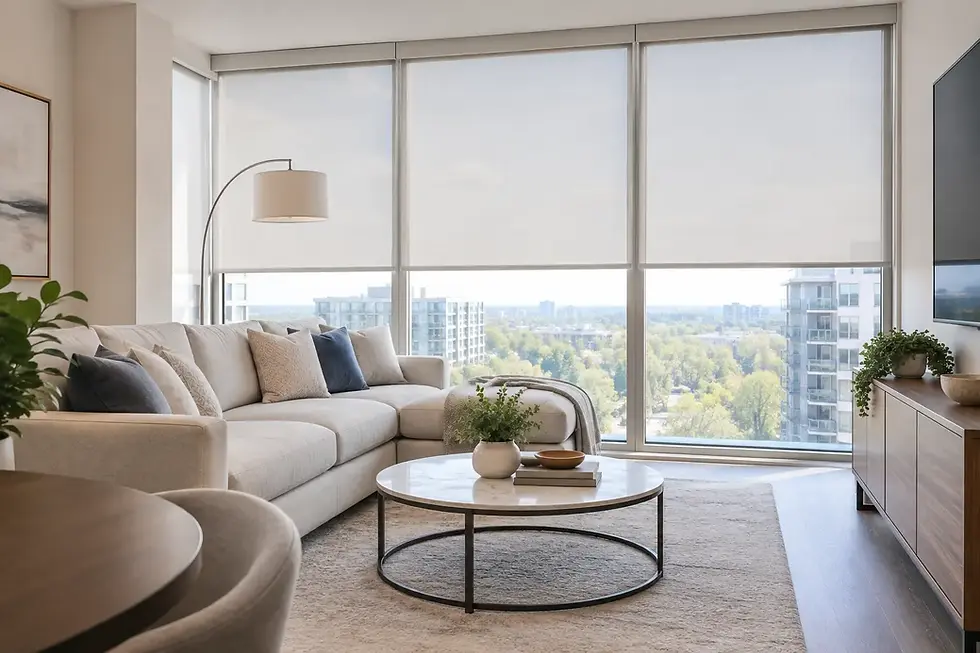
Sunscreen shades are well suited to living rooms, home offices, and condos with broad views. They reduce glare and help protect flooring and furnishings from harsh sun while preserving an outward view during the day. Openness level matters here: a more open fabric offers a clearer view, while a tighter weave provides greater privacy and solar control.
For street-facing windows, zebra blinds offer flexible control. Their alternating sheer and opaque bands can be aligned to soften daylight or create more privacy, giving homeowners more adjustment than a standard roller shade. They are a popular choice when you want one streamlined treatment that can shift with the time of day.
A strong fit for kitchens, bathrooms, and condos
Roller shades and other streamlined shades work well where moisture resistance, cleanability, and minimal bulk are priorities. In kitchens, they stay close to the window and avoid the excess fabric that can feel impractical near food preparation areas. In bathrooms, the right material provides privacy without making the space feel enclosed.
For Richmond Hill condo owners, shades are often easier to coordinate across multiple windows because they create a consistent, compact appearance. Motorized options are particularly useful for tall glazing, hard-to-reach windows, and rooms where several shades need to move together.
The trade-off is that shades generally do not bring the same visual softness or sound absorption as drapery. A roller shade may solve glare beautifully while leaving a large room feeling a little bare. That is where combining a shade with side panels or full drapery can be worthwhile.
Privacy and Blackout: Do Not Assume All Products Perform Alike
The words “blackout” and “privacy” can mean different things depending on the treatment and installation details. A blackout fabric blocks light through the material, but small light gaps can remain around the edges of the shade. For a bedroom where darkness is the priority, the mounting method, side gaps, and the fit above the window should all be considered during the consultation.
Drapes with blackout lining can provide excellent coverage, especially when they extend beyond the window frame. However, they must be full enough and positioned correctly to perform well. For the strongest result, many homeowners combine a blackout shade with blackout drapery. The shade handles the glass area, while the drapes reduce side light and add warmth.
For privacy, think about when you need it. A sunscreen shade can be ideal during daylight hours but may not provide the same privacy once interior lights are on at night. In that case, add drapery, choose a dual-shade arrangement, or select a product designed for more complete evening coverage.
Style Should Follow the Room, Not a Passing Trend
A window treatment should support the architecture and furnishings already in the space. Contemporary homes with simple millwork often suit roller, zebra, or silhouette-style shades. Traditional rooms may benefit from Roman shades or pleated drapery that adds dimension without looking overly formal.
Colour matters, but texture is often what makes a custom treatment look considered. A warm linen-look drape can soften cool grey walls. A subtly woven roller shade can add depth while staying clean and modern. In rooms with patterned furniture or statement wallpaper, a quieter shade may keep the window from competing with the rest of the design.
For wide patio doors, drapery is often the most graceful option because it moves in the same direction as the door and stacks to the side. For smaller individual windows, fitted shades usually look more proportionate. The scale of the opening should guide the choice.
Why Custom Measurement Changes the Result
Off-the-shelf window coverings may appear less expensive at first, but a poor fit can create light gaps, uneven stacking, awkward hardware placement, and inconsistent privacy. Custom treatments are measured for the actual window, trim, ceiling height, and operating needs of the space.
That is especially valuable in homes with bay windows, oversized glazing, angled ceilings, patio doors, or windows that are close together. A professional consultation also helps identify practical details before production, such as whether a treatment will clear a handle, work around a window crank, or allow easy access to a door.
Millhaüs Blinds provides factory-direct custom drapery and shades with professional installation included, giving homeowners a clear path from selection and measurement through to a clean, finished result. Instead of paying a retail middleman, you can focus your budget on the materials, fit, and performance that will matter every day.
The Best Choice May Be a Layered One
If you are choosing only one treatment, shades are usually the more compact and versatile option for light control. Drapes are often the better choice when design impact, insulation, and softness lead the priority list. But large windows and high-use rooms frequently benefit from both.
Start with the problem you want the treatment to solve: glare in a home office, privacy at night, better sleep, a more finished living room, or easier control of tall windows. From there, a tailored consultation can narrow the fabric, opacity, operating style, and installation approach to one that looks right and works reliably for your Richmond Hill home.


Comments