
Best Office Window Shades East Gwillimbury
Morning sun across a boardroom table can turn a productive meeting into a struggle with glare, heat, and washed-out presentation screens. The best office window shades East Gwillimbury businesses choose are not simply decorative additions. They help employees work comfortably, protect equipment and furnishings, manage privacy, and give clients a confident first impression from the moment they enter.
For a small professional office, medical practice, retail location, or larger commercial workspace, the right solution depends on how each room is used and how the building faces the sun. A reception area needs a different level of light and privacy than a finance office, training room, or street-facing consultation space. Custom measurements and professional installation make that difference visible every day.
Choosing the Best Office Window Shades in East Gwillimbury
The strongest choice begins with performance, not colour. Before selecting fabric or operating style, consider what is happening at each window throughout the workday. Direct afternoon light may create glare on monitors. West-facing glass can make certain rooms uncomfortably warm. Ground-level windows may expose desks, files, and client conversations to passing traffic.
A well-planned office shade system balances five practical needs: glare reduction, daylight control, privacy, energy efficiency, and a clean professional appearance. Not every window needs the same treatment. In fact, using one shade type across every room can leave some areas either too dark or insufficiently private.
For businesses that meet clients from nearby Newmarket or welcome customers from across York Region, that level of detail matters. Window coverings become part of how the space functions and how the business presents itself.
Roller shades for clean, dependable light control
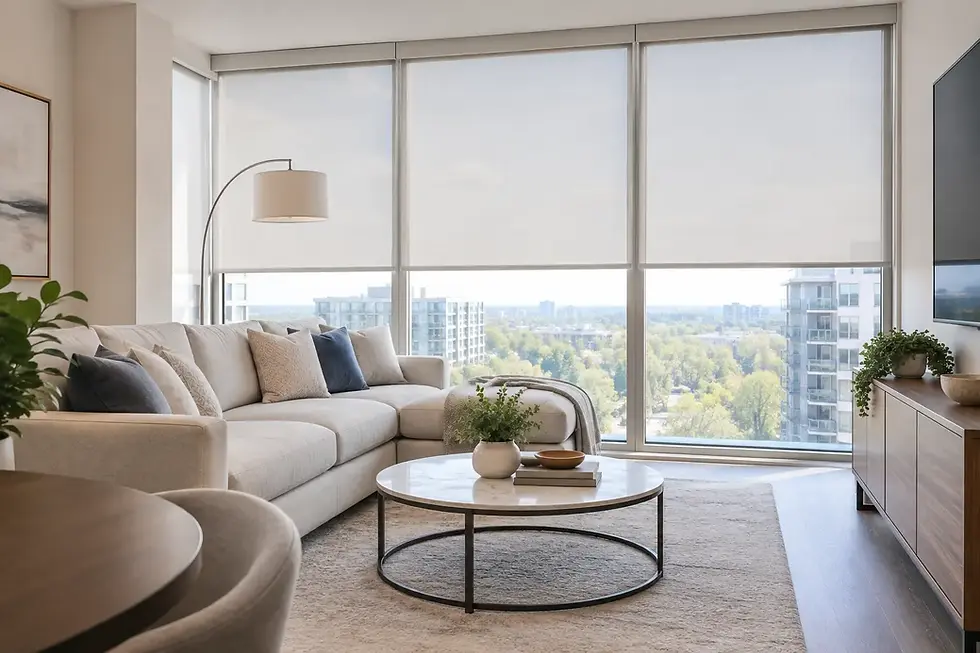
Roller shades are often the most versatile option for offices because their profile is simple, modern, and easy to coordinate with almost any interior. They sit neatly at the window, work well in rows of large windows, and are available in a wide range of fabrics and opacities.
Light-filtering roller shades soften harsh daylight while maintaining an open feel. They suit reception areas, hallways, shared workspaces, and offices where employees want natural light without the distraction of sharp sun. Blackout roller shades are better suited to boardrooms, presentation rooms, or rooms used for video calls and screen-based training.
The trade-off is straightforward: the more light a fabric blocks, the less outside visibility it provides. A consultation can help identify where a filtering fabric will do the job and where blackout coverage is worth the investment.
Sunscreen shades for bright offices with a view
Sunscreen blinds are designed for offices with broad windows, attractive views, or a strong need for daytime glare management. Their technical woven fabrics reduce heat and screen glare while still allowing varying degrees of outward visibility. This can make a significant difference in open-plan offices where closing an opaque shade would make the room feel boxed in.
The fabric openness factor affects the result. A more open weave generally preserves more view and daylight but offers less daytime privacy. A tighter weave provides greater glare control and privacy while reducing visual connection to the outdoors. There is no universal best percentage. The ideal choice depends on window orientation, nearby buildings, workstation placement, and whether clients can see into the space.
Sunscreen shades are especially practical where computer screens sit close to windows. Rather than relying on employees to adjust their monitors throughout the day, the shade system can reduce the source of glare directly.
Zebra blinds when flexible privacy matters
Zebra blinds offer alternating sheer and solid fabric bands that can be aligned to filter light, create privacy, or allow a clearer view outside. Their appearance is polished enough for executive offices, reception areas, real estate offices, and client-facing workplaces, while their adjustability gives staff more control than a single-opacity roller shade.
They are a good fit when the office needs to shift between openness and discretion during the day. For example, a street-facing office can admit filtered daylight in the morning, then move to a more private setting during appointments or sensitive conversations.
Zebra blinds are not always the first choice for spaces that require complete room darkening. In that setting, a blackout roller shade remains the more dependable option.
Match the Shade to the Room, Not Just the Window
A practical office plan looks at each space individually. Reception areas generally benefit from light-filtering or sunscreen shades that reduce glare without making the entrance feel closed off. Private offices may need stronger privacy control, particularly at ground level or near neighbouring properties. Boardrooms and training rooms often perform best with blackout shades, especially if staff use projectors or large display screens.
For clinics, wellness practices, and other environments where cleanliness is a daily priority, easy-care materials and antibacterial blind options can be a smart consideration. Fire retardant blinds may also be appropriate for commercial projects with defined building or operational requirements. Product selection should support the requirements of the space rather than add features that are not needed.
A consistent colour palette can tie the office together, but consistency does not require identical fabrics everywhere. Choosing complementary shades with different performance levels can create a more functional result while keeping the overall design intentional.
Motorized Shades Make Large Offices Easier to Manage
Manual shades work well for many offices, particularly in smaller rooms with accessible windows. Motorized blinds become increasingly valuable when windows are tall, numerous, hard to reach, or used by different people throughout the day.
With motorization, staff can raise or lower multiple shades at once rather than walking from window to window. Scheduled operation can also support a more consistent environment by lowering shades during the brightest parts of the day and opening them when direct sun has moved away. This is useful in reception areas, multi-window boardrooms, and offices where teams are focused on client work rather than building adjustments.
Motorization is an investment, so it makes the most sense where convenience, sun exposure, accessibility, or the number of windows justifies it. A mixed approach is often sensible: motorized shades in high-impact areas and manual shades in private rooms with occasional use.
Why Custom Fit Matters in Commercial Spaces
Off-the-shelf shades can appear economical at first, but standard sizes often create visible gaps, uneven coverage, and a less finished appearance. In an office, those gaps can allow glare to reach screens or compromise privacy at exactly the wrong angle.
Custom office shades are measured for the actual window opening, surrounding trim, door clearance, and mounting conditions. This is particularly useful in commercial spaces with wide glazing, narrow sidelights, unusual ceiling heights, or rows of windows that need to align cleanly. The installation method matters as much as the fabric selection because a professional finish depends on accurate placement and smooth operation.
Millhaüs Blinds provides factory-direct custom window treatments with professional installation included, helping businesses avoid the added layers of a retail showroom model. The process starts with understanding the space, confirming the practical needs of each room, and selecting materials that deliver the right balance of appearance and performance.
Budget for Long-Term Value, Not Just the Initial Price
Office window shades should withstand frequent use, sun exposure, and regular cleaning while continuing to look appropriate for the business. Lower-cost options may seem attractive for a larger project, but fabric quality, hardware strength, and fit can affect how the installation performs over time.
The right budget is not necessarily the highest one. It is the one directed toward the windows that have the greatest impact on comfort, privacy, and energy use. Prioritize direct-sun workstations, presentation rooms, street-facing offices, and large glass areas first. Then choose complementary treatments for lower-impact windows as the project scope allows.
A free consultation and accurate quote make it easier to compare options without guessing at measurements or installation requirements. Bring a simple floor plan if available, note which rooms experience glare or privacy concerns, and identify any windows that are difficult to access. Those details lead to a more useful recommendation than selecting shades from samples alone.
The best office shade is the one employees barely have to think about: it controls the light when they need focus, provides privacy when conversations matter, and keeps the workspace looking composed for every client who walks through the door.


Comments