
Guide to Condo Window Coverings in Toronto
- Millhaüs Blinds
- Jul 14
- 6 min read
Floor-to-ceiling glass is one of the reasons people choose condo living, but it can quickly become a source of glare, heat, and unwanted visibility after dark. This guide to condo window coverings Toronto owners can use focuses on the decisions that make the biggest difference: how a covering fits, how it handles light, and how it works with your building and daily routine.
A good condo window treatment should feel intentional rather than temporary. It needs to suit the room, clear window handles and balcony doors, preserve the view when open, and provide the privacy you expect when the city lights come on. That is why made-to-measure blinds and drapery are often a better value than off-the-shelf options that leave gaps, hang unevenly, or fight the shape of the window.
Start With How You Use the Room
The best window covering is not necessarily the darkest or most decorative one. It is the one that solves the main problem in that particular room.
In a living room with a strong afternoon exposure, glare control may be the priority. Sunscreen blinds filter harsh light while maintaining a connection to the view, making them a practical choice for people who work from home or use the space for entertaining. They reduce screen glare without making the room feel closed in.
Bedrooms often call for a different approach. Blackout blinds are a strong choice for shift workers, light sleepers, children’s rooms, or anyone facing bright neighbouring buildings. True light control depends on the fabric and the fit around the window. A properly measured system will minimize the light gaps that are common with standard ready-made blinds.
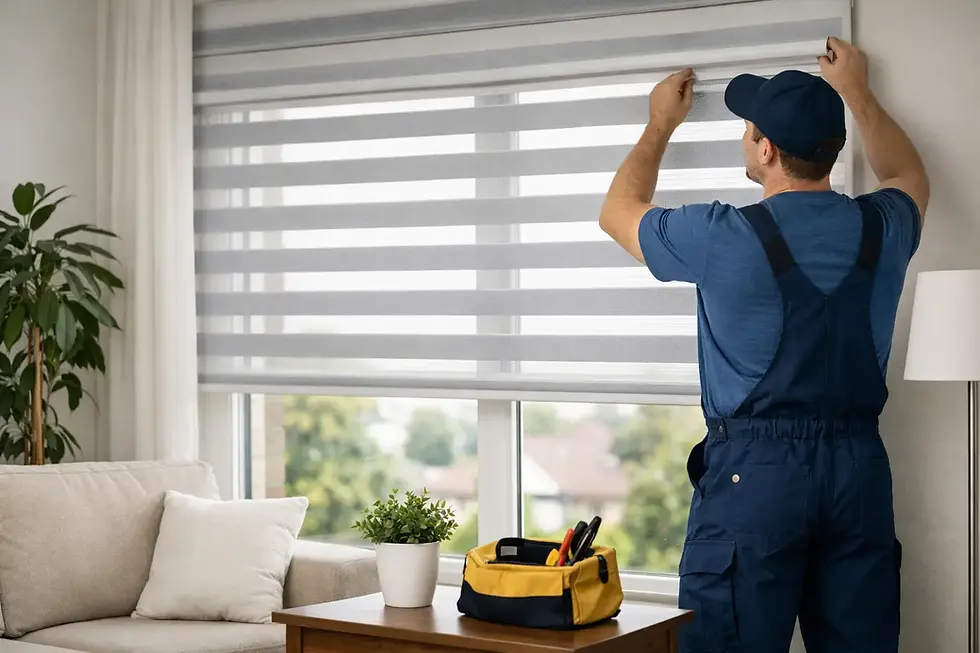
For an open-concept suite, consider whether you need different levels of control throughout the day. Zebra blinds let you adjust alternating sheer and opaque bands, so you can soften daylight, increase privacy, or close the blind more fully without changing the overall look of the room.
Guide to Condo Window Coverings Toronto: Choose by Performance
Condo windows are rarely all the same. A suite might have a large fixed pane in the living room, a narrow bedroom window, and a balcony door that needs frequent access. Matching every opening with one product can look tidy, but it is not always the most functional decision.
Roller shades for a clean, modern finish
Roller shades are a dependable choice for Toronto condos because they sit close to the glass and work well with contemporary interiors. Available in sunscreen, light-filtering, and blackout fabrics, they offer a streamlined profile that does not compete with furniture or architectural details.
They are especially useful for windows with limited depth or where a low-profile treatment is preferred. The trade-off is that a single roller shade gives one type of fabric performance at a time. If you want filtered daylight during the day and near-total darkness at night, a dual-shade setup may be worth considering.
Zebra blinds for flexible privacy
Zebra blinds are popular in condos for good reason. Their layered design allows light to be adjusted without raising the entire blind. This can be helpful in suites overlooked by nearby towers, where daytime privacy and natural light both matter.
They offer a polished, modern appearance and a good range of colours. However, they are generally best for standard window openings rather than doors that are used constantly. For a frequently used balcony door, a tailored roller shade or drapery panel may be the more practical option.
Sunscreen blinds for view and glare control
A clear city view should not come with constant squinting or overheating. Sunscreen blinds reduce glare and soften direct sunlight while preserving an outward view during the day. They are well suited to living rooms, dining areas, and home offices with broad glass walls.
Openness matters here. A more open weave offers a clearer view but provides less daytime screening. A tighter weave increases privacy and glare control, though it slightly softens the view. The right balance depends on your floor, exposure, and how close neighbouring buildings are.
Blackout blinds for bedrooms and media spaces
Blackout blinds create the darker environment many condo bedrooms need, particularly in North York buildings where street lighting and neighbouring windows can stay bright late into the evening. They are also useful in media rooms where reflections on a television are distracting.
For the strongest result, choose a blackout fabric with a carefully fitted installation. If complete darkness is a priority, discuss side gaps, mounting position, and the possibility of layering with drapery. Details at the edges often determine whether the room feels genuinely dark or merely dim.
Drapery and curtains for softness and scale
Drapery adds warmth to glass-heavy interiors. It can make a bedroom feel more restful, improve the look of a large window wall, and introduce texture where a condo has sleek floors, white walls, and hard surfaces.
Drapery is often paired with roller shades or sunscreen blinds. The blind handles day-to-day privacy and glare, while the drapery adds softness and stronger nighttime coverage. This layered approach costs more than a single blind, but it can deliver a more finished result in principal bedrooms and living rooms.
Check the Building Before You Choose
Condo living comes with a few practical constraints. Some buildings have window-covering guidelines, particularly when treatments are visible from outside. Your property management office may specify neutral backing colours or other appearance requirements. Confirm these details before selecting fabrics, especially for windows that face a shared courtyard or major street.
Measure carefully around handles, mullions, bulkheads, and sprinklers. A balcony door needs enough clearance to operate comfortably, while a window near a kitchen counter may need a treatment that stays out of the way. These are not small details. They affect whether the finished product is convenient every day.
Also consider how the blinds will be mounted. Inside mounting creates a neat, built-in appearance when there is adequate frame depth. Outside mounting can provide better coverage on shallow frames or unusually shaped openings. A professional consultation helps identify the better option before production begins.
Motorization Makes Sense in More Condos Than You Think
Motorized blinds are not only for hard-to-reach windows. They are useful for large living-room windows, tall glass panels, and daily routines where several blinds are adjusted at once. With a remote, wall control, or smart-home integration, you can lower shades for privacy in the evening or raise them to welcome daylight in the morning.
Motorization is also a clean choice for spaces where you prefer fewer visible cords. For families, it can simplify operation and keep the window area looking uncluttered. The added investment is most worthwhile when the blinds are used frequently, difficult to access, or part of a larger condo design plan.
Why Custom Measurement Changes the Result
Condo windows can look uniform from the street, yet openings within a suite often vary enough to affect fit. Even a small measuring difference can create uneven hems, side gaps, or blinds that interfere with handles. Custom manufacturing accounts for each opening individually rather than treating the entire suite as one standard size.
Factory-direct custom blinds also give buyers more control over fabric, opacity, hardware, and operation without retail showroom markups. At Millhaüs Blinds, the process is built around accurate quoting, tailored product selection, and free professional installation, so the finished treatment is designed to work properly from day one.
When comparing quotes, look beyond the initial price. Confirm whether measurement, installation, hardware, and the selected fabric are included. A lower number can become less attractive if key components are added later or if the product is not properly suited to the window.
Make the Final Choice With Samples in the Space
Fabric can look completely different under showroom lighting than it does beside your own flooring, wall colour, and view. Look at samples in the morning, afternoon, and evening. Hold them against the glass, then step back and see how they change the room.
Pay attention to what happens after dark. A fabric that feels private in daylight may reveal more silhouettes at night when interior lights are on. This is one of the most common condo surprises, and it is easy to avoid by choosing the right opacity or adding a second layer where privacy matters most.
The right window covering lets you enjoy the part of condo living you paid for - the light, the view, and the clean architectural lines - without giving up comfort or privacy. Book a professional consultation before choosing, and let the fit, fabric, and function work together in your space.


Comments