
How Do Motorized Blinds Work in Your Home?
- Millhaüs Blinds
- 3 days ago
- 6 min read
A blind that closes at the touch of a button can look simple, but the convenience comes from a carefully sized motor, a reliable power source, and precise setup at each window. How do motorized blinds work in a real home? A compact motor turns the blind’s internal tube or mechanism, raising, lowering, or positioning the fabric without cords or manual pulling.
For a Newmarket homeowner with tall living-room windows, a hard-to-reach stairwell window, or a wall of patio doors, that small change can make light control far easier every day. Motorization is not only about the technology. When the blind is made to measure and professionally installed, it is a practical upgrade for privacy, comfort, and a cleaner-looking room.
How Do Motorized Blinds Work Behind the Fabric?
Most motorized roller shades, blackout blinds, sunscreen blinds, and zebra blinds use a tubular motor. The motor sits inside the roller tube at the top of the shade. When it receives a command, it rotates the tube in one direction to lift the fabric and in the other direction to lower it.
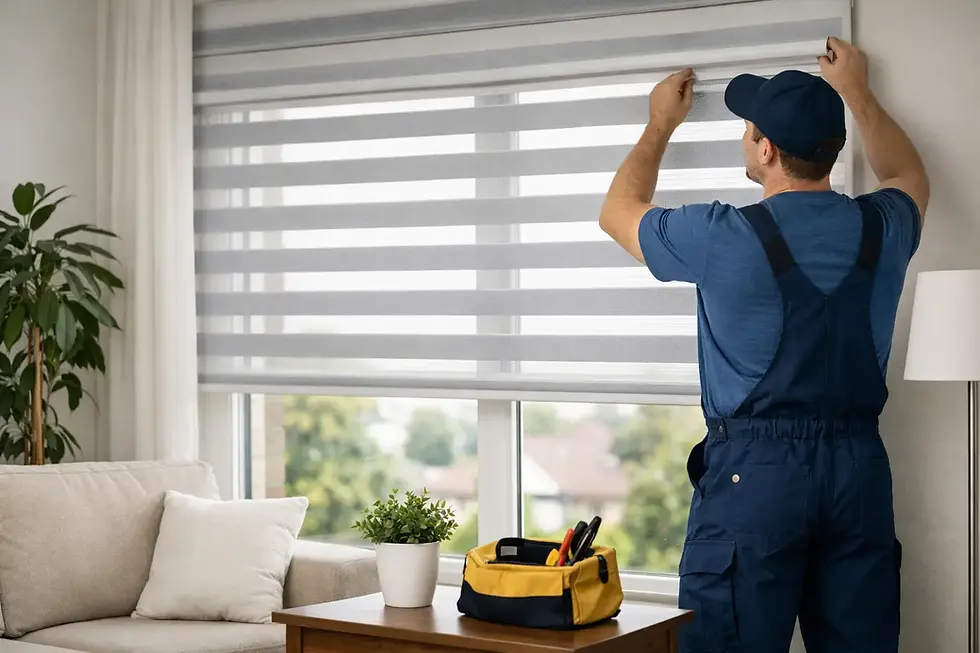
The fabric is secured to the tube and a weighted bottom bar helps it travel evenly. On zebra blinds, the motor moves the alternating sheer and opaque fabric layers into alignment. This lets you shift from filtered daylight to greater privacy without manually operating a chain.
The motor is small, quiet, and hidden inside the headrail or roller system. What you see is a clean custom blind. What makes it move is an internal drive designed for the weight and width of that particular window covering.
The motor stops where it should
A properly configured motor has upper and lower travel limits. These tell the blind exactly where to stop when it is fully raised or lowered. Limits also support favourite positions, such as lowering a sunscreen shade to block afternoon glare while keeping the view open below or above the fabric.
Accurate measuring matters here. A blind that is too wide, too heavy, or incorrectly fitted can affect how smoothly it operates. This is one reason a custom consultation and professional installation are worth considering, particularly for oversized windows, layered treatments, and condo spaces with precise clearances.
Power Options for Motorized Window Coverings
Motorized blinds need power, but the best source depends on the window location, the number of shades, and how you plan to use them.
Battery-powered motors are a popular option because they avoid visible wiring and work well where electrical access is limited. The battery is usually concealed in a slim wand, behind the headrail, or in another discreet position. Battery life varies with blind size, fabric weight, and daily use. A shade operated several times a day will need attention sooner than one used only at bedtime.
Hardwired motors connect to the home’s electrical system. They are often a strong choice for new construction, major renovations, or larger multi-window projects. Since there are no batteries to manage, hardwired systems suit homeowners who want frequent automated schedules or integrated control throughout several rooms.
Some systems also use rechargeable battery packs. These offer the tidy appearance of battery power with the convenience of recharging rather than replacing batteries. The right choice is not always the most technical one. It is the one that fits your window layout, finishes, and everyday routine.
How You Control Motorized Blinds
The control method can be as straightforward or as connected as you prefer. A handheld remote is often the simplest solution. It can operate one shade, a group of shades in a room, or multiple zones independently.
A wall-mounted control provides a familiar switch-style experience, which is useful near entrances, bedrooms, and patio doors. For connected homes, compatible smart controls can allow operation through a phone, voice assistant, timer, or automation platform.
Schedules are where motorization becomes especially useful. You might set bedroom blackout blinds to close before bedtime, open sunscreen shades in the morning, or lower west-facing shades during the brightest part of the afternoon. The goal is not to automate every movement just because you can. It is to make the windows that cause the most daily inconvenience easier to manage.
One blind or an entire room
Motorization works well for a single awkward window, but it can be even more valuable across a coordinated room. Several blinds can be grouped so they move together, while still allowing separate control when needed.
For example, a living room may have sunscreen shades across the main windows and blackout blinds in an adjoining media area. Grouping can simplify daily operation, while separate channels preserve control over each zone. A consultation can help determine whether you need individual remotes, room-based groups, or broader home automation.
Why Fabric and Blind Style Still Matter
A motor does not replace the need to choose the right window treatment. It simply changes how you operate it. The fabric, opacity, and construction still determine how the blind performs.
Sunscreen blinds reduce glare and soften harsh daylight while maintaining a degree of outward visibility during the day. They are a practical option for home offices, open-concept kitchens, and rooms with large windows. Blackout blinds are better suited to bedrooms, nurseries, and media rooms where stronger light control is the priority.
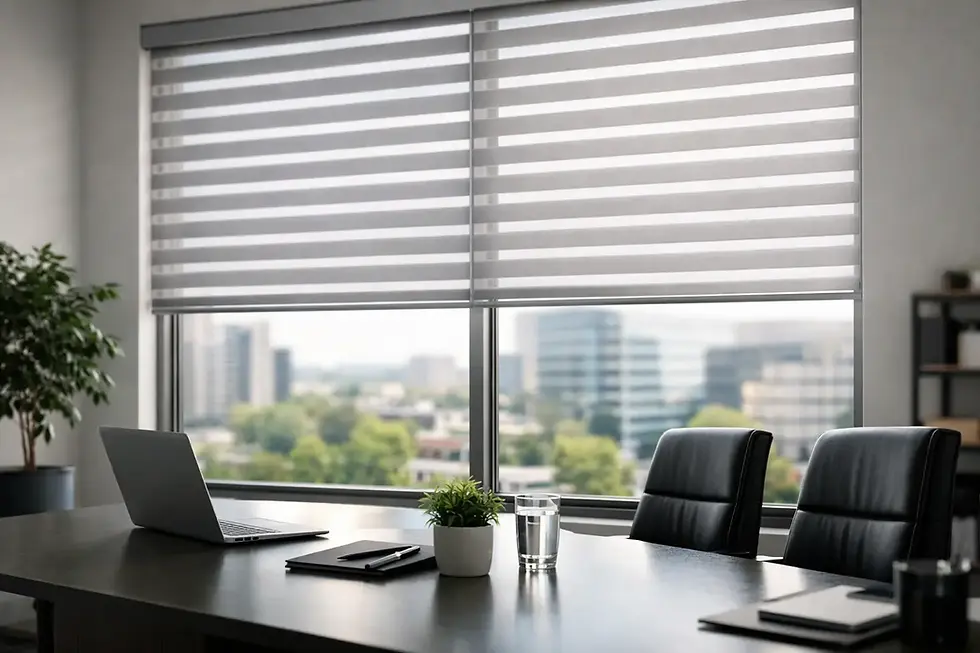
Zebra blinds provide a flexible middle ground. Their alternating bands can create soft filtered light, a clearer view, or more privacy as the fabric shifts. Motorization makes those adjustments especially convenient because you can position the bands consistently rather than trying to find the same setting by hand each time.
Colour and openness also affect comfort. A darker sunscreen fabric may offer better glare reduction, while a lighter fabric can brighten the room. The right selection depends on sun exposure, privacy needs, and the look you want after the blinds are installed.
The Practical Benefits Beyond Convenience
The most obvious benefit is ease of use. Tall windows, windows behind furniture, and large patio-door coverings become simple to operate. Yet the day-to-day value goes further.
Motorized blinds remove hanging operating cords, giving rooms a neater finish and reducing cord-related concerns in family spaces. They also make it easier to use blinds as intended. When adjusting a shade takes seconds, you are more likely to close it for privacy, reduce screen glare, or manage intense sunlight before a room overheats.
That can support more comfortable interiors and may reduce reliance on cooling during sunny periods. Energy performance will vary by fabric, window orientation, glass quality, and how consistently the blinds are used, so it should be viewed as one part of a broader comfort strategy rather than a guaranteed utility-saving figure.
For condos and commercial settings, repeatable control can be just as valuable. A property manager or business owner may want shades to present a consistent appearance across a boardroom, lobby, or suite. Custom manufacturing helps ensure the fabric, fit, and operation match from window to window.
What to Consider Before Choosing Motorization
Motorized blinds cost more than manually operated blinds because the system includes the motor, power solution, controls, and setup. The return is strongest where a blind is large, frequently used, difficult to reach, or part of a room-wide light-control plan.
It is also worth thinking about future routines. If you only want to operate a bedroom shade from bed, a simple remote may be all you need. If you want several rooms to respond to set schedules, a connected system and appropriate power planning may make more sense.
Noise is another common question. Quality motors are designed for quiet operation, but they are not silent. You will hear a low mechanical sound while the blind moves. In most residential rooms, it is brief and unobtrusive, especially compared with the convenience of moving several shades at once.
Finally, do not treat installation as an afterthought. Mounting surfaces, window depth, fabric weight, power access, and the final travel settings all affect the finished result. Factory-direct custom blinds with free professional installation give you clearer accountability from measurement through the final demonstration.
A Better Fit Makes Motorization Feel Effortless
The best motorized blind is one you barely have to think about. It fits the window cleanly, moves evenly, stops at the right position, and gives you the level of light and privacy you expect. Whether you are planning a single blackout shade or coordinating every window in a new space, Millhaus Blinds can help you choose a tailored option that suits the room, the budget, and the way you live.
A free consultation is a useful place to start: bring the windows that frustrate you most, the times of day light becomes a problem, and the level of control you want. The right custom solution turns those small daily adjustments into something genuinely easy.

Comments