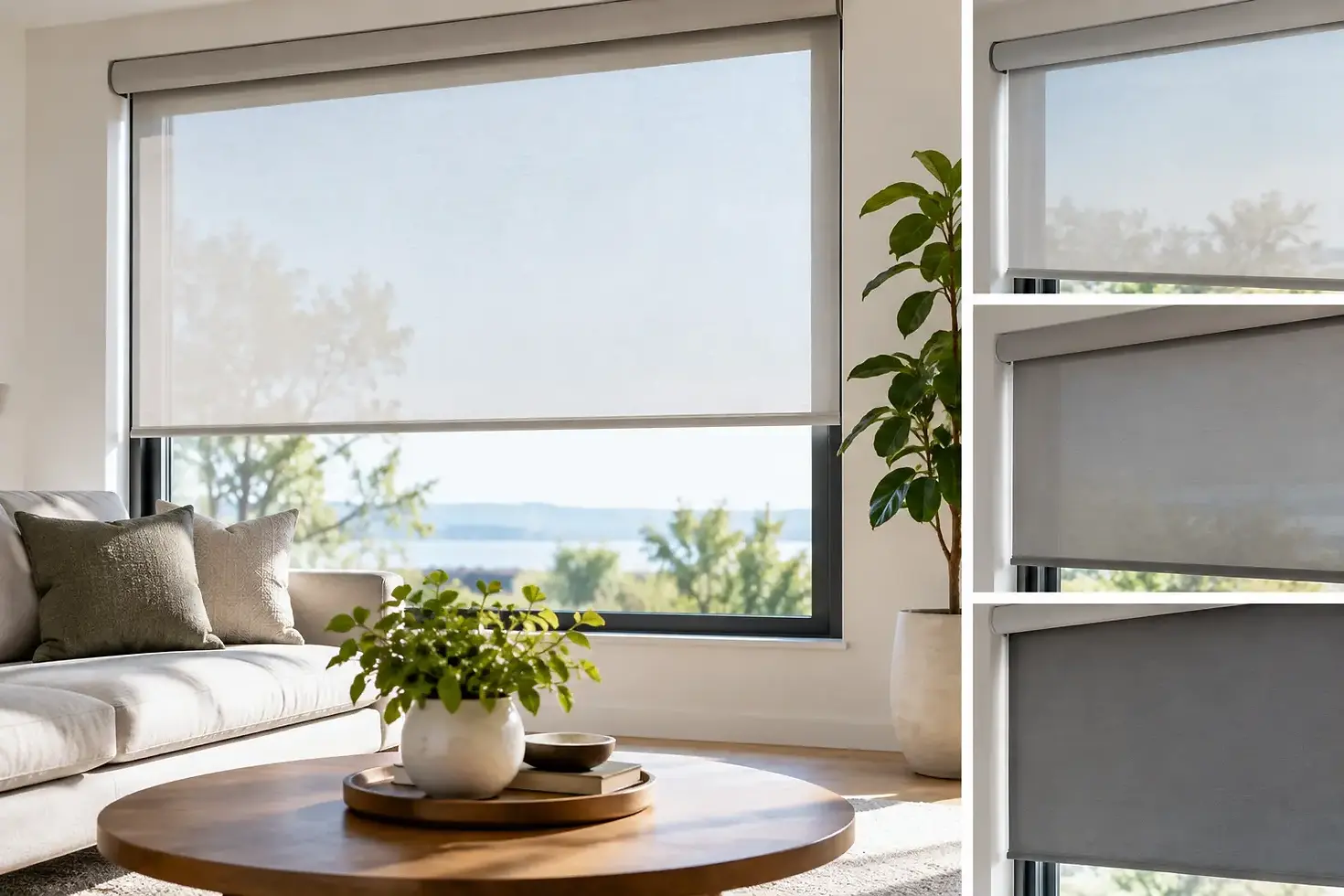
Solar Fabric Opacity Review for Better Window Shades
A solar fabric opacity review starts with one practical question: what do you need to see, and what do you need to block? A bright Aurora living room may benefit from a view-preserving sunscreen blind, while a street-facing bedroom may need far more privacy. The right fabric is not simply the darkest or lightest option. It is the one that balances daylight, glare, heat and visibility for the way you use the room.
Solar fabrics, often used in custom roller shades and sunscreen blinds, are woven to filter sunlight rather than shut it out completely. Their performance is usually described by an openness factor, fabric colour, weave, and coating. Those details affect how the shade looks from inside, how much heat reaches the glass, and how private the room feels after sunset.
Solar fabric opacity review: start with openness
In the window-covering industry, opacity and openness are often discussed together, but they are not interchangeable. Openness is the percentage of open space in the weave. A lower number means a tighter weave and less visible light passing through. A higher number means a more open weave, brighter interiors and a clearer connection to the outdoors.
A 1% solar fabric has a very tight construction. It offers strong glare reduction, a more filtered view and better daytime privacy than a 5% or 10% material. It is a smart choice for rooms with intense sun exposure, screen-heavy home offices, and commercial spaces where visual comfort matters throughout the day.
A 3% fabric is often the middle-ground choice. It keeps interiors comfortable and reduces harsh sunlight while retaining enough outside visibility for many kitchens, living rooms and condo spaces. For homeowners who want a clean, modern roller shade without making the room feel closed off, 3% is frequently the most versatile option.
A 5% fabric allows more daylight and a clearer view. It works well where the view is the priority and direct glare is manageable. However, it will not provide the same daytime screening or solar control as a tighter weave. At 10% openness and above, the shade becomes increasingly view-focused and less protective, making it better suited to lower-sun areas or windows where privacy is not a major concern.
The percentage alone does not tell the whole story. Two fabrics with the same openness can perform differently depending on their yarn, colour and backing. That is why a fabric swatch viewed at the window is more useful than selecting from a small photo or a colour chip alone.
What each opacity level does in a real room
The most successful selection depends on the window orientation, exterior surroundings and room function. South- and west-facing glass typically needs stronger glare and heat control than a shaded north-facing window. A room with neighbouring homes close by also needs a different privacy strategy than a high-rise suite with an open skyline view.
Tighter fabrics: 1% to 2%
These fabrics create a more subdued, comfortable light level. They are especially effective where sunlight makes television viewing difficult, washes out artwork, heats up a workspace, or creates reflection on computer screens. The outside view remains present but softened, almost like looking through a fine screen.
The trade-off is clear: less glare comes with less view clarity. If your main goal is preserving a crisp view of a garden, lake, or cityscape, a very tight fabric can feel more restrictive than expected. It is still a strong choice for a home office, media room, waiting area or sunny commercial office.
Balanced fabrics: 3% to 5%
This range is where many custom sunscreen blind projects land. It gives rooms a brighter, lighter character while reducing the hardest edge of direct sun. A 3% fabric generally leans more toward comfort and privacy, while 5% leans more toward daylight and view.
For an open-concept main floor, this can be a practical way to keep daylight moving through the space without leaving furnishings exposed to constant glare. It also pairs well with motorization, allowing the shades to lower during peak afternoon sun and raise again when the light becomes softer.
Open fabrics: 7% to 10%+
Open solar fabrics provide the strongest outward visibility and the least visual interruption. They can look excellent in a room where the scenery is a major design feature. In return, they offer lighter glare control and a lower level of daytime privacy.
This category should be chosen deliberately. It is not ideal for windows facing close neighbours, busy sidewalks, or a setting where occupants expect substantial screening. For those locations, a layered solution can make more sense: a solar shade for daylight and a separate blackout roller shade or drapery for privacy when needed.
Daytime privacy is not nighttime privacy
This is the point that catches many buyers off guard. Solar fabric can provide useful privacy during the day when exterior light is brighter than interior light. From outside, people see a darker surface and have a reduced view into the room. Once the lights come on indoors after dark, that relationship reverses.
At night, most solar fabrics allow silhouettes and interior activity to be visible from outside. A 1% fabric may obscure details better than a 5% fabric, but it is not a blackout privacy solution. If a bedroom, bathroom, ground-floor room, or street-facing condo needs dependable nighttime coverage, consider pairing sunscreen blinds with blackout blinds, lined drapery, or another room-darkening layer.
The shade also needs accurate sizing and professional installation. Even an opaque material cannot block visibility through side gaps, above the shade, or below the hem bar. Made-to-measure dimensions and careful bracket placement matter as much as the fabric selection.
Fabric colour changes the experience
Darker solar fabrics usually provide a sharper outward view because they reduce reflected light on the interior side of the shade. Charcoal, black and deep bronze fabrics can make the exterior view look surprisingly clear during the day, particularly with a 3% or 5% weave.
Lighter colours reflect more light and can help a room feel airy, but they may produce a softer, hazier view. White and pale neutral fabrics are popular in minimalist interiors, though they should be assessed against the actual sunlight in the room. A warm white that looks subtle in a sample book may feel much brighter across a full wall of glass.
Colour also affects solar performance. Light fabrics often reflect more solar energy, while darker materials absorb more. The best choice depends on the complete fabric specification, the glass itself and the room's purpose. A professional consultation should look at these factors together rather than assuming dark always means cooler or light always means better.
Glare and heat control deserve separate attention
Glare control is about visual comfort. Heat control is about how much solar energy reaches the room. Solar fabrics can help with both, but the strongest option for one is not always the strongest for the other.
For example, a moderately open dark fabric may give an excellent view and reduce screen glare, while a lighter, more reflective fabric may better support heat management. Rooms with large west-facing windows often benefit from assessing both priorities before choosing an openness level. This is particularly relevant for condo owners with floor-to-ceiling glazing, where late-day sun can make one side of the suite difficult to use.
Motorized shades add useful control without adding daily effort. Timed lowering during high-sun hours can reduce glare and help protect flooring, furniture and finishes from prolonged direct light. For larger window banks, this can be more consistent than relying on manual adjustments.
How to choose with confidence
The simplest approach is to review samples at the actual window, at more than one time of day. Hold a 1%, 3% and 5% fabric against the glass. Look outward, then step outside and look in. Turn on interior lighting if privacy is part of the decision.
Consider whether the space needs one shade to do everything or whether layered window treatments will provide a better result. A solar roller shade is excellent for filtered daylight, view management and daytime glare. It is not intended to replace a true blackout treatment where complete darkness or after-dark privacy is required.
At Millhaüs Blinds, factory-direct custom shades are measured for the window, the room and the way you live in it, with free professional installation included. A hands-on fabric review can prevent the common mistake of choosing openness based on a percentage alone. Bring the question back to the window in front of you: how much light, view and privacy should this room keep?


Comments