Drapery Styling Guide for Better-Looking Rooms
A beautiful drapery installation can make an ordinary room feel finished, while a poorly planned one can make even premium fabric look undersized or out of place. This drapery styling guide focuses on the decisions that create a tailored result: where to mount the rod, how much fabric to use, which length suits the room, and how to balance style with privacy and light control.
For homeowners in Aurora, drapery often needs to work harder than a decorative accent. It may soften a large family-room window, provide evening privacy in a newer neighbourhood, help manage bright afternoon sun, or bring warmth to a bedroom with clean-lined finishes. The right approach starts with the window's function, then builds the design around it.
Start With What the Room Needs
Before choosing a colour or pattern, decide what the drapery needs to accomplish. Living rooms commonly benefit from light-filtering panels that add softness without closing off daylight. Bedrooms may call for lined drapery or a blackout layer to support better sleep. In dining rooms and formal spaces, decorative panels may be enough if privacy and sun control are handled by another window covering.
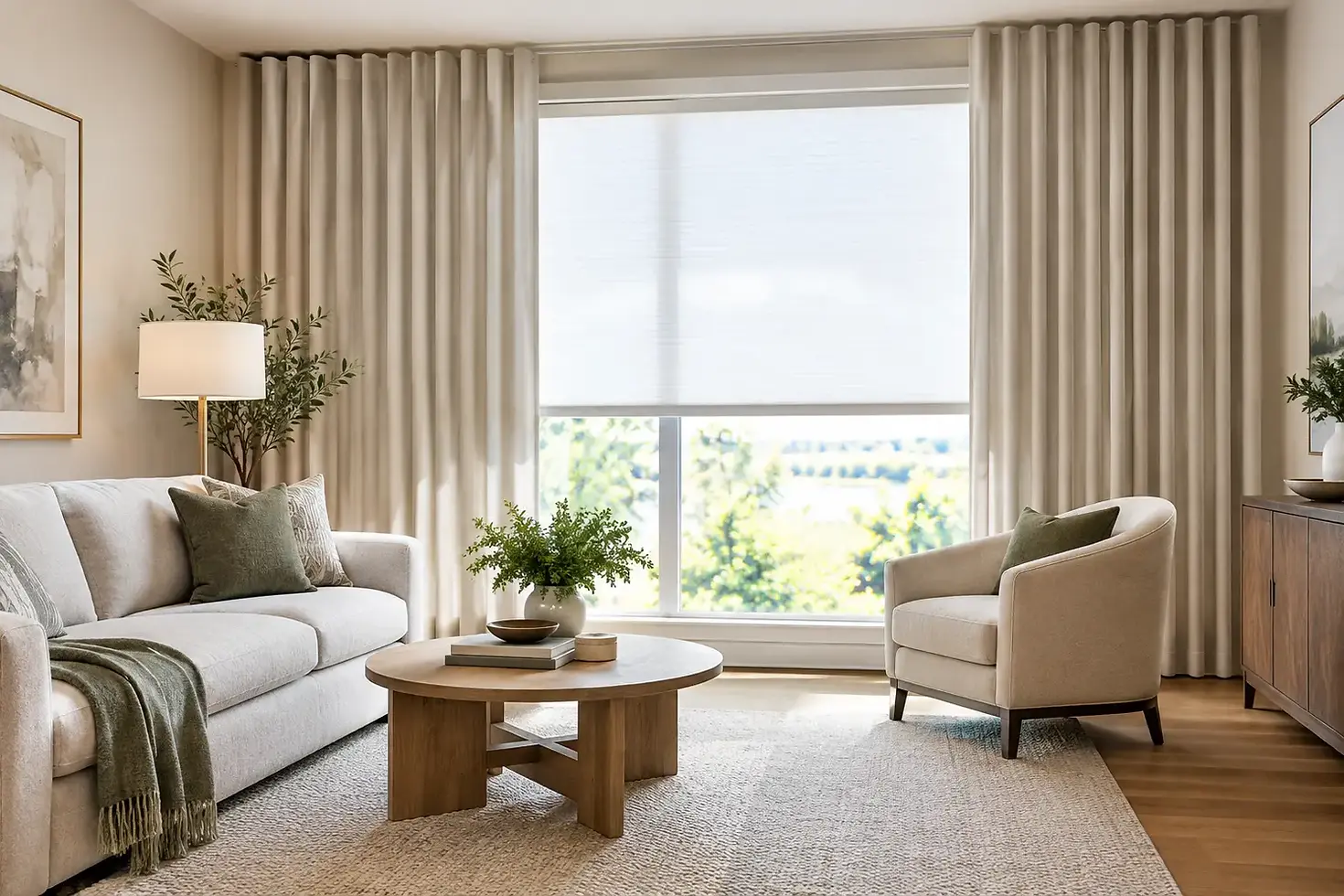
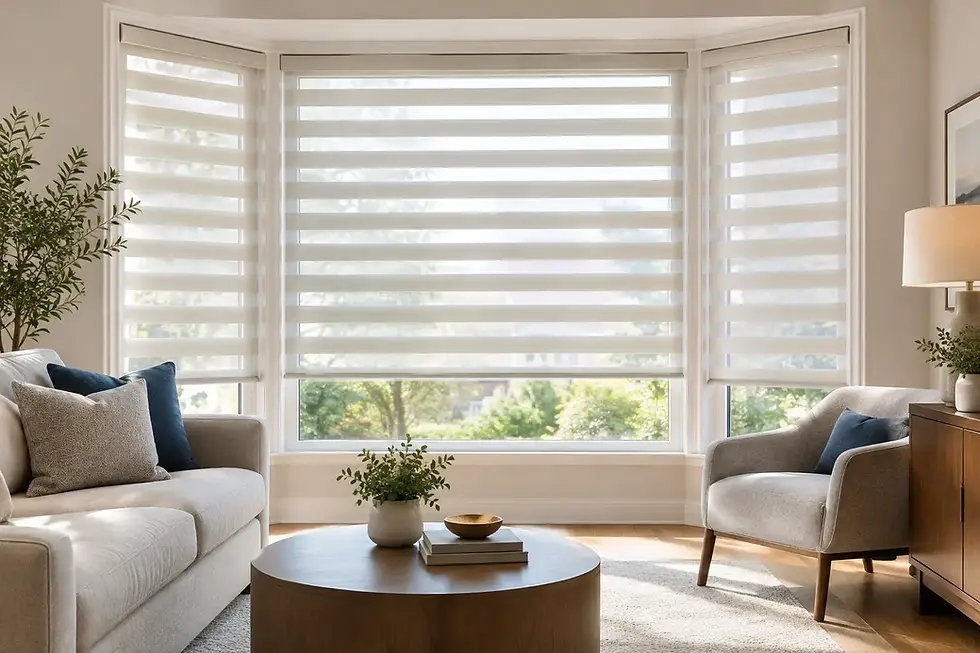
This is where layering earns its place. Drapery paired with roller shades, zebra blinds, or sunscreen shades gives a room more control throughout the day. The shade handles practical privacy and glare management, while the drapery adds scale, texture, insulation, and a more complete design. It is particularly useful on wide windows or patio doors, where a single treatment may not provide every function you need.
There is a trade-off. Layering creates a richer result, but it requires accurate measurements so treatments operate freely and do not compete for space. A professional consultation can identify the right projection, mounting position, and fabric weight before anything is made.
Drapery Styling Guide: Choose the Right Length
Length is one of the fastest ways to tell whether drapery looks custom. Panels that stop noticeably above the floor can make a room feel unfinished unless they are intentionally sized for a radiator, built-in cabinet, or another physical obstruction.
For most residential rooms, drapery should either just touch the floor or hover about 1 centimetre above it. This clean break is practical for everyday use, especially in high-traffic spaces or homes with pets. It also suits contemporary interiors, condos, and rooms where a crisp tailored line matters.
A slight puddle, usually 2 to 5 centimetres of fabric resting on the floor, creates a more relaxed and traditional look. It can work beautifully in a formal bedroom or sitting room, but it is less convenient where panels are opened often or where floors are cleaned frequently. Larger puddles are highly decorative and generally better reserved for low-traffic spaces.
The rod height matters as much as the panel length. Mounting hardware close to the ceiling, rather than directly above the window frame, draws the eye upward and makes the room feel taller. A wider rod also allows panels to sit beyond the glass when open, preserving more of the view and bringing additional daylight into the room.
Fullness Is What Makes Drapery Look Expensive
A common mistake is ordering panels based only on the width of the window. Drapery is not meant to lie flat when closed. It needs enough fabric to form consistent folds and retain a full appearance.
The right fullness depends on fabric and heading style. Sheer fabrics typically require more fullness because they are translucent and need extra volume to look substantial. Heavier linens, textured woven fabrics, and lined drapery can use slightly less, though they still need enough width for the folds to hold their shape.
As a general design principle, wider windows need panels that look generous even when fully closed. Saving fabric in this area may reduce the upfront cost, but it often produces a result that feels sparse. Made-to-measure drapery avoids the compromise of trying to force standard panels onto a window that does not match standard dimensions.
Select a Heading That Fits the Home
The heading is the top construction of the drapery and has a major effect on the finished look. Wave drapery creates even, continuous folds and works well in modern homes, open-concept spaces, and wide expanses of glass. Its clean profile also makes it a strong option for motorization.
Pinch pleats have more structure and a classic tailored appearance. They suit formal rooms, traditional interiors, and spaces where the drapery is intended to be a focal point. Grommet panels are casual and easy to operate, but the visible hardware and broader folds make them less refined than a custom wave or pleated heading.
The best choice depends on the architecture, furniture, and how often the drapery will move. A panel that stays mostly decorative can prioritize appearance. Panels used every day should also be easy to draw, stack neatly, and clear the window opening.
Choose Fabric for Light, Privacy, and Durability
Fabric affects more than colour. It determines how drapery hangs, filters light, blocks views, insulates the room, and holds up over time.
Sheers are ideal when the goal is soft daylight and daytime privacy. They diffuse direct sun and reduce the hard edges that bare windows can create, but they do not offer complete privacy after dark when interior lights are on. For that reason, sheers work especially well as the front layer in a double-track system.
Linen-look fabrics bring texture and warmth, though their weave can allow varying levels of light through. Velvet and heavier textured fabrics create depth and help provide a more formal, insulated feel. Lined drapery offers stronger privacy, better room darkening, and added protection for the face fabric from sun exposure.
Colour should support the room rather than compete with it. A tone close to the wall colour can make the room feel calm and expansive. A deeper contrast can frame the window and add character, particularly in rooms with neutral walls and simple furnishings. Patterned drapery can be effective, but it should be chosen with care when the room already includes bold rugs, upholstery, or artwork.
Hardware Should Support the Design
Hardware is not an afterthought. The rod, track, brackets, and finials influence how the drapery operates and how polished it looks.
A decorative rod can suit an exposed, traditional look, particularly with pleated panels. A discreet track is often the better choice for wave drapery, ceiling-mounted installations, and layered treatments. Tracks can also be curved around bay windows or configured for wide patio doors, giving larger openings a cleaner, more continuous appearance.
For wide or heavy drapery, proper support is essential. Hardware must be specified for the fabric weight and window span, with brackets positioned to prevent sagging. This is one of the practical details that separates a tailored installation from a solution that looks good only on the first day.
Motorization is worth considering for tall windows, hard-to-reach locations, and large panels that are opened and closed daily. It adds convenience, but it also helps maintain consistent use of privacy and light-control settings. For bedrooms, it can make a layered treatment easier to use rather than leaving one layer permanently in place.
Plan Around Obstacles Before Fabric Is Ordered
Window cranks, baseboard heaters, radiators, built-ins, air vents, and furniture placement all affect the final design. A drapery panel may need to sit farther forward to clear a projecting handle, or it may require a special mounting solution where ceiling bulkheads limit available height.
Patio doors deserve particular attention. The stack of open panels must not block the usable doorway, and the treatment must glide smoothly enough that it will actually be used. In a dining area, drapery behind chairs may look elegant but can become inconvenient if the chairs constantly catch the fabric. Good styling accounts for daily living, not only the first impression.
Accurate in-home measuring prevents these issues from becoming expensive surprises. Millhaus Blinds combines custom-made drapery with professional installation, so the fabric, fullness, hardware, and final placement are planned as one complete treatment rather than separate purchases.
Give the Window Room to Make an Impact
Drapery works best when it is treated as part of the room's architecture. Mount it high, make it wide enough, choose fabric that serves the space, and avoid under-sizing the fullness. Those choices create the calm, finished feeling people notice even when they cannot immediately identify why the room looks better.
If you are updating one window or planning a whole home, begin with a measured consultation and let the practical details guide the style. The most successful drapery is not simply attractive fabric at a window - it is a tailored layer that makes the room more comfortable to live in every day.


Comments