
Smart Shading Trends for Better Everyday Living
A west-facing living room can look completely different at 4 p.m. than it does at breakfast. The glare shifts across the floor, screens become hard to see, and a room that felt open suddenly needs privacy. That practical reality is driving today’s smart shading trends: homeowners want window coverings that respond to how they actually live, not just how a room looks in a showroom.
For homeowners and condo owners in Aurora, smart shading is increasingly about making everyday routines easier. Motorized control, better light-filtering fabrics, layered treatments, and energy-conscious materials can all improve comfort without making a space feel overdesigned. The right choice depends on window direction, room use, privacy needs, and the level of control you want.
Smart shading trends are becoming more practical
The biggest shift is not simply that more blinds have motors. It is that automation is being paired with purposeful fabric selection and custom fitting. A motorized shade is useful, but it becomes far more valuable when the opacity, colour, roller mechanism, and mounting style have been chosen for the window and the room.
Homeowners are moving away from one-size-fits-all window coverings. A media room may need blackout blinds for a clear daytime viewing experience, while a kitchen benefits from sunscreen blinds that soften harsh sunlight without blocking the outdoor view. Bedrooms often need dependable privacy at night, and a home office needs glare control that still allows natural light to do its job.
This is why made-to-measure shading matters. Standard sizes can leave light gaps, interfere with trim, or look undersized on large windows. Custom blinds allow for accurate measurements, a more finished appearance, and performance that matches the way the space is used.
Motorization is now a comfort feature
Motorized blinds have become one of the most requested upgrades because they solve small daily inconveniences. Large or high windows become easy to control. A row of shades can move together rather than one at a time. In bedrooms, shades can be scheduled to raise in the morning or lower before bedtime.
For condos, motorization also brings a clean look to expansive glass. There are fewer visible cords, and residents can manage hard-to-reach windows without furniture or ladders getting in the way. For families, cordless motorized operation can also be a more considered choice around children and pets.
Still, motorization is not automatically necessary for every window. A manually operated roller shade may be the sensible choice for a small guest room window that is rarely adjusted. The best plan often combines motorized treatments in high-use or difficult-to-reach areas with manual options where simplicity is enough.
Better daylight control without closing off the room
The old choice between bright daylight and closed blinds is fading. Current shading options give homeowners more control over glare, UV exposure, and privacy while preserving a connection to the outdoors.
Sunscreen blinds are a strong example. They filter intense sunlight and reduce screen glare while allowing a softened view through the fabric during the day. They work especially well in living rooms, kitchens, and workspaces where full blackout would make the room feel unnecessarily dark.
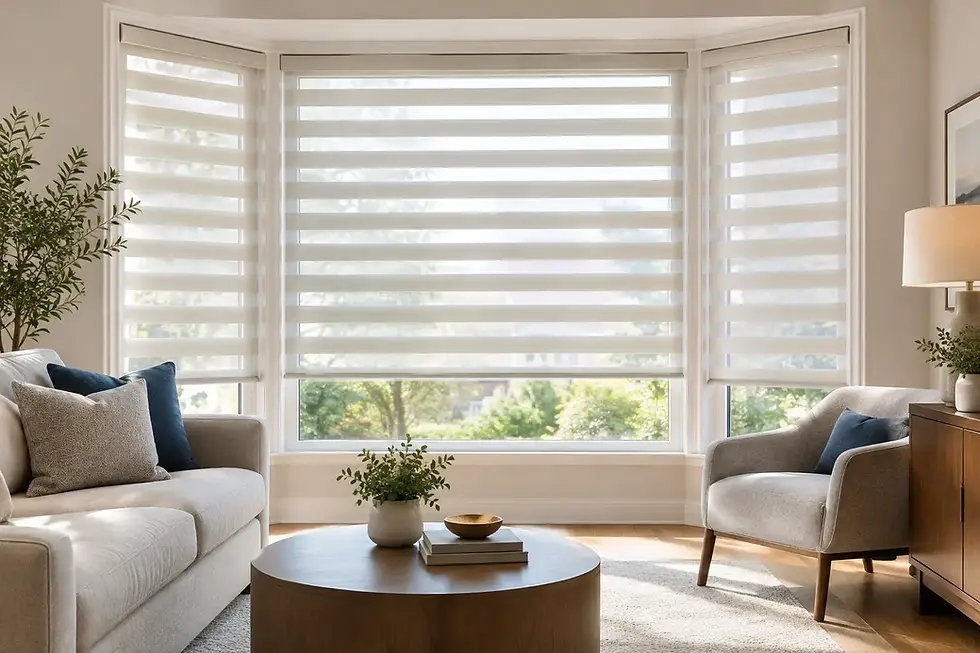
Zebra blinds are another popular choice because their alternating sheer and solid bands make it possible to adjust light levels with precision. They offer a contemporary profile and can shift from filtered daylight to greater privacy without needing a separate treatment.
For rooms with changing needs, layered shading is gaining attention. A sunscreen blind can handle daytime glare, while a blackout blind or drapery layer provides darkness and privacy when needed. This approach adds versatility, although it requires careful planning so the finished treatment does not overwhelm the window or crowd the space.
Blackout is being used more selectively
Blackout blinds remain essential for bedrooms, nurseries, media rooms, and shift workers who need dependable darkness during the day. But smart design means using blackout where it earns its place rather than installing it across every room.
In a main living area, a blackout fabric may feel too heavy when a light-filtering roller shade would provide enough comfort. In a bedroom with streetlights or early sunrise exposure, blackout can be a meaningful quality-of-life upgrade. Side channels, outside mounts, and precise measurements can also reduce the light gaps that often frustrate homeowners.
Energy efficiency is part of the design decision
Window coverings are increasingly being chosen with seasonal comfort in mind. Solar heat through glass can make rooms feel hot in summer, while cold glass surfaces can make a room less inviting during winter. Although blinds are not a replacement for properly insulated windows, the right materials and coverage can help moderate those effects.
Cellular-style constructions, room-darkening fabrics, and well-fitted roller shades can contribute to a more comfortable interior. In sunny rooms, solar fabrics help limit the intensity of direct rays. In colder months, closing treatments at night can add another layer between the room and the glass.
The trade-off is visibility and brightness. A darker or denser fabric generally provides more privacy and light control, but it may reduce the open, airy feeling that made you love the room in the first place. A professional consultation should consider orientation, window size, nearby homes, and how much daylight you want to retain.
Soft finishes are returning alongside clean-lined blinds
Minimal roller shades and zebra blinds remain popular, especially in newer condos and contemporary homes. At the same time, many homeowners are bringing softness back with Roman shades, drapery, and dream curtain blinds. These treatments add texture, improve the visual scale of tall windows, and can make bedrooms and formal living spaces feel more complete.
The current look is less about heavy, complicated layers and more about intentional combinations. A tailored roller shade behind full-length drapery can give a room practical privacy during the day and a warmer, more finished feel in the evening. Neutral fabrics remain a dependable choice, but textured weaves and calm natural tones are replacing flat, purely utilitarian finishes.
For commercial spaces, the same principle applies differently. Offices, clinics, hospitality spaces, and multi-unit developments often prioritize consistent appearance, easy operation, cleanability, and code-conscious materials. Fire retardant and antibacterial blind options can be particularly relevant where performance and maintenance standards matter as much as design.
Smart controls should fit the household, not complicate it
Automation can be as simple or as advanced as you need it to be. Some clients prefer a handheld remote or wall control. Others want shades grouped by room, scheduled around daily routines, or operated from a phone. Both approaches can be effective.
The key is to choose controls that every member of the household will actually use. If a system feels confusing, people will stop using its best features. A straightforward setup with logical room groupings is often more valuable than adding technology for its own sake.
For larger homes and commercial projects, coordinated controls can save time and create a more consistent result across multiple windows. Planning early is helpful when windows are tall, wide, numerous, or located in shared spaces. It allows the treatment design, power requirements, and installation details to be considered together.
Why professional measuring and installation still matter
Smart shading only performs as well as its fit and installation. Even premium fabrics and motors can disappoint if a shade is mounted at the wrong depth, poorly aligned, or selected without considering obstructions such as handles, trim, vents, or doors.
A factory-direct custom provider can simplify that process by connecting consultation, accurate quoting, product selection, and professional installation. Millhaüs Blinds helps homeowners and project buyers select high-end custom treatments with free professional installation, so the finished result is designed around the actual space rather than a generic window size.
For property managers and developers, this coordinated approach also helps maintain consistency across units or shared areas. Matching fabrics, reliable lead times, scalable supply, and installation planning can make a significant difference when several spaces need to be completed to the same standard.
Choose the trend that solves your real window problem
The most useful smart shading trend is the one that makes your room easier to live in. Start with the problem you notice most: afternoon glare, overlooked windows, difficult controls, poor sleep, too much heat, or a space that feels unfinished. From there, the right custom shade, blind, or drapery solution becomes much clearer.
A thoughtful consultation can turn that daily annoyance into a tailored improvement that looks right, operates reliably, and continues to earn its place long after the initial design decision.


Comments