
How to Choose Window Coverings for Every Room
A west-facing living room in Aurora may need to soften intense afternoon sun without losing its view. A bedroom needs dependable darkness, while a street-level office may need privacy all day. That is why learning how to choose window coverings starts with the way each room is actually used, not simply with a colour sample.
The right treatment should look tailored, operate easily, fit accurately, and keep performing through daily use. Custom window coverings make that balance easier because the material, opacity, lift system, mounting style, and measurements can all be selected for the window and the people using the space.
How to Choose Window Coverings by Function First
Before comparing fabrics or finishes, decide what the window covering needs to do. Most homeowners are trying to solve one or more practical concerns: privacy, glare, heat, daylight control, sleep quality, or a cleaner finished look. Commercial and multi-unit projects may also require consistent appearance, fire-retardant materials, durability, and easy operation across many windows.
A good starting point is to rank the room's priorities. In a bedroom, blackout performance may come ahead of view preservation. In a kitchen, a wipeable roller shade may be more practical than full drapery. In a condo living area, the best choice may be a sunscreen blind that reduces glare while maintaining a connection to the city outside.
One product does not need to solve every problem in every room. A home often looks more intentional when treatments are selected room by room, then coordinated through complementary colours, hardware, and fabrics.
Start with privacy and sightlines
Privacy is not simply a choice between open and closed. Consider when privacy matters and where people can see in. Ground-level windows facing a sidewalk need a different approach than a second-storey bedroom overlooking a backyard.
Zebra blinds are a flexible option where homeowners want adjustable privacy and light. Their alternating sheer and solid fabric bands allow the view and light to change throughout the day. For rooms where privacy is non-negotiable, blackout blinds or lined drapery provide stronger coverage.
Sunscreen blinds work well when daytime glare is the main issue. They filter harsh sunlight while preserving an outward view, but they do not provide the same level of nighttime privacy when interior lights are on. This is a worthwhile trade-off in a view-focused room, provided another layer is added where needed.
Decide how much light you want to keep
Natural light makes a room feel larger and more welcoming, but uncontrolled sun can create glare on screens, fade furnishings, and make rooms uncomfortable. The goal is usually not to block every ray of sunlight. It is to control it.
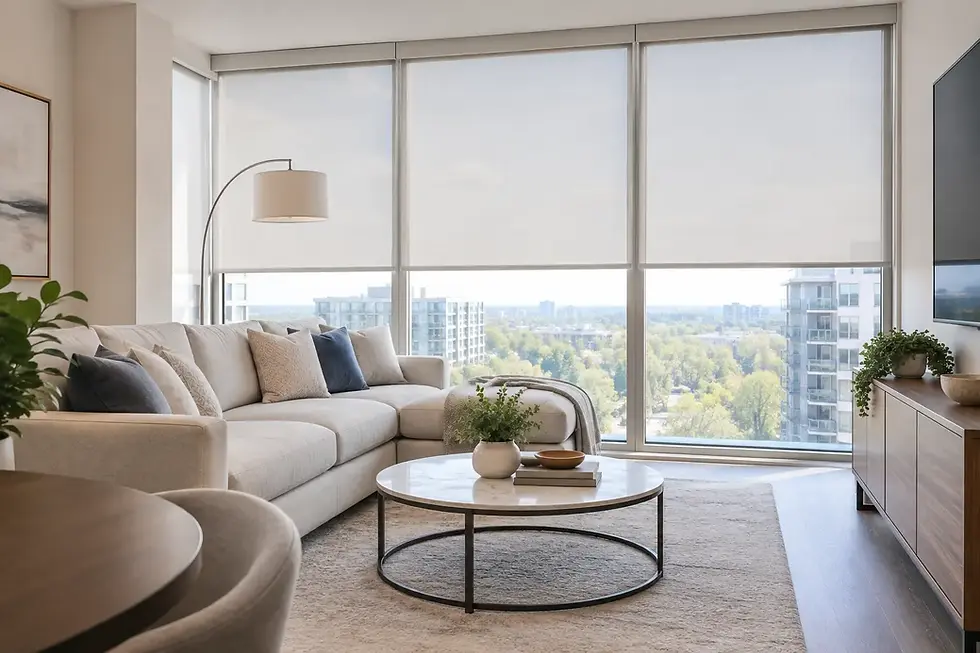
Roller shades offer a clean, modern profile and are available in a broad range of openness levels. A lower openness sunscreen fabric gives more glare reduction and privacy, while a higher openness fabric preserves a clearer view. Silhouette-style treatments create a softer, diffused effect that suits living rooms and dining spaces where the light itself is part of the atmosphere.
For media rooms, nurseries, and bedrooms, blackout materials are the more dependable choice. Remember that a blackout fabric alone cannot eliminate every edge of light. The mounting method, window shape, and side gaps all affect the final result. Accurate measurement and professional installation matter most in rooms where darkness is a priority.
Match the Covering to the Room's Demands
The best window covering for a room should work with its moisture level, traffic, cleaning needs, and furniture layout. A beautiful fabric that is difficult to operate behind a sofa, or a light-filtering blind in a room that requires darkness, will quickly feel like the wrong investment.
Living rooms and open-concept spaces
Living areas benefit from adaptable light control. Zebra blinds, sunscreen blinds, roller shades, and drapery are all strong choices, depending on the style of the room. A sunscreen roller shade can protect finishes and reduce glare during the day, while drapery panels add softness, texture, and stronger evening privacy.
Layering is especially effective in large windows or patio-door areas. A functional shade handles daily light control, while stationary or operable drapery adds visual scale and insulation. This approach costs more than a single treatment, but it delivers a more finished look and greater flexibility.
Bedrooms and nurseries
Sleep spaces need reliable privacy and controlled light. Blackout roller shades are clean and space-efficient, while blackout drapery can improve room darkening and bring warmth to the design. For homeowners who prefer a softer daytime glow, pair a light-filtering shade with room-darkening drapery.
Motorization is particularly useful in bedrooms with high, wide, or hard-to-reach windows. Scheduled operation can lower coverings before bedtime and open them in the morning without cords or manual adjustments.
Kitchens, bathrooms, and high-use areas
In spaces exposed to humidity, splashes, or frequent handling, choose materials that are practical to maintain. Roller shades and certain blind fabrics offer a tidy profile and straightforward care. Avoid selecting a delicate decorative treatment solely for its appearance if it will sit beside a sink, stovetop, or busy family entrance.
For health-conscious homes, antibacterial fabrics can be a smart consideration in high-touch or shared environments. They are also well suited to clinics, childcare spaces, and offices where cleanliness is part of the day-to-day operation.
Condos, offices, and commercial settings
Condo owners often need window coverings that preserve a clean architectural look without overwhelming compact rooms. Roller shades, sunscreen blinds, and motorized options can fit this need well. Before choosing, confirm any condominium rules relating to exterior-facing colours, installation details, and uniform appearance.
For offices, retail spaces, and larger developments, the decision should include performance requirements beyond style. Fire-retardant materials, glare control for monitors, consistent fabric availability, and scalable installation all affect the long-term result. Graphic blinds can also turn windows into a branded surface while maintaining practical light control.
Choose Fabric, Colour, and Opacity with Purpose
Fabric selection changes both the appearance and performance of a treatment. Light-coloured fabrics generally reflect more light and can help a room feel airy. Darker fabrics may add contrast and visual depth, but they can make a small room feel heavier when used across large windows.
Neutral does not have to mean plain. Warm whites, soft greys, sand tones, charcoal, and textured weaves can support changing furniture and paint colours over time. If the room already has strong patterns, a quieter window treatment may give the design room to breathe. If the room is simple, drapery or a textured shade can become the feature.
Opacity deserves as much attention as colour. Sheer fabrics soften daylight but offer limited privacy. Light-filtering fabrics reduce brightness while keeping the room luminous. Room-darkening and blackout options provide more coverage, though the final effect depends on the fit and installation. Seeing material samples against the actual window at different times of day helps prevent surprises.
Consider Energy Efficiency and Daily Operation
Window coverings can support comfort throughout the year. Solar fabrics help manage heat and glare from direct sun, while cellular-style insulating options and layered drapery can help reduce heat loss near windows. The amount of benefit depends on window quality, exposure, and how consistently the coverings are used.
Operation is equally important. A treatment that is difficult to reach or inconvenient to adjust may stay in one position, limiting its value. Motorized blinds are a practical upgrade for large banks of windows, tall stairwell windows, condos, and rooms with changing sun conditions. They offer clean operation with no dangling cords and can be grouped for consistent movement.
Manual systems remain an excellent value where windows are easily accessible and the homeowner prefers straightforward control. The right choice depends on the number of windows, the layout, and how often each covering will be adjusted.
Why Custom Measurement Changes the Result
Off-the-shelf coverings can appear economical at first, but standard sizes often leave gaps, sit unevenly, or fail to suit unusual window dimensions. Custom-made window coverings are measured for the opening, mounting surface, trim, and clearance around handles or doors. That precision affects privacy, light control, and appearance.
Professional installation also helps ensure the treatment operates properly from day one. For a large project or a single statement window, accurate quoting should account for the fabric, system, installation conditions, and the performance you expect. Factory-direct custom service can reduce unnecessary retail markups while keeping product selection and installation under one accountable team.
Millhaüs Blinds helps homeowners, condo owners, and commercial buyers compare premium options with practical requirements in mind, then provides free professional installation for a worry-free finish.
Bring photos of the room, note the direction each window faces, and be clear about what frustrates you now - glare, lack of privacy, difficult access, or unfinished style. A tailored consultation turns those details into a window-covering plan that feels right every time you use the room.


Comments