
Guide to Layered Window Treatments for Homes
A bright room can feel exposed by noon, then too dark once the sun drops. That is the practical problem a guide to layered window treatments should solve. Rather than asking one blind or curtain to handle every job, layering combines coverings so you can manage daylight, privacy, insulation, and style at different times of day.
For homeowners, condo owners, and property managers, the result is a window treatment that works harder without making the room feel busy. A sunscreen shade can soften glare while preserving a view. Drapery can add warmth and a more finished look. A blackout liner or blackout blind can take over when sleep, media viewing, or complete privacy matters most.
What layered window treatments actually do
Layered window treatments use two or more coordinated coverings at one window. Usually, one layer provides daily light control and privacy, while the second layer adds softness, room-darkening performance, insulation, or a decorative finish.
The most common approach is a tailored blind or shade installed close to the glass, paired with drapery or curtains mounted above and outside the window opening. This arrangement keeps the functional layer easy to operate while allowing the fabric layer to frame the window and cover light gaps at the sides.
Layering is not simply about adding fabric. Each layer should have a clear purpose. If both coverings perform the same job, the window may look heavy and cost more than necessary. The best combinations divide responsibilities: filtered daylight during the day, privacy in the evening, and stronger darkness or warmth when needed.
Start with how the room is used
Before choosing colours or fabric, look at the room at the hours you actually use it. A south-facing living room, for example, has different demands than a north-facing bedroom. Large windows can bring beautiful light, but they can also create screen glare, fading on floors and furniture, and uncomfortable heat.
In an Aurora family room with wide patio doors, a sunscreen roller shade may be the everyday layer because it filters sunlight without closing off the backyard. Full-height drapery can then provide evening privacy and a polished architectural finish. In a bedroom, the priority may shift to a blackout blind with decorative drapery, especially if outdoor lighting or early summer sun affects sleep.
Condo windows deserve the same careful thinking. Floor-to-ceiling glass often needs daytime glare control, but residents may not want to lose the city view. A light-filtering roller shade or zebra blind paired with stationary drapery panels can offer a clean, tailored answer without crowding the room.
Questions worth answering before you select materials
Think about whether you need privacy during the day, at night, or both. Consider how much direct sun enters the room, whether there are screens or televisions nearby, and how often the covering will be raised and lowered. Also account for window depth, door handles, heating vents, and furniture placement.
These details determine whether a slim roller shade, zebra blind, Roman shade, or another style is the better first layer. They also affect drapery fullness, track placement, and how far the finished treatment should extend beyond the glass.
The strongest layered combinations
A roller shade and drapery pairing is one of the most versatile options. Roller shades have a neat profile and can be specified in sunscreen, light-filtering, or blackout materials. The shade handles the daily function; the drapery contributes texture, sound softness, and a high-end finished appearance. This is particularly effective in living rooms, dining areas, and open-concept spaces.
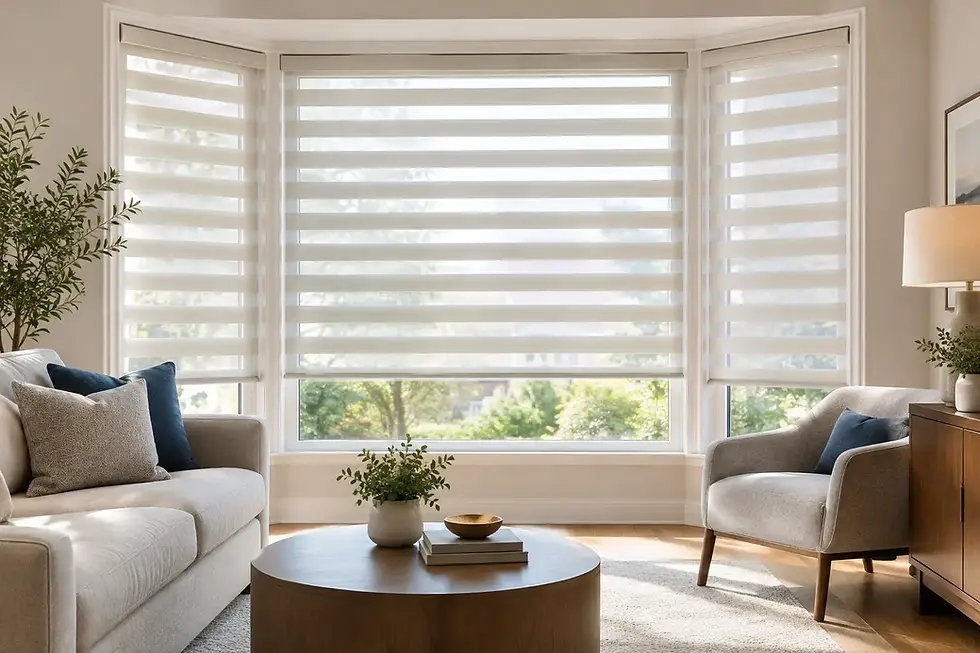
Zebra blinds with drapery work well when you want flexible light control without a bulky look. Their alternating sheer and opaque bands allow a quick adjustment between filtered daylight and more privacy. Adding drapery makes the window feel more substantial and helps create stronger nighttime coverage when the panels are closed.
Blackout blinds with curtains are a practical choice for bedrooms, nurseries, media rooms, and shift workers. It is worth setting expectations correctly: blackout fabric reduces light through the material, but side gaps around an inside-mounted shade can still allow a glow into the room. Well-planned drapery installed wide and high can reduce those gaps considerably. For clients who need the darkest possible room, accurate measuring and mounting choices matter as much as the fabric itself.
Roman shades and drapery create a softer, more traditional layered look. This combination suits formal dining rooms, primary bedrooms, and homes where fabric is central to the interior design. The trade-off is that fabric shades generally have more visual presence than roller products, so they need careful coordination with the drapery pattern, texture, and fullness.
Silhouette-style shades can be a refined daytime layer in rooms where diffused light is the goal. Their soft vanes and sheer panels create an elegant effect, while side panels or full drapery can provide a stronger evening statement. Because these shades are visually distinctive, neutral drapery often produces the most balanced result.
Choose the order of performance first
A successful design starts with the layer closest to the window. This is usually the layer that controls solar gain, glare, and the first level of privacy. Sunscreen blinds are useful where daylight and views matter, but they are not designed to provide total nighttime privacy when interior lights are on. In that situation, a second layer is not an indulgence. It is the part of the plan that makes the room usable after dark.
If privacy is the main concern, a light-filtering shade can be more appropriate for daytime use. If darkness is the priority, begin with a blackout option. Once that functional decision is made, select drapery that supports the look and coverage you want.
Colour should also follow performance. Pale fabrics and light neutral shades can keep a room open and calm, especially around smaller windows. Darker drapery can add contrast and visual depth, though it may feel more dominant in a compact condo or a room with low ceilings. Texture is often a safer way to add richness than a strong print, particularly when the window is already a focal point.
Measure for a tailored, not crowded, result
Layered treatments require more planning than a single blind. The first question is whether the shade should be mounted inside the window opening or outside it. An inside mount can look clean and compact, but it requires sufficient depth and may leave small side gaps. An outside mount can offer broader coverage and can visually enlarge a narrow window, though it needs enough wall space around the opening.
Drapery is typically mounted above the window and extended beyond each side. This helps the panels sit mostly off the glass when open, preserving daylight and the view. It also makes the window look taller and wider. The exact projection from the wall must account for the first layer, so fabric does not catch on the shade or sit awkwardly in front of it.
This is where professional consultation has real value. A treatment that looks excellent in a showroom can perform poorly if the bracket placement, track depth, panel width, or fabric weight is wrong for the window. Precise measurement and tailored installation prevent the common frustrations of uneven hems, blocked handles, incomplete coverage, and difficult operation.
Motorization makes layering easier to use
Two layers only help if people actually use them. Motorized blinds are especially useful for high windows, large banks of glass, and hard-to-reach areas behind furniture. They also simplify daily routines. The sunscreen shade can lower in the afternoon to reduce glare, then raise when the light becomes softer.
Motorization does not have to mean every layer moves automatically. Many homeowners choose a motorized functional shade and stationary decorative drapery panels. Others prefer motorized drapery tracks for large patio doors or formal rooms. The right choice depends on how frequently each layer needs to change and whether convenience, accessibility, or a clean cord-free finish is the main goal.
For commercial spaces, shared rooms, and rental properties, simple durable operation is often more valuable than complex controls. A well-specified system should match the daily demands of the space, not add unnecessary features.
Plan the budget around the layers that matter most
Layered window treatments can be a premium upgrade, but the best investment is not always the most elaborate combination. Put the budget first toward the functions that affect daily comfort: accurate fit, quality operating components, the right opacity, and professional installation. Decorative details can then be adjusted through fabric selection, panel style, or hardware.
Factory-direct custom blinds and shades can make this approach more practical by reducing the retail markup that often comes between a homeowner and a made-to-measure solution. At Millhaüs Blinds, the consultation considers the full window assembly, so the blind, shade, drapery, and installation plan are designed to work together rather than being selected in isolation.
For an entire home, it may make sense to layer only the rooms where it delivers the greatest benefit. Bedrooms may need blackout performance, while main living areas may benefit from sunscreen shades and drapery. Secondary rooms can remain simpler without compromising the overall design.
The right layered treatment should feel easy once it is in place. It should welcome daylight when you want it, create privacy when you need it, and make the room feel considered rather than overdone. Start with the way you live in the space, then let each layer earn its place at the window.


Comments