
Direct Blinds Versus Showroom Blinds Compared
A window covering can look impressive on a showroom display and still be the wrong choice for the window in front of you. That is the real issue in the direct blinds versus showroom blinds decision. Homeowners and condo owners want a polished result, dependable privacy, and light control that works every day - not a product that looked good under retail lighting but feels like a compromise once it is installed.
For buyers in Vaughan, the choice often comes down to control. Do you want to select from a retailer's available range and process, or work directly with a custom blind provider that can assess the space, tailor the product, and complete professional installation? Both paths can produce attractive window treatments. The better value depends on how much customization, guidance, and accountability your project requires.
Direct Blinds Versus Showroom Blinds: The Core Difference
A showroom typically acts as a retail layer between the buyer and the manufacturer. It may offer many samples, established brands, and a convenient place to compare colours in person. The retailer may also arrange measuring and installation, but those services can be handled through separate channels, with separate markups and varying responsibility at each step.
Buying direct brings the consultation, made-to-measure product selection, production coordination, and installation process closer together. Instead of choosing from a display first and sorting out the practical details later, the decision is shaped around the actual windows, room use, décor, and performance needs from the beginning.
That difference matters most when the project is more involved than one standard window. Wide patio doors, large living-room windows, bay windows, condo glazing, and rooms requiring blackout performance all benefit from accurate planning. So do commercial spaces where consistency, fire-retardant options, hygiene considerations, and repeatable specifications can matter as much as appearance.
Price Is About More Than the Sticker
Showroom blinds are not automatically overpriced, and factory-direct blinds are not automatically the least expensive option in every situation. A ready-made blind in a common size may be a sensible purchase when the goal is a quick, temporary solution. But comparing only the first quoted price can hide meaningful differences.
A showroom price may reflect retail overhead, brand positioning, sales commissions, sample displays, and the additional handling involved in passing an order through the supply chain. Installation, upgraded fabrics, special brackets, motorization, and measurements may appear as separate costs. Buyers should ask what is included before comparing one quote to another.
With a direct custom provider, factory-direct pricing can reduce the layers between product and customer. More importantly, the quote can be built around the completed result: the selected material, custom dimensions, operating system, and installation. That makes it easier to judge value rather than trying to combine a base product price with a list of later additions.
Millhaüs Blinds pairs premium custom window coverings with free professional installation, helping clients focus on the finished room rather than coordinating multiple suppliers. The objective is not to choose the lowest-cost blind at any cost. It is to select durable quality and practical performance without paying for unnecessary retail layers.
Custom Fit Changes How Blinds Perform
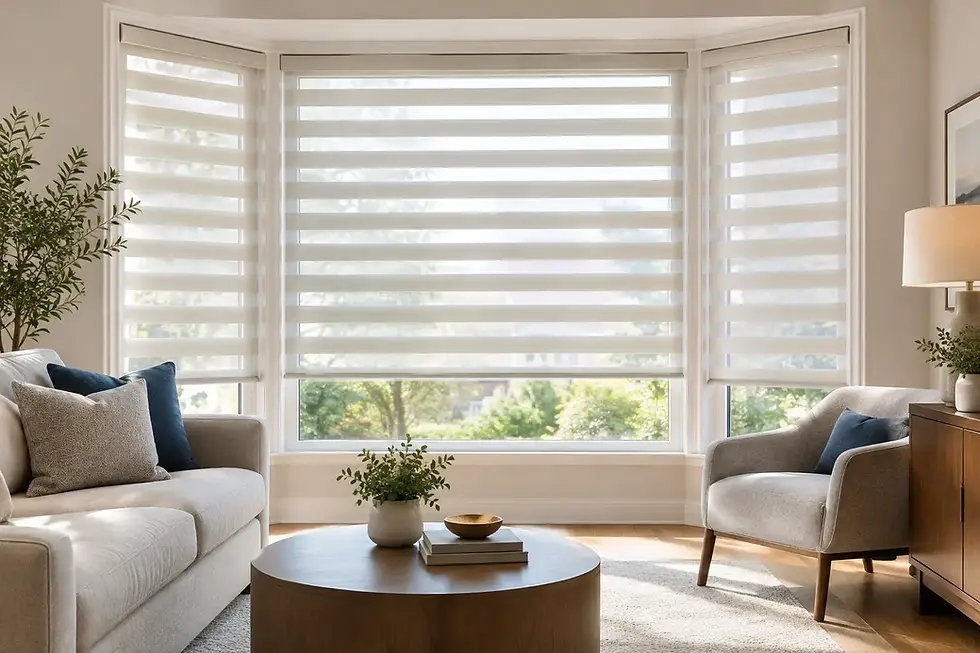
A few millimetres can affect the look and function of window coverings. An inside-mounted roller shade needs enough clearance to operate cleanly. A blackout blind needs thoughtful overlap and placement to reduce unwanted light at the edges. Zebra blinds need careful alignment so the alternating fabric bands sit evenly. Motorized blinds require a plan for controls, power, and how the shades will be used daily.
Showrooms can certainly offer custom ordering, but the experience varies. Some rely on customer-provided measurements or outsource the site visit after the sale. That approach can work for straightforward windows, although it leaves more room for disconnects between the sample selection, measurement decisions, and final installation.
A direct consultation starts with the window itself. The installer can assess depth, trim, obstructions, sill clearance, door handles, and nearby furniture. They can also discuss whether a sunscreen blind will provide the daytime glare control needed, whether a blackout shade suits a bedroom, or whether drapery will add the softness and coverage the room is missing.
This is especially useful in condos, where window shapes, limited wall space, and close neighbouring buildings can create privacy challenges. A tailored plan lets a homeowner balance view preservation with daytime privacy and evening coverage rather than accepting a one-size approach.
Samples Matter, but the Home Matters More
Showrooms have an obvious advantage: buyers can touch fabrics, compare colours, and see operating styles side by side. That is valuable. Fabric texture, openness level, and the difference between a warm white and a cool white are easier to understand in person than on a screen.
Still, samples need to be evaluated in the room where they will live. A fabric that appears neutral under store lighting may look cooler in a north-facing bedroom or warmer against oak flooring. A dark roller shade may provide drama in a showroom but make a compact office feel more enclosed. The amount and direction of daylight can change the appearance of every option.
A direct in-home consultation brings samples to the real environment. It allows decisions to be tested against wall colour, flooring, furniture, exterior exposure, and the intensity of the sun at that window. For homeowners who are selecting several treatments across an entire house, this creates a more coordinated result than making isolated decisions at a retail counter.
When a Showroom May Be the Right Choice
The showroom route can make sense when you are early in a renovation and want broad visual inspiration, or when you already know the precise brand and model you want. It can also suit shoppers who enjoy visiting several stores, comparing displays, and managing the remaining steps themselves.
For a simple, standard-sized window where premium fit and specialized performance are not priorities, a retail option may meet the need. The key is to confirm who measures, who installs, what happens if the specification is not right, and whether the quoted price includes all required components.
The risk is not the showroom itself. The risk is assuming that a polished retail experience guarantees a complete service experience. Ask direct questions about lead times, installation responsibility, warranty support, and final costs before committing.
When Buying Direct Delivers Better Value
Direct blinds are often the stronger choice when the goal is a finished, made-to-measure solution with fewer handoffs. This is particularly true for homeowners selecting premium roller shades, Roman shades, silhouette blinds, zebra blinds, curtains, or motorized systems that must work together across multiple rooms.
It also makes sense when performance is central to the purchase. Blackout treatments for sleep, sunscreen fabrics for glare and UV management, antibacterial materials for care-focused environments, and fire-retardant blinds for commercial applications should be chosen with the setting and installation details in mind.
Property managers, developers, and commercial buyers can benefit from the same direct relationship on a larger scale. A controlled supply and installation process helps maintain consistency across suites, common areas, offices, retail spaces, or phased projects. Rather than trying to match products through different retail channels, the buyer can work from an agreed specification and a clear installation plan.
Questions That Lead to a Better Decision
Before choosing either route, ask whether the quote includes measuring, custom production, delivery, hardware, installation, and taxes. Ask what fabric options are available for privacy, heat management, and light filtering. Ask who will be responsible for the final fit and how the chosen product will perform on your particular windows.
Then consider how long you expect to live or work with the result. A blind is used repeatedly, often several times a day. Smooth operation, clean alignment, dependable materials, and the right level of privacy can make a noticeable difference long after the initial purchase has faded from memory.
The best choice is the one that gives you confidence before the order is placed. Bring your window dimensions, room photos, and practical goals to a professional consultation, then choose the option that delivers a tailored fit, transparent quote, and window coverings you will be glad to use every day.


Comments