
Condo Covering Guide for Privacy and Light
Floor-to-ceiling glass is one of the best features of condo living, until the afternoon sun hits the television, nearby suites look straight in, or a bedroom stays bright long after bedtime. This condo covering guide helps Vaughan condo owners choose window treatments that suit compact spaces, condominium rules, daily routines, and the view they paid for.
The right covering is not simply a finishing touch. It controls glare, protects furnishings from harsh sunlight, improves daytime privacy, and gives a room a more considered look. The best choice depends on how each window faces, what happens in the room, and whether preserving a clear view matters more than complete darkness.
Start with the realities of condo windows
Condo windows ask more of a window covering than most detached-home windows. They are often wider, taller, closer to neighbouring buildings, and exposed to stronger sun at certain times of day. A treatment that looks good in a showroom can feel too bulky in a living room with limited wall space or interfere with access to a balcony door.
Before choosing a fabric or colour, consider the window's orientation. East-facing suites usually need soft morning light control. West-facing units often need stronger glare reduction and solar protection later in the day. South-facing glass may benefit from sunscreen fabrics that filter daylight while helping reduce heat gain. North-facing rooms can usually prioritize privacy and appearance, since intense direct sun is less of a concern.
Also look at where the window sits within the room. A living area may need a view-friendly fabric during the day, while the bedroom needs true blackout performance. One product does not always need to solve every need. Layering a practical blind with drapery can provide more flexibility where the layout and budget allow it.
Condo covering guide: match the product to the room
Custom-made coverings are especially valuable in condos because window sizes and ceiling heights can vary significantly, even within the same building. Accurate fitting keeps the finish clean, reduces distracting light gaps, and ensures the treatment operates properly around window handles, balcony doors, and adjacent walls.
Roller shades for a clean, modern finish
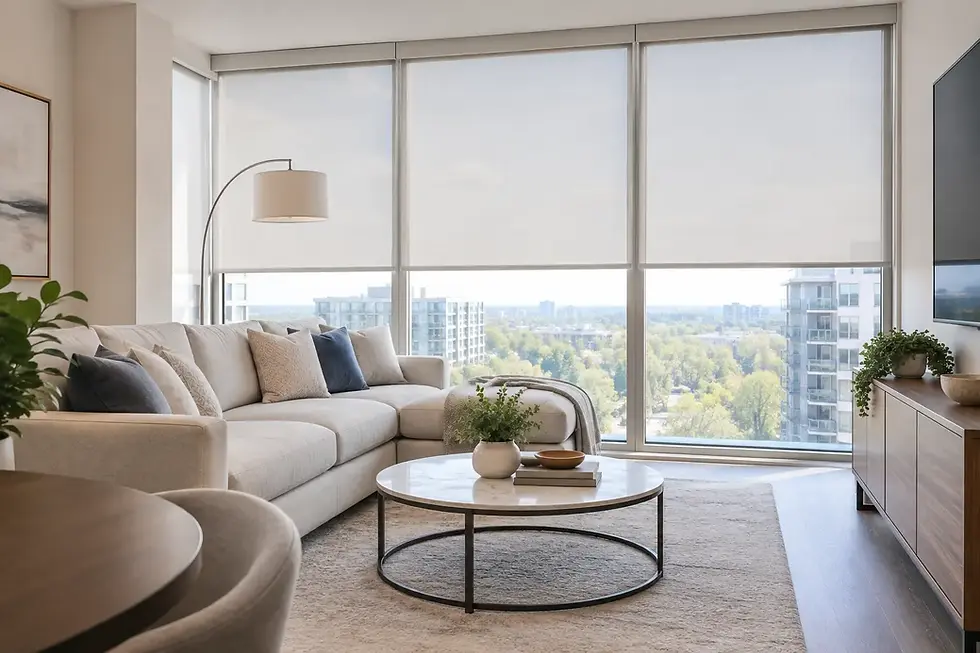
Roller shades are a strong choice for contemporary condo interiors. Their simple profile suits large glass expanses, and they stack neatly when raised. Available in many fabrics and openness levels, they can be selected for filtered daylight, privacy, or room-darkening performance.
Sunscreen roller shades are useful in main living spaces with a desirable view. The fabric filters glare and UV exposure while maintaining a degree of outward visibility during daylight hours. Openness matters: a higher openness factor generally offers a clearer view but less privacy and less light filtering, while a tighter weave provides stronger coverage.
For bedrooms, blackout roller shades create better sleep conditions, particularly when paired with properly fitted side coverage and a fascia or cassette where appropriate. No shade is identical in every installation, so discussing potential edge light during a consultation helps set the right expectation.
Zebra blinds for adjustable daylight
Zebra blinds offer a practical middle ground between an open shade and a privacy blind. Alternating sheer and solid fabric bands can be aligned to let in filtered light or adjusted for greater coverage. They suit condo owners who want more control during the day without making the room feel closed off.
They work particularly well in living rooms, home offices, and kitchens where conditions change throughout the day. The trade-off is that zebra blinds have a more defined visual presence than a minimalist roller shade. For a quiet, architectural look, roller shades may be the better fit. For adaptable light control, zebra blinds are hard to beat.
Drapery and curtains for softness and depth
Drapery adds warmth to the hard surfaces common in condominium interiors: glass, concrete, stone, and engineered flooring. It can make a bedroom feel more restful or give an open-concept living area a more finished, high-end character.
Sheer drapery is ideal when the goal is to soften daylight while retaining an airy feel. Lined drapery provides greater privacy and can support better light control. For the most versatile setup, many owners pair a sunscreen or blackout blind with decorative drapery. The blind handles the practical work, while the drapery adds texture, colour, and visual scale.
In a compact suite, fabric selection matters. Lighter fabrics and ceiling-mounted tracks can make the room feel taller. Heavier fabrics can look exceptional in larger units but may overwhelm a small den if they are too dark or too full.
Privacy changes from day to night
A common mistake is choosing a window covering based only on how it performs in daylight. During the day, a sunscreen fabric may give useful privacy because outdoor light is stronger than interior light. At night, that relationship reverses. With lights on inside, silhouettes and room details can become visible from outside.
For bedrooms and street-facing or closely overlooked windows, choose a treatment with reliable night privacy. Blackout shades, opaque roller fabrics, closed zebra blinds, or lined drapery are all worthwhile options depending on the desired appearance. If privacy is a priority but you still want daytime light, a layered approach offers the most control.
Bathrooms and home offices deserve particular attention. A bathroom covering should provide immediate coverage without making the small room feel confined. In a home office, glare control is often more important than full darkness. A sunscreen blind may keep a monitor usable and preserve daylight better than an opaque fabric.
Think about balcony doors and daily use
Balcony access should shape the product selection. A covering that looks excellent but is inconvenient to operate will quickly become frustrating. Roller shades and zebra blinds can work well when installed and sized correctly around a door, while drapery on a smooth track can create a polished solution for wider sliding doors.
Consider how often the door is used, where the handle sits, and whether furniture limits access. A professional measurement identifies these details before production, rather than leaving them to chance after the covering arrives.
Motorization is also worth considering for tall windows, wide banks of glass, or hard-to-reach locations. With motorized blinds, owners can manage sunlight and privacy at the touch of a button, on a schedule, or through compatible smart-home controls. It is a convenience upgrade, but it can also help protect flooring and furnishings by making daily solar control easier to maintain.
Choose fabrics that work as hard as they look
Colour and texture influence the entire room, but performance should lead the decision. A pale fabric often keeps a room feeling open, while darker fabrics can provide more visual definition and may reduce perceived glare. That said, fabric colour alone does not determine privacy or blackout capability. The backing, weave, opacity, and installation method all matter.
For a condo exposed to strong afternoon sun, prioritize fabrics designed for solar management. They can reduce glare and help moderate heat near the window, which may improve comfort during warmer months. For bedrooms, ask for a true blackout fabric if darkness is the goal. Light-filtering fabrics create a pleasant glow, but they will not produce the same sleeping conditions.
For households with children, pets, or frequent entertaining, durable, easy-care materials are a sensible investment. Premium custom coverings should continue looking sharp through normal daily use, not only on installation day.
Why professional measuring and installation matter
Condo windows can look uniform but still have subtle differences in width, depth, frame clearance, and surrounding obstructions. Small inaccuracies become noticeable on large glass surfaces. They can create uneven gaps, limit operation, or leave a treatment sitting awkwardly against the ceiling or wall.
A tailored consultation brings the design and technical sides together. The right provider reviews your window dimensions, sun exposure, privacy concerns, mounting options, and preferred style before recommending products. Factory-direct custom production also helps keep quality and pricing under closer control than a standard retail purchase.
Millhaüs Blinds provides made-to-measure premium blinds, shades, drapery, and curtains with free professional installation, giving condo owners a straightforward route from consultation to a clean final fit. Whether you are furnishing a new Vaughan suite or updating a long-loved home, accurate quoting and experienced installation make the process far more worry-free.
Make the decision room by room
Rather than choosing one covering for every window, build a plan around how you live. Start with the spaces where poor light control or lack of privacy affects you most. Bedrooms may call for blackout shades, living rooms may benefit from sunscreen or zebra blinds, and a dining area may be the right place for drapery that brings the design together.
Bring photos of your windows, note when sun enters each room, and consider how you use the space after dark. A well-chosen condo covering should make the view better when you want it, disappear when you do not need it, and give you comfort and privacy without asking you to compromise on style.


Comments