
Best Shades for West Windows That Beat Afternoon Sun
At 4 p.m., a west-facing window can turn a comfortable room into the warmest spot in the house. The best shades for west windows do more than make a room look finished. They reduce harsh glare, manage solar heat, protect furnishings, and let you keep the view or privacy you want when the afternoon light is strongest.
For homeowners in Aurora, this decision often comes down to how the room is used. A west-facing family room may need filtered daylight without television glare. A bedroom may need dependable blackout performance. A condo living area may need compact, motorized shades that work with large glass panels. The right choice is rarely just about colour. Fabric openness, opacity, fit, and how the shade operates all matter.
What West-Facing Windows Need From a Shade
West sun is low, direct, and intense later in the day. Unlike overhead midday light, it enters at an angle that can shine directly into seating areas, workspaces, and screens. It also creates a more noticeable heat gain at the time many people arrive home.
A well-chosen window treatment should address three separate issues: solar heat, glare, and privacy. Some products are excellent at one but less effective at another. For example, a light-filtering roller shade can soften brightness beautifully, but it will not create the darkness needed for a nursery or media room. A blackout shade offers much stronger light control, but may block a valued view during the day.
The most effective approach is to decide which concern has the highest priority in that room, then customize the fabric and operating style around it. Made-to-measure sizing is especially valuable on west windows because gaps at the sides can allow concentrated strips of sunlight to enter.
Best Shades for West Windows: Top Choices by Need
Sunscreen roller shades for view and daytime glare control
Sunscreen blinds are often the strongest all-around option for west-facing living rooms, kitchens, offices, and open-concept spaces. Their technical fabrics filter direct sunlight while maintaining an outward view in daylight. This makes them a practical answer when you want to cut the glare on a television, computer, or dining table without making the room feel closed in.
The key specification is openness factor. A lower openness factor generally provides greater sun filtering and privacy, while a higher openness factor preserves more of the view and lets in more light. For a window that receives intense afternoon exposure, a tighter fabric is usually the better choice. Darker sunscreen fabrics can also offer clearer outward views during the day, while lighter colours may better suit a softer interior palette.
There is a trade-off. At night, a sunscreen shade does not provide full privacy when interior lights are on. If privacy after dark is essential, pair this style with drapery or select a more opaque shade for that room.
Blackout roller shades for bedrooms and media rooms
Blackout roller shades are the clear choice when west sun disrupts sleep, movie viewing, or shift-work schedules. A quality blackout fabric blocks the light coming through the shade itself and gives the room a clean, contemporary appearance.
For the best result, pay attention to the installation style. An outside-mounted blackout shade can extend beyond the window opening and reduce side light better than a shade fitted only within the frame. On some windows, side channels or a carefully planned layered treatment may be appropriate where maximum room darkening is the goal.
Blackout does not automatically mean a dark-coloured fabric. White, soft grey, and warm neutral blackout materials are widely available, so the room can remain bright-looking when the shade is raised. What matters is the backing and construction of the fabric, not simply the face colour.
Zebra blinds for flexible everyday control
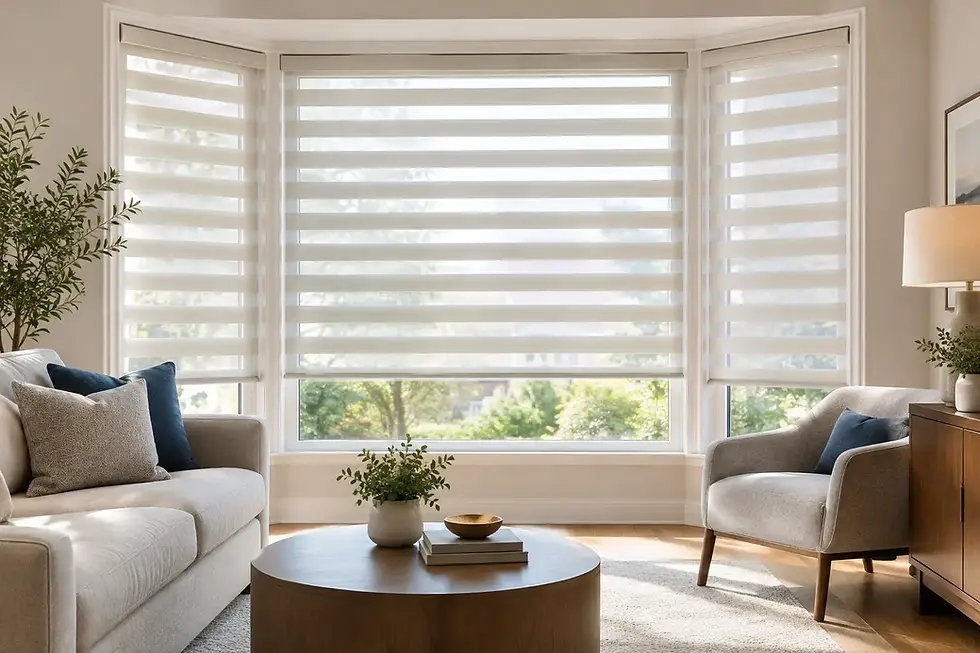
Zebra blinds combine alternating sheer and opaque fabric bands, allowing you to shift between filtered light, more privacy, and a clearer view without raising the blind completely. They are a highly practical option for a west-facing room used throughout the day.
In the open position, the sheer sections soften incoming sun. When the opaque bands align, the blind provides more coverage and privacy. That adjustability makes zebra blinds particularly useful in family rooms and kitchens where the light changes quickly from bright afternoon sun to evening privacy needs.
They are not a full blackout solution, and light can still enter around the edges and through sheer areas depending on their position. Still, for homeowners who want one streamlined treatment with a modern look and flexible control, zebra blinds offer a strong balance.
Roman shades for softness with meaningful light control
Roman shades bring more texture and warmth than a standard roller treatment. They work well in west-facing dining rooms, bedrooms, and formal living spaces where the window covering is part of the decorative plan.
The performance depends on the lining. A privacy lining gently filters light, while a blackout lining provides much stronger coverage. Because Roman shades stack at the top when raised, they can be a good fit for windows where preserving the full view during cooler morning hours matters.
Their fabric-forward design does require thoughtful material selection. A delicate decorative fabric may not be the best choice for a window receiving daily direct sun unless it has the right lining and durable construction. Custom consultation helps match the appearance you want with a material built for the exposure.
Why Shade Colour and Fabric Still Matter
A pale shade reflects more visible light and can help a room feel airy, but it is not automatically the best heat-control option. Performance comes from the fabric's construction, backing, and openness as much as its colour. Similarly, a dark sunscreen fabric can improve daytime view-through while still filtering solar glare effectively.
For west windows, look beyond a fabric swatch under showroom lighting. Consider how the material will perform when sun is hitting it directly at the end of the day. A professional in-home consultation makes this easier because the window orientation, room layout, and surrounding finishes can be assessed in the actual space.
Motorization Is More Than a Convenience Upgrade
Motorized blinds are particularly useful on west-facing glass because timing matters. Closing shades before the room overheats is more effective than waiting until sunlight is already pouring across the floor. With motorization, shades can be operated from a remote, wall control, or compatible smart-home system, making it easier to create a daily schedule around afternoon exposure.
Motorization also makes sense for tall windows, hard-to-reach areas, and multi-window rooms where manually adjusting every treatment is inconvenient. For households with children or pets, cordless motorized operation provides a clean look without dangling control chains.
The right system depends on the number of windows, power access, and how much automation you want. Battery-powered options can suit many applications, while wired solutions may be considered during a larger build or renovation project.
Consider a Layered Treatment for Maximum Performance
One shade does not have to do every job. Layering a sunscreen roller shade with drapery is one of the most effective ways to manage a difficult west exposure. The sunscreen layer handles daytime glare while retaining the view, and the drapery adds nighttime privacy, softness, and another barrier against late-day light.
A blackout roller shade paired with side drapery can also deliver a more finished bedroom treatment while improving room darkening. This approach costs more than a single shade, but it offers flexibility that is hard to match with one product alone.
For large patio doors or wide window walls, coordinated panels can prevent the room from feeling visually busy. Choosing a consistent fabric family and matching hardware keeps the treatment intentional rather than overdone.
Fit and Installation Affect the Result
Even premium shade fabric cannot perform properly if the fit is inaccurate. Inside mounts have a clean, built-in appearance, but they need sufficient frame depth and can allow some light around the edges. Outside mounts provide greater coverage and are often the better choice when glare control or blackout performance is the priority.
Professional measurement also accounts for handles, trim, door clearance, window depth, and uneven openings. These small details determine whether a shade raises smoothly, hangs straight, and covers the glass as intended. Millhaüs Blinds combines factory-direct custom products with free professional installation, helping homeowners get the tailored fit without the added showroom markup.
Before selecting a fabric, spend one afternoon observing the west-facing room at its brightest. Notice where the sun lands, which seats get hot, and whether glare affects screens or daily routines. That simple check will point you toward a shade that looks right at noon and works hard when the sun is low.


Comments