Best Blinds for Tall Windows That Work Harder
Tall windows make a room feel generous, bright, and beautifully open. They can also create a daily problem when afternoon glare hits the sofa, privacy disappears after dark, or a standard corded blind becomes awkward to operate. The best blinds for tall windows are not simply the longest option available. They need to suit the window’s height, exposure, purpose, and the way you want the room to feel at different times of day.
For homeowners in Aurora, custom sizing matters especially in rooms with two-storey glass, oversized patio doors, or dramatic living-room windows. A made-to-measure treatment keeps the proportions clean, covers the opening properly, and gives you reliable control over sunlight without making the window feel heavy.
What Makes Tall Windows Different?
A tall window asks more from its covering than a standard bedroom window. The fabric or blind must remain stable over a longer drop, operate smoothly, and look intentional from top to bottom. Weight, mounting position, stack size, and the window’s orientation all affect the result.
Light is another consideration. A large expanse of glass can fill a room with welcome daylight in the morning, then produce harsh glare and heat later on. The right solution lets you adjust that exposure rather than forcing you to choose between a dark room and an unprotected one.
Privacy can be more complex too. Tall windows are often placed in principal rooms, stairwells, bedrooms with vaulted ceilings, or spaces that face nearby homes. A custom consultation helps determine whether you need full privacy, daytime screening, room darkening, or a layered approach.
The Best Blinds for Tall Windows by Need
There is no single best product for every tall window. The strongest choice depends on whether your priority is clean lines, insulation, darkness, privacy, or effortless operation.
Roller shades for a clean, modern finish
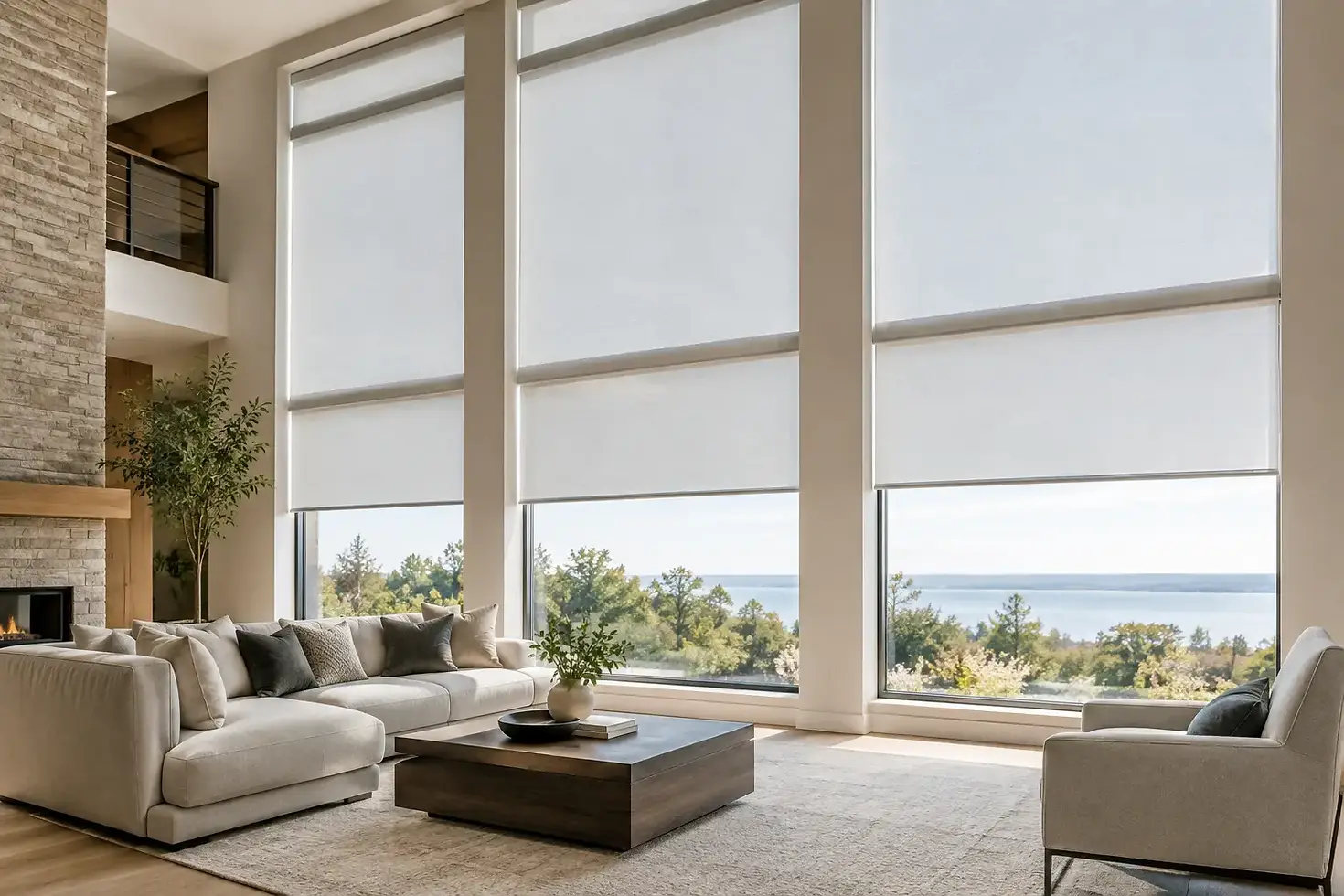
Roller shades are one of the most practical choices for tall windows. Their simple, flat profile suits contemporary interiors and allows the window itself to remain the focal point. With custom-made roller shades, you can select the opacity that fits the room, from light-filtering fabric to full blackout material.
For a tall living-room window, a sunscreen roller shade can reduce glare while maintaining a view out during the day. In a bedroom or media room, blackout roller shades provide more complete coverage and greater comfort. Because the shade rolls neatly into a compact top profile, it is a strong option where you do not want bulky fabric gathering at the top of the window.
The trade-off is that a single roller shade usually provides one level of light control at a time. If you want soft filtered daylight during the day and privacy at night without changing treatments, consider zebra blinds or a layered design.
Zebra blinds for flexible light and privacy
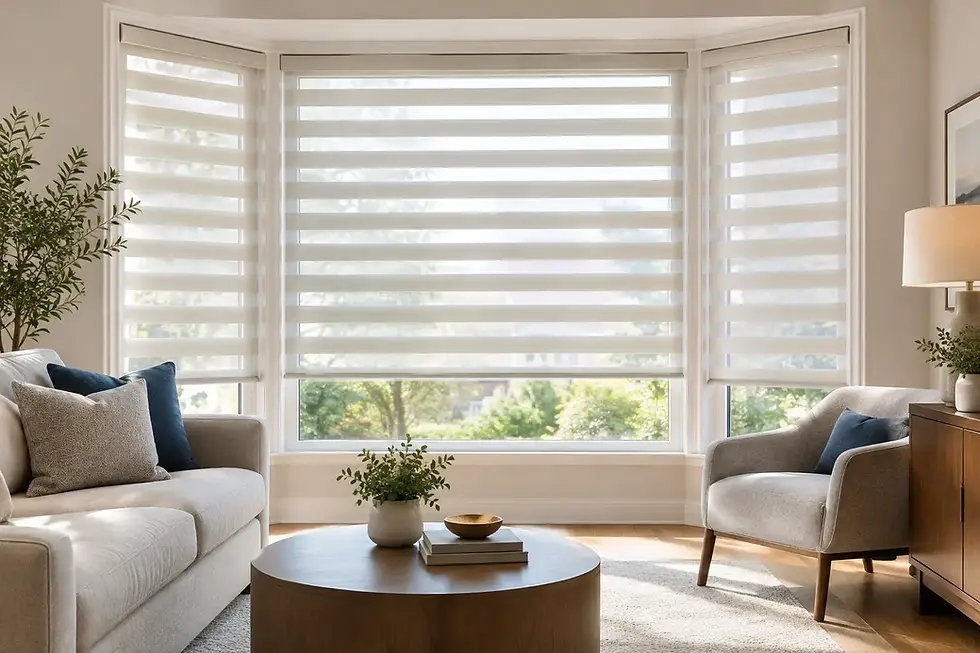
Zebra blinds work particularly well on tall windows where daylight control needs to change throughout the day. Their alternating sheer and opaque fabric bands can align to soften incoming light or close for greater privacy. The look is crisp and architectural, making it a natural fit for high-ceilinged rooms and modern condos.
They are a popular choice when homeowners want more flexibility than a basic roller shade offers, but still prefer a streamlined blind instead of traditional drapery. A properly sized zebra blind also helps keep the scale balanced on a tall, narrow opening.
For very wide windows, product selection and mounting details become more important. Custom measurements ensure the blind operates evenly and the fabric bands align cleanly across the full opening.
Cellular and blackout options for comfort
Tall windows can be a source of heat gain in summer and heat loss during colder months. Insulating shade options can make a noticeable difference in rooms that feel exposed or difficult to keep comfortable. Cellular-style products are designed to hold air within their structure, while blackout materials help limit light and add another layer between the room and the glass.
Blackout blinds are not only for bedrooms. They are useful in nurseries, home theatres, shift-worker spaces, and any room where strong sun becomes disruptive. On a tall window, careful side coverage and accurate installation matter. Small gaps may be more noticeable when there is a large amount of glass around the treatment.
If complete darkness is the goal, discuss the room’s layout during your consultation. A blackout fabric can greatly reduce light, but the mounting style, wall clearance, and surrounding trim influence how much light enters around the edges.
Roman shades when softness is the priority
Roman shades bring fabric texture and a more tailored, furnished appearance to tall windows. They can soften a room with hard surfaces, high ceilings, and expansive glass while still offering practical light control. They are especially effective in formal dining rooms, bedrooms, and living rooms where the window treatment is meant to contribute to the overall décor.
The key consideration is stack height. When a Roman shade is raised, the folded fabric collects near the top of the window. On very tall windows, that stack can be substantial depending on the fabric and style. This is not necessarily a drawback, but it should be planned so the treatment does not cover more glass than expected when open.
Vertical solutions for tall doors and wide glass
When tall windows are combined with patio doors or broad wall-to-wall glass, vertical-oriented treatments can be the practical answer. They follow the shape of the opening, provide easy access where needed, and can make a wide glazed area feel more organized.
Drapery panels are also worth considering for large, tall openings. They add insulation, softness, and a polished finish, particularly when paired with sunscreen or blackout blinds behind them. This layered approach costs more than a single blind, but it offers exceptional flexibility and a more finished design statement.
Why Motorization Makes Sense on Tall Windows
The higher the window, the more valuable motorization becomes. A blind that is difficult to reach is less likely to be used consistently, which means you lose the very benefits you selected it for. Motorized blinds allow you to raise, lower, tilt, or adjust shades from a remote, wall control, or compatible smart-home system.
Motorization is particularly useful for windows above stair landings, behind furniture, or in two-storey spaces. It also makes daily light management easier. You can lower shades during the brightest part of the day, open them for morning light, or create a more private setting in the evening without handling cords or reaching for a control pole.
For larger residential projects and commercial spaces, automated window coverings can support a more consistent appearance across multiple windows. They also offer a clean, cordless look that suits modern interiors and helps reduce cord-related concerns in family homes.
Measure, Mount, and Proportion Matter
A premium blind can still look wrong if it is mounted at an awkward height or sized without considering the full visual area. For tall windows, outside mounting is often a smart choice because it can make the opening look more balanced, cover more of the glass, and improve privacy. In other situations, an inside mount creates the cleanest architectural finish.
The right answer depends on trim depth, window handles, surrounding wall space, and how much room is available above the opening. It also depends on whether the window is one of several. In a bank of tall windows, consistent alignment is essential. Even a small difference in mounting height can become obvious across the room.
This is where professional measuring and installation offer real value. Millhaüs Blinds provides factory-direct custom window treatments with free professional installation, so measurements, product specifications, and final placement are considered as one process. You receive a tailored result without adding a retail middleman to the project.
Choosing Fabrics for Sun, Views, and Privacy
The best fabric is rarely chosen by colour alone. A west-facing tall window may benefit from a denser sunscreen fabric or blackout solution to manage late-day heat and glare. A window with a beautiful ravine or garden view may call for an open-weave sunscreen shade that preserves sightlines while cutting the sharpest sun.
For street-facing rooms, privacy needs change from day to night. Sunscreen fabrics work well for daytime visibility and glare reduction, but they do not deliver the same nighttime privacy as an opaque blind. Zebra blinds, blackout roller shades, or drapery layers may be better suited to those spaces.
Material quality also matters on long drops. Premium fabrics are designed to hang evenly, maintain their colour, and perform reliably over time. That durability is especially valuable when a treatment covers a large, highly visible part of the room.
A Better Way to Plan Tall Window Coverings
Before selecting a style, stand in the room at the times you use it most. Notice where the glare falls, whether neighbours can see in, how much of the view you want to preserve, and whether the window can be reached comfortably. These details lead to a better choice than selecting a blind solely from a sample book.
A free consultation gives you the chance to compare fabrics, opacity levels, operating options, and mounting approaches in the actual space. For tall windows, that hands-on guidance can prevent costly compromises and help you choose a treatment that looks composed from floor to ceiling.
The right custom blind should make a dramatic window easier to live with, not harder to manage. Book a consultation when you are ready to turn that impressive glass into a comfortable, private, and polished part of your home.


Comments