
Are Motorized Shades for Barrie Homes Worth It?
A bright Barrie morning can change a room quickly. Sun fills a kitchen, catches a television screen, warms a west-facing living room, and makes privacy feel like an afterthought. Motorized shades for Barrie homes give homeowners a simple, polished way to respond: lower the shades from a wall control, remote, app, or programmed schedule without interrupting the moment.
This is not just a convenience upgrade. When the system, fabric, and fit are chosen properly, motorized window shades can improve comfort, protect furnishings, support privacy, and make tall or hard-to-reach windows practical to manage every day. The best result comes from treating motorization as part of the window-covering plan, not as an add-on selected at the last minute.
What motorized shades solve in a Barrie home
Barrie homes often have large windows designed to bring in daylight, whether they overlook a backyard, a lake-facing view, or an open-concept main floor. Those windows create appeal, but they can also bring intense glare, uneven room temperatures, and exposure after dark. A manually operated shade works well in many spaces. The difference with motorization is consistency: the shade is more likely to be used when it takes one touch rather than several trips around the room.
In a family room, scheduled sunscreen shades can soften afternoon light before it hits the television and upholstery. In a bedroom, blackout roller shades can close at bedtime and open gradually in the morning. In a home office, a tailored shade can reduce screen glare while preserving enough filtered daylight to keep the space comfortable.
Motorization is especially useful where a window is high above a staircase, placed behind furniture, or part of a large bank of glass. Those are the windows homeowners tend to leave uncovered or operate less often because access is inconvenient. A powered system makes them functional rather than decorative-only.
Choosing the right motorized shade style
The motor is only one part of the decision. Fabric opacity, shade type, colour, mounting position, and window measurements all affect how the finished covering performs. A premium motor cannot make the wrong fabric provide privacy or turn a poorly measured shade into a clean installation.
Roller shades for clean control
Motorized roller shades are a strong choice for contemporary interiors, larger windows, and rooms that need reliable glare management. Sunscreen fabrics filter harsh daylight while maintaining an outward view during the day. Blackout fabrics are better suited to bedrooms, media rooms, and spaces where darkness matters more than the view.
A layered approach can also work well. A sunscreen roller shade in a main living area manages daytime brightness, while drapery adds softness and extra coverage in the evening. The right combination depends on how the room is used, not simply on what is currently popular.
Zebra shades for adjustable light
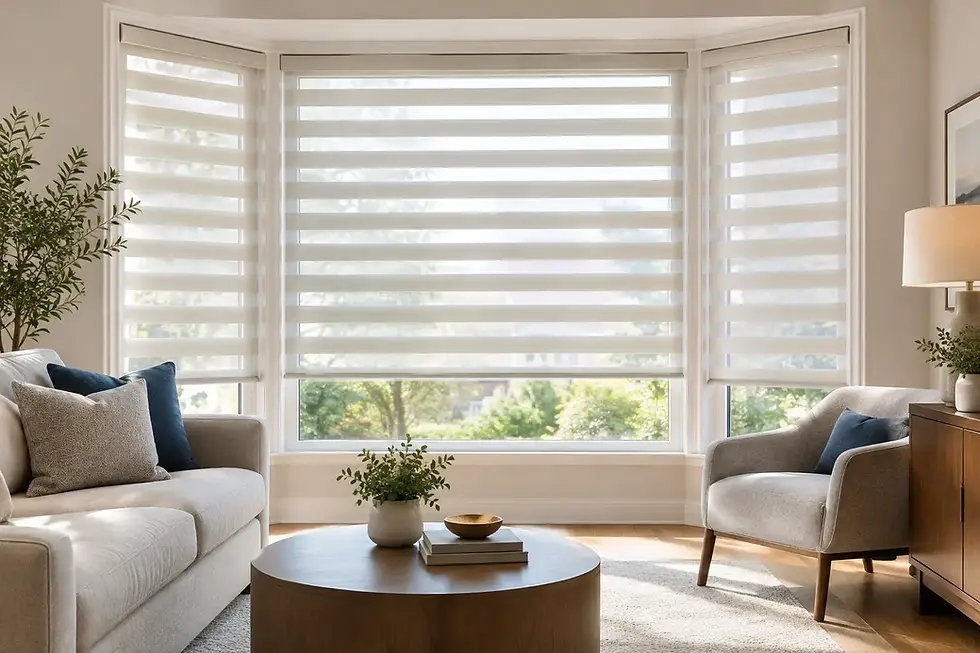
Motorized zebra blinds provide a different kind of control. Their alternating sheer and opaque bands can be positioned to filter light, improve privacy, or allow more daylight into the room. They suit homeowners who want more flexibility throughout the day without adding a heavy visual element to the window.
They are particularly effective in kitchens, dining rooms, and open-concept spaces where full blackout is rarely needed but glare changes as the sun moves. Fabric selection still matters. A light-coloured material may make a room feel airy, while a darker fabric can offer a crisper view outward and stronger visual definition.
Roman shades and drapery for a softer finish
For formal living spaces, bedrooms, and interiors with traditional details, motorized Roman shades or drapery can provide the same day-to-day ease with more texture and softness. These options are ideal when the treatment must contribute strongly to the room’s finished look.
There is a trade-off. Fabric treatments generally need more planning around stack space, fullness, and the available room above or beside the window. That is exactly why an in-home consultation is valuable: the installation method should support both the design intent and dependable operation.
Power options should fit the room and the project
There is no single best power choice for every home. Battery-powered motors are popular because they keep the installation visually clean and work well in many finished spaces. They are practical for individual windows and rooms where a straightforward installation is the priority.
Hardwired motorization is often worth considering during a new build or major renovation, particularly for several large shades, high windows, or whole-home control. It can provide a permanent power source and reduce the need for ongoing battery charging. The planning needs to happen early, before wall finishes and electrical decisions are finalized.
Solar charging can be an option for windows that receive adequate light, while plug-in power may suit layouts where an outlet is already discreetly located. The right answer depends on window access, quantity, desired controls, and the level of automation you want. A clear quote should identify the power approach upfront so there are no surprises after installation.
Automation is useful when it follows your routine
The most useful smart-shade settings are often the simplest. You might schedule bedroom blackout shades to rise on weekdays, close living-room shades before strong late-day sun, or group all main-floor window coverings under one command when leaving the house.
Voice control and smartphone access can be convenient, but they should not be the only reason to choose motorization. A reliable remote or wall-mounted control is still valuable for guests, children, and anyone who wants immediate control without opening an app. Homeowners should also ask whether shades can be grouped by room and whether the controls will remain easy to use if technology preferences change later.
Automation should support comfort, not make the house feel complicated. For some households, one remote per room is enough. For others, timed scenes across the home make daily light control much easier. Both approaches can be premium when they are tailored to the people using the space.
Custom measuring matters more with motorization
Motorized shades need precise measurement, accurate mounting, and careful alignment. On a wide window, even small errors in width, bracket placement, or fabric clearance can affect the finished appearance. Custom manufacturing also makes it possible to coordinate fabric, hardware, and control choices across rooms without forcing every window into the same solution.
Millhaüs Blinds provides factory-direct custom window coverings with professional installation included, helping homeowners avoid the guesswork of ordering a motorized system from a retail shelf. The process begins with how each room is used: where the sun enters, how much privacy is needed, whether children or pets are part of the household, and how the shades need to operate.
That guidance matters because lower cost is not always better value. An off-the-shelf shade may appear comparable, yet offer limited sizing, fewer fabric choices, visible gaps, or controls that do not suit the space. A made-to-measure solution is designed to sit correctly within or above the opening and deliver the level of light control the homeowner expects.
Where motorized shades deliver the strongest value
Motorization can be worthwhile on nearly any window, but it tends to deliver the clearest return in rooms with frequent light changes or inconvenient windows. Consider it first for primary bedrooms, nurseries, media rooms, home offices, open-concept living spaces, patio doors, and high or oversized windows.
Energy performance is another reason to plan carefully. Shades are not a replacement for properly insulated windows, but they can help manage solar heat gain during sunny periods and add a layer of insulation at the glass. The benefit depends on the fabric openness, colour, window orientation, and whether the shades are consistently lowered when needed. Automation helps with that consistency.
For homeowners who want a more considered finish, motorized shades also reduce the visual clutter of cords and chains. This gives large windows a cleaner presentation while supporting a safer, more streamlined home environment.
Plan for the result you want every day
A successful motorized shade project starts with a practical question: what should this room feel like at 8 a.m., 2 p.m., and 9 p.m.? The answer will point you toward the right opacity, operating system, and style far more effectively than choosing a motor first.
If you are considering motorized shades for a Barrie home, book a free consultation and ask for recommendations based on your actual windows, light exposure, and lifestyle. The right custom shades should feel effortless after installation - quiet, tailored, dependable, and ready whenever the light changes.


Comments