Fire Retardant Window Blinds Explained
- Millhaüs Blinds
- Jun 13
- 6 min read
A boardroom, condo common area, daycare office, or home workspace can all look polished with the wrong blinds in the window - right up until safety requirements enter the conversation. Fire retardant window blinds are one of those products people often ask about only after a builder, inspector, property manager, or designer flags them. At that point, the real question is not just what looks good. It is what performs properly, fits the space, and still feels like a smart long-term purchase.
For many buyers, that balance matters as much as compliance. You want a blind that supports safer interiors without making the room feel cold, overly commercial, or limited in style. That is where custom manufacturing and proper product guidance make a real difference.
What fire retardant window blinds actually mean
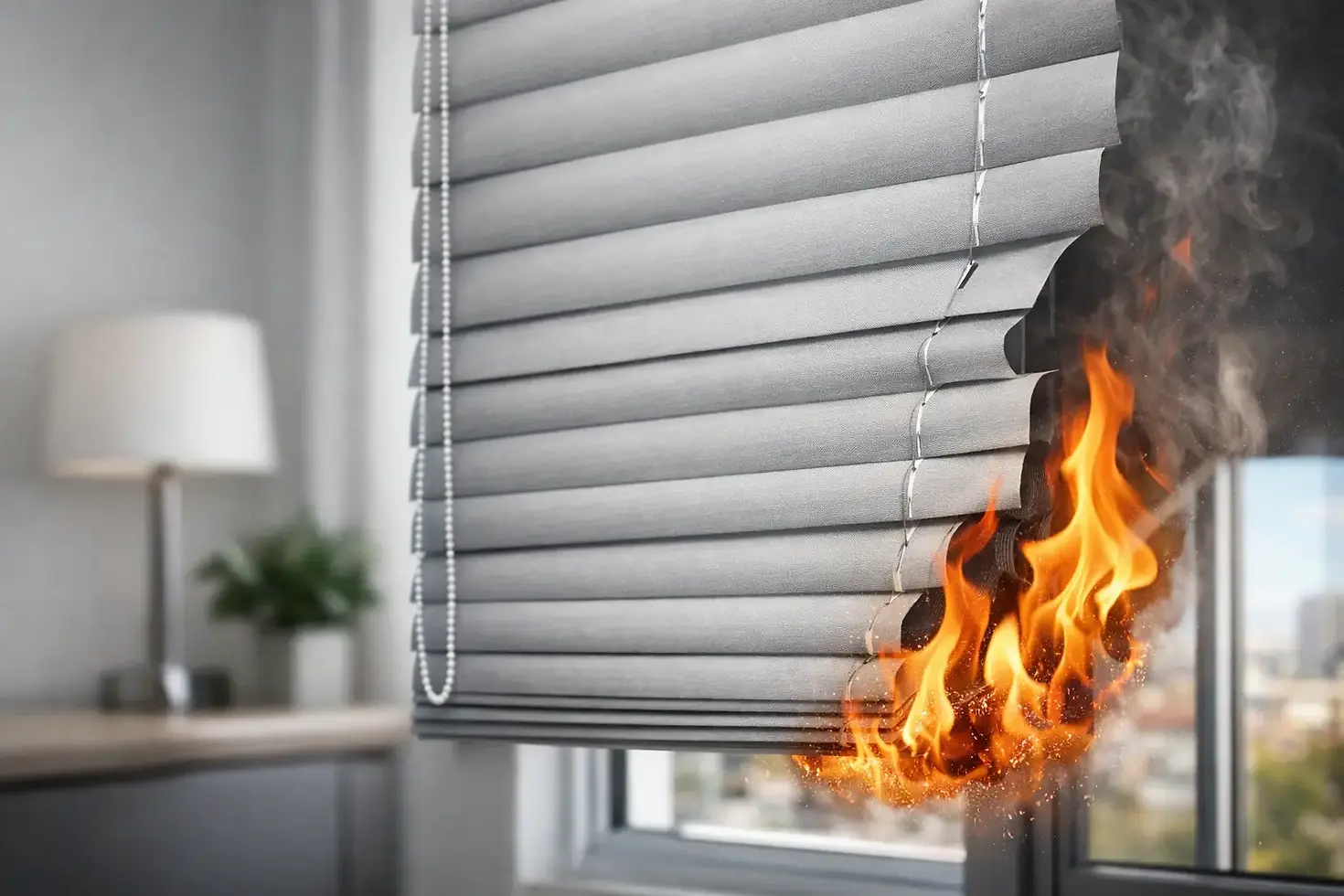
Fire retardant window blinds are made with fabrics or materials designed to resist ignition and slow flame spread. That does not mean they are fireproof. It means the product is intended to perform better than standard untreated materials when exposed to heat or flame, helping reduce how quickly fire can move through a space.
That distinction matters. A lot of buyers assume any blind marketed for commercial use is automatically fire retardant, but that is not always the case. Others assume all fire retardant blinds look institutional, which is also outdated. Today, there are practical, attractive options that work in offices, condos, rental properties, healthcare settings, and select residential projects.
The right choice depends on the room, the building type, and the standards the project needs to meet. In some cases, a property manager is trying to align with building expectations. In others, a homeowner simply wants added peace of mind in a nursery, basement suite, or home office.
Where fire retardant window blinds make the most sense
Some spaces call for a higher level of performance from every finish, including the window coverings. Fire retardant blinds are commonly selected for commercial interiors, multi-unit residential buildings, schools, clinics, model suites, and shared amenity spaces. They are also a sensible choice for developers who want product consistency across multiple units.
In Vaughan, for example, condo and mixed-use projects often require window treatments that balance appearance, durability, and practical safety considerations. A made-to-measure blind helps avoid the loose fit and inconsistent finish that often come with off-the-shelf options, especially in large-scale installations where uniformity matters.
Residential buyers can benefit too, but it depends on the setting. Not every home needs fire retardant fabrics in every room. If your main goal is blackout performance in a bedroom, solar control in a living area, or moisture resistance in another space, there may be several product routes to compare. Fire retardancy can be one priority among others, rather than the only deciding factor.
Fire retardant blinds vs standard blinds
At a glance, the difference may not be obvious. The real difference is in the material specification and intended performance. Standard blinds may offer privacy, glare control, and style, but they are not necessarily made to meet stricter fire-related expectations. Fire retardant options are selected specifically because the fabric or material has been treated or manufactured for improved flame resistance.
That comes with trade-offs. Some fire retardant fabrics have a more technical look, depending on the collection. Others are surprisingly design-friendly and available in colours and textures that suit modern residential or professional interiors. Pricing can also vary. If you are comparing factory-direct custom products against mass retail blinds, the conversation should be about total value, not just the ticket price. Fit, finish, material quality, and installation all affect how the product performs over time.
Which styles are available in fire retardant materials
One of the biggest misconceptions is that you are locked into a single plain option. In reality, fire retardant materials are available across several blind categories, though selection depends on the manufacturer and the project requirements.
Roller blinds are one of the most common choices because they offer a clean profile, straightforward operation, and broad fabric availability. They work well in offices, condos, and institutional settings where a neat, minimal finish is preferred. Sunscreen blinds can also be available in fire retardant fabrics, making them useful where daytime light control and outward visibility matter.
For some projects, blackout performance is part of the brief as well. That is often the case in media rooms, healthcare environments, or residential bedrooms where light control is a priority. The key is making sure the blackout fabric meets the needed specification rather than assuming every blackout blind does.
Motorization may also be worth considering. In large homes, commercial spaces, or hard-to-reach windows, motorized operation adds convenience and a more refined result. It is not necessary for every project, but it can make sense where ease of use and consistency are important.
Why custom sizing matters more than people expect
A well-made blind can still underperform if the fit is off. Gaps, poor alignment, uneven hems, and awkward operation all take away from the final result. With fire retardant window blinds, custom sizing matters because you are often selecting the product for performance as well as appearance. If the blind does not suit the window properly, the space does not feel finished.
This is especially relevant for condo owners and commercial buyers dealing with large windows, narrow openings, or repeated dimensions across multiple rooms. Accurate measuring, clear product selection, and professional installation remove a lot of guesswork. It also helps protect the investment. A tailored fit looks better, works better, and usually avoids the disappointment that comes from trying to force a standard-size product into a custom opening.
What to ask before you order
A quick quote is useful, but the right questions matter just as much as the price. Start with where the blinds are going and what the space needs day to day. Is the room mostly about privacy, glare reduction, blackout, appearance, or safety performance? If it is a commercial or multi-unit project, ask what material documentation or specifications are available and whether the selected fabric is appropriate for the building type.
Then consider how the blinds will be used. A busy office may need durability and simple maintenance. A condo owner may care more about clean design and light filtering. A developer may need scalable supply and consistent finishes across many windows. These are not small details. They affect which product line makes sense.
It also helps to ask about the full process. Factory-direct service has real advantages when the consultation, measuring, manufacturing, and installation are coordinated properly. You get clearer accountability, more accurate quoting, and fewer surprises.
Style still matters, even in performance-driven spaces
No one wants a safer blind that makes the whole room feel like an afterthought. The good news is that practical performance and polished design are not competing goals anymore. Neutral rollers, textured screens, and well-chosen blackout materials can support a clean, contemporary interior without drawing attention for the wrong reasons.
That matters for businesses meeting clients in person, for landlords preparing a unit for occupancy, and for homeowners who simply want the room to feel complete. The best result is usually the one that does its job quietly - controlling light, supporting safety goals, and blending into the overall look of the space.
This is where hands-on guidance pays off. You do not need the biggest catalogue. You need the right options, sized correctly, explained clearly, and installed with care.
Choosing a supplier for fire retardant window blinds
Not every blinds provider handles fire retardant products with the same level of confidence. For project-based buyers, that can become a problem fast. A dependable supplier should be able to explain the product clearly, help match the blind to the space, and deliver a finished installation that looks intentional rather than improvised.
That is one reason many buyers prefer a factory-direct custom approach. It gives you better control over sizing, material selection, lead times, and final quality. For homeowners, it makes the process simpler. For commercial buyers and developers, it supports consistency and better coordination across the project.
If you are comparing options, look past surface-level promises. Ask how the product will fit your windows, how the material aligns with your needs, and how the installation will be handled. Those details shape the end result far more than a generic showroom pitch.
Fire retardant window blinds are not only about meeting a requirement. Done properly, they are a smart way to combine safety-minded performance, clean design, and long-term value in one tailored window covering. If your next space needs more than a standard blind can offer, getting expert guidance early usually saves time, money, and second-guessing later.


Comments