Matter Smart Shades for a Better-Fitted Home
A sunny kitchen can feel perfect at 9 a.m. and uncomfortably exposed by noon. Matter smart shades give homeowners a practical way to manage that change automatically, without filling the room with extra remotes or relying on a single smart-home brand. The result is better light control, stronger privacy and a more comfortable daily routine built around window coverings that are made for the space.
For a custom home, condo or commercial project, the value is not simply in adding a motor. It is in pairing the right shade fabric, opacity, control method and installation details with technology that will remain useful as the rest of the property evolves.
What Matter Smart Shades Actually Do
Matter is a smart-home communication standard designed to help compatible products work across major control platforms. Instead of choosing shades that only operate through one manufacturer app, Matter-compatible shades can be set up within a broader smart-home system and controlled alongside lighting, thermostats and other connected devices.
In everyday use, that can mean opening solar shades with a morning routine, lowering blackout shades before a movie, or closing privacy shades at a scheduled time each evening. Voice control may also be available, depending on the smart-home platform and equipment in the home.
The key advantage is flexibility. Homeowners are less likely to be locked into one ecosystem when they choose a properly supported Matter product. That matters when a household uses more than one phone type, changes smart speakers later, or wants a connected home that feels simpler rather than more complicated.
Still, Matter is not a promise that every feature will look identical in every app. Basic shade commands such as open, close and set position are generally the foundation. Advanced settings, precise schedules, battery information and specialty functions can depend on the selected motor, hub and preferred control platform. A professional consultation helps set the right expectations before the shades are ordered.
Start With the Window Treatment, Not the Technology
A high-end smart shade should perform beautifully even when no automation is running. Before selecting a motor or controller, choose the window covering around how the room needs to function.
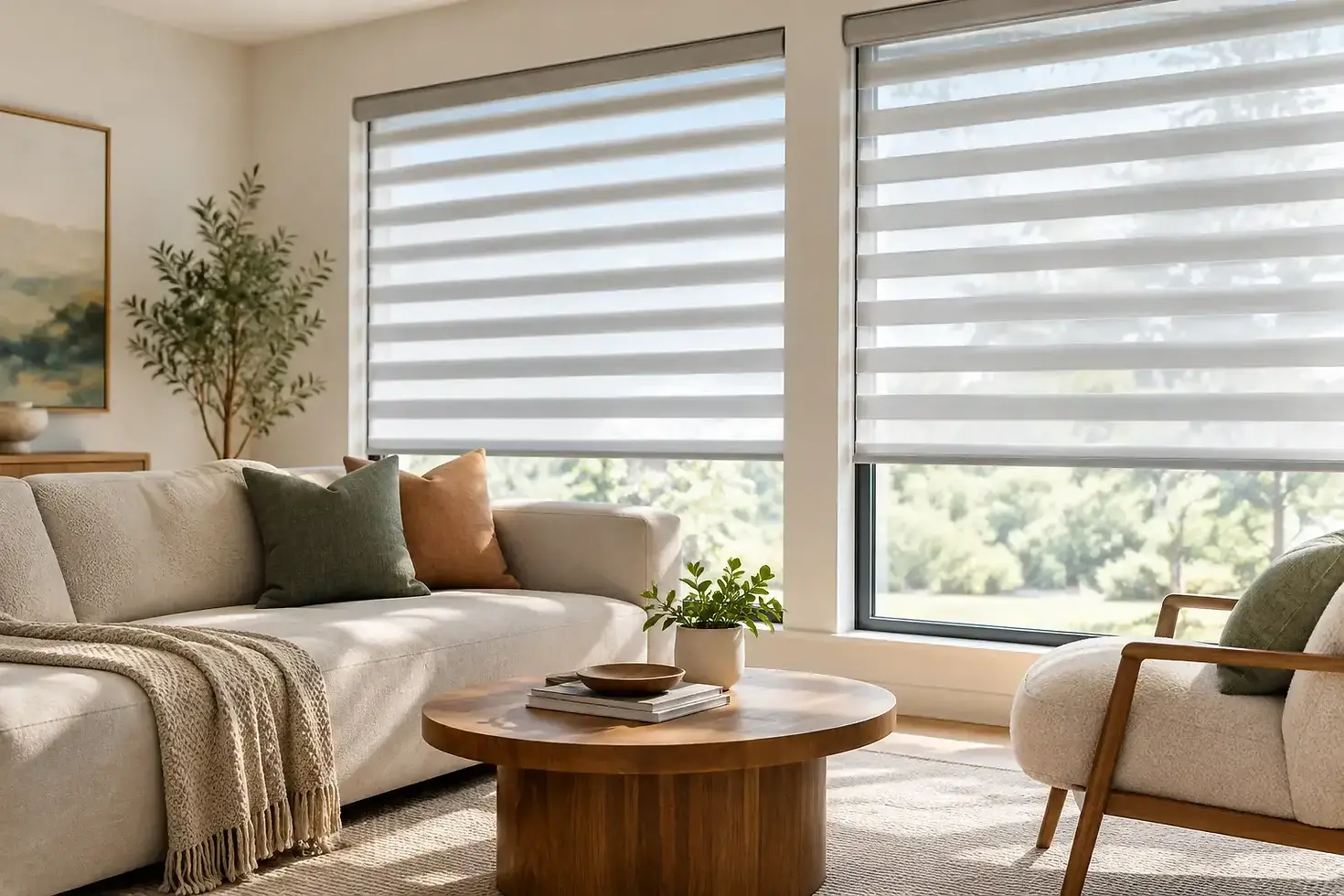
Roller shades are a clean, versatile option for contemporary homes, condos and offices. They can be specified in sunscreen fabrics that soften glare while maintaining an outward view, or in blackout materials for bedrooms, media rooms and spaces where light control is the priority. Zebra blinds provide adjustable bands of sheer and opaque fabric, giving occupants more control over privacy and daylight throughout the day.
Roman shades bring a softer, more tailored look to living rooms, bedrooms and formal spaces. Their fabric selection can coordinate with upholstery and wall finishes while adding insulation and visual warmth. For large banks of glass, paired shade systems can be especially effective: a sunscreen layer for daytime glare and privacy, with a blackout layer for evenings or sleep.
Fabric openness, colour and mounting style all affect performance. A dark sunscreen fabric may preserve a stronger view outward during the day, while a lighter fabric can brighten the room and better complement a pale interior palette. Blackout performance also depends on the fit around the window. A shade that stops light through the fabric can still allow edge light unless the installation is planned with that in mind.
Where Automation Makes the Biggest Difference
Smart controls are most valuable when they remove a repeated inconvenience. Tall windows, difficult-to-reach openings, large sliding doors and multi-window rooms are obvious candidates. So are bedrooms where shades need to open gently in the morning and close consistently at night.
In an Aurora home with strong afternoon sun, scheduled sunscreen shades can reduce glare across kitchen counters, home offices and living areas before the room becomes uncomfortable. That can also lessen the load on cooling systems during warmer months. In winter, programmed shades can support comfort by closing after sunset to add another layer between the room and cold glass.
Privacy is another strong reason to automate. Street-facing rooms and homes close to neighbouring properties can benefit from a simple evening schedule that lowers shades before occupants settle in. For condo owners, automation can make a large glazing area easier to manage without turning daily light control into a chore.
Commercial applications benefit for similar reasons. Offices, meeting rooms, clinics and shared amenity spaces often need consistent glare reduction at predictable times. Centralized shade routines can support a more polished experience for staff, clients and tenants while protecting screens and interior finishes from direct sun.
Choosing Power and Controls for Matter Smart Shades
The power method should suit the window, usage level and construction conditions. Battery-powered motors are often a strong choice where wiring is not practical and where a clean installation is the priority. They work well for many residential applications, but batteries need periodic charging or replacement based on shade size, fabric weight and frequency of use.
Hardwired motors offer dependable power for larger installations, frequently used shades and new construction projects where electrical planning can happen early. They can be an excellent fit for large window walls, commercial spaces and homes where several shades will operate each day. The trade-off is that wiring needs to be coordinated before finishes are complete.
Some systems use rechargeable battery wands, while others offer solar charging options where the window receives enough suitable light. The best answer depends on the window orientation, shade style and how accessible the power source will be over time.
Matter support also requires the appropriate smart-home setup. Depending on the product, a home may need a compatible controller, border router or manufacturer bridge to connect shades reliably to the chosen platform. Wi-Fi coverage, building materials and the location of connected equipment should be reviewed early, particularly in larger homes or concrete condo buildings.
A wall switch or handheld remote remains worthwhile even in a connected home. It gives guests an intuitive way to operate the window coverings and provides a familiar backup for daily use. The strongest systems combine convenient automation with simple manual control options.
Why Custom Measurement Changes the Result
Off-the-shelf smart shades can appear attractive until the installation reveals uneven light gaps, poor bracket placement or fabrics that do not suit the room. Custom-made window coverings are measured for the actual opening, surrounding trim, ceiling height and operating clearance. That precision is especially important with powered shades, where a level installation and correctly selected hardware affect both appearance and performance.
At Millhaüs Blinds, the process begins with the space rather than a preset package. Fabric samples, shade styles and control choices can be evaluated together, so a homeowner does not have to compromise on design to get modern functionality. Factory-direct pricing and free professional installation also provide a clearer path to premium custom shades without unnecessary retail markups.
For developers and property managers, a coordinated approach makes it easier to standardize finishes, specify performance requirements and plan installation across multiple suites or common areas. Consistency matters when a project needs dependable lead times, clean presentation and repeatable results.
Questions to Settle Before You Order
Ask how many shades will be controlled as a group and how often they will move. A single bedroom shade has different power and automation needs than twelve shades across an open-concept main floor. Consider whether each room needs its own routine, whether privacy settings should change by time of day, and whether the shades should respond to sun exposure or only fixed schedules.
Also consider the view. Automation should support the way you live in the room, not keep the windows covered all day. A well-planned sunscreen fabric can preserve daylight and views while controlling glare, then close more fully only when privacy or darkness is needed.
Finally, confirm the exact compatibility of the selected motor before making smart-home decisions. Product specifications change, and a consultation should verify the current Matter capability, required accessories and available controls for the chosen shade system.
The best smart shades fade into the background because the room simply feels right: less glare at the desk, more privacy after dark and daylight available when you want it. Book a free consultation to plan Matter smart shades around your windows, your finishes and the way your home is actually used.


Comments