
Why Greenguard Certified Blinds Matter in Georgina
- Millhaüs Blinds
- 3 days ago
- 5 min read
A bright kitchen facing Lake Simcoe, a sunny family room, or a newly finished basement can all benefit from better window coverings. For homeowners searching for Greenguard certified blinds Georgina options, the goal is usually bigger than choosing a colour: it is creating a comfortable home with thoughtful materials, reliable privacy, and light control that suits real daily life.
Low-emitting window treatments can be a practical consideration when furnishing a new home, completing a renovation, preparing a nursery, or updating a space where the family spends most of its time. The right custom blinds should look refined, fit accurately, and support a cleaner indoor environment without asking you to compromise on performance.
What Greenguard Certification Means for Blinds
GREENGUARD certification is associated with products that have been tested for chemical emissions and meet established limits for indoor air quality. In practical terms, it gives homeowners another useful measure when comparing window-covering fabrics and components, particularly when they are concerned about volatile organic compounds, often called VOCs.
Window treatments are installed close to the areas where people sleep, work, play, and relax. That does not mean every blind is a concern, nor does it mean certification is the only factor that matters. It does mean that a verified low-emitting option can provide added confidence when selecting fabrics and finishes for a home with children, pets, allergies, or a preference for more considered materials.
Certification should always be checked at the product level. A manufacturer may offer certified collections alongside other collections, and the certification may apply to a specific fabric, shade system, or configuration rather than every product under a brand name. During a consultation, ask which exact material is certified and whether the chosen colour, backing, and operating system are included in the applicable product documentation.
Why low-emitting materials are worth considering
Indoor spaces are becoming tighter and more energy efficient, which is good for comfort and heating costs but can make material selection more relevant. Blinds, shades, drapery fabrics, adhesives, and finishes are all part of the overall interior environment. Choosing lower-emitting materials is one sensible way to make a renovation feel as good as it looks.
For Georgina households, this can be especially useful in bedrooms, home offices, finished lower levels, and four-season rooms. These are spaces where custom window coverings often have a major role in controlling glare, privacy, and temperature while remaining a visible part of the room every day.
Choosing Greenguard Certified Blinds in Georgina
The best choice depends on the room, the exposure, and how you use the space. A certification is valuable, but it should work alongside the practical features that make blinds worth installing in the first place. Light direction, window size, privacy needs, insulation, and cleaning requirements all deserve equal attention.
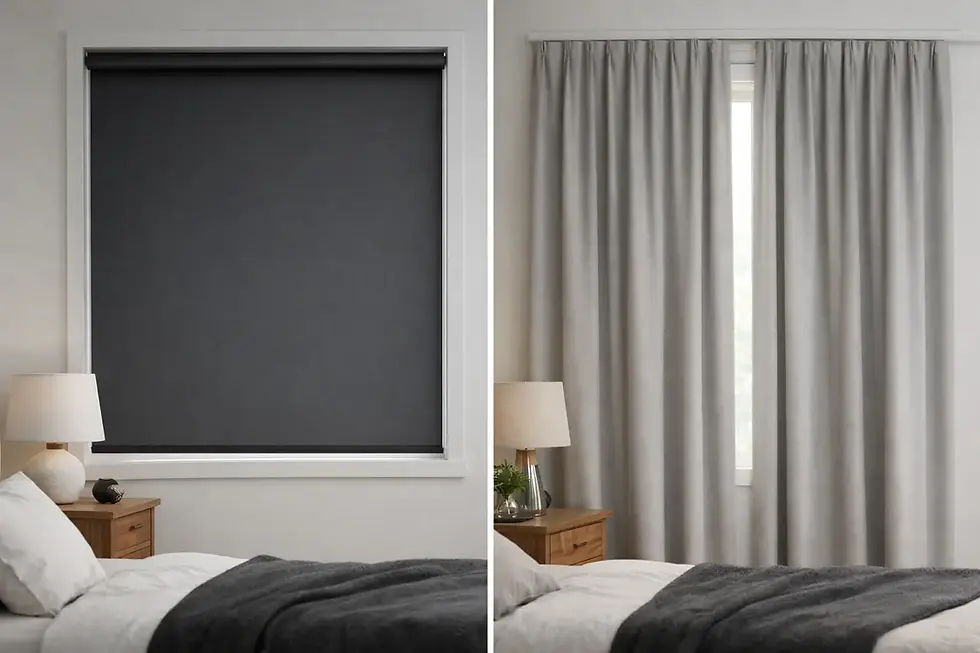
Roller shades are a strong choice for clean-lined interiors and large windows. Available in sheer, light-filtering, and room-darkening options, they can provide an understated finish while giving the fabric room to perform. In a living room with strong afternoon sun, a sunscreen shade can soften glare and help preserve views. In a bedroom, a blackout shade can offer the deeper darkness many homeowners prefer.
Zebra blinds offer a different kind of flexibility. Their alternating sheer and opaque bands let you shift between filtered daylight and privacy with a simple adjustment. They suit kitchens, family rooms, and contemporary spaces where homeowners want more control than a standard roller shade provides. The trade-off is that they have a more defined visual presence than a minimal roller shade, so the fabric and colour should be selected carefully.
For bedrooms and media rooms, consider whether blackout performance is the priority. Some products create substantial room darkening, while others offer more complete coverage when paired with side channels, carefully planned mounting, or layered drapery. Exact results depend on the window shape and installation method, so this is a detail worth discussing before ordering rather than assuming any blackout-labelled fabric will produce the same effect.
Motorized blinds can also be an excellent fit for tall windows, hard-to-reach areas, or households that want scheduled privacy and easier control of sunlight. Automation adds convenience, but it is not necessary for every room. In a simple guest room or on a small window, a quality manual system may be the more cost-effective choice. The advantage of custom planning is that each room can receive the operating system that makes sense for its use.
A Better Fit Than Off-the-Shelf Window Coverings
Ready-made blinds can be tempting because the price appears straightforward. Yet they often require homeowners to accept limited sizes, uneven coverage, and a narrower material selection. Windows are rarely as standard as they look, particularly in bay windows, patio doors, older homes, and rooms with oversized glazing.
Made-to-measure blinds are produced around the actual opening and the desired mounting approach. This creates a cleaner finished appearance, improves coverage, and helps the product operate as intended. Accurate measuring also matters for light control. Even a small gap can be noticeable in a bedroom or a room with intense sun exposure.
Millhaüs Blinds combines factory-direct custom products with professional guidance and free installation, removing much of the uncertainty from the buying process. Instead of selecting a blind from a shelf and hoping it works at home, homeowners can compare suitable fabrics, functions, and finishes against their own windows. That direct model also helps keep premium window treatments more attainable by reducing retail middlemen.
Style, Comfort, and Performance Can Work Together
A low-emitting blind does not have to look clinical or limited. Modern shade fabrics range from soft neutrals and textured weaves to crisp architectural finishes. The best selection often begins with the role of the room, then moves to colour and texture.
In a lakeside living area, sunscreen blinds may preserve a lighter feel while reducing harsh glare. In a street-facing bedroom, a layered solution of blackout blinds and drapery can create privacy, softness, and stronger light management. In a home office, a light-filtering roller shade can reduce screen glare without turning the room dark during working hours.
Energy efficiency is another meaningful part of the decision. Window coverings can help manage solar heat gain in summer and add an extra insulating layer in colder months. They are not a replacement for well-built windows, but properly selected shades can make a room more comfortable and reduce the urge to constantly adjust heating or cooling.
For commercial settings, the same thinking applies. Offices, clinics, rental properties, and common areas benefit from products that balance appearance with dependable operation. Property managers may prioritize consistent fabric availability, fire-retardant options, antibacterial finishes, and coordinated installation across multiple units. A clear product specification makes future ordering and project planning more manageable.
Questions to Ask Before You Order
Before choosing any certified window treatment, confirm the exact product certification and request details relevant to your selected fabric. Ask how the blind will be mounted, how much light may enter around the edges, and what cleaning method the material requires. If privacy is a major concern, describe when it is needed - daytime, nighttime, or both - because sheer fabrics and sunscreen materials behave differently after dark.
It is also helpful to discuss the view. Some homeowners want to block an unattractive sightline completely, while others want privacy without losing daylight or a view of the water. There is no universal best blind. A tailored recommendation is more valuable than a product that is popular but poorly matched to the room.
Start with the rooms where comfort matters most, then select materials that support both your design plans and how your household lives. A well-fitted, verified low-emitting blind can be a quiet upgrade, but one you notice every morning when the light is right, the privacy is handled, and the room simply feels finished.


Comments