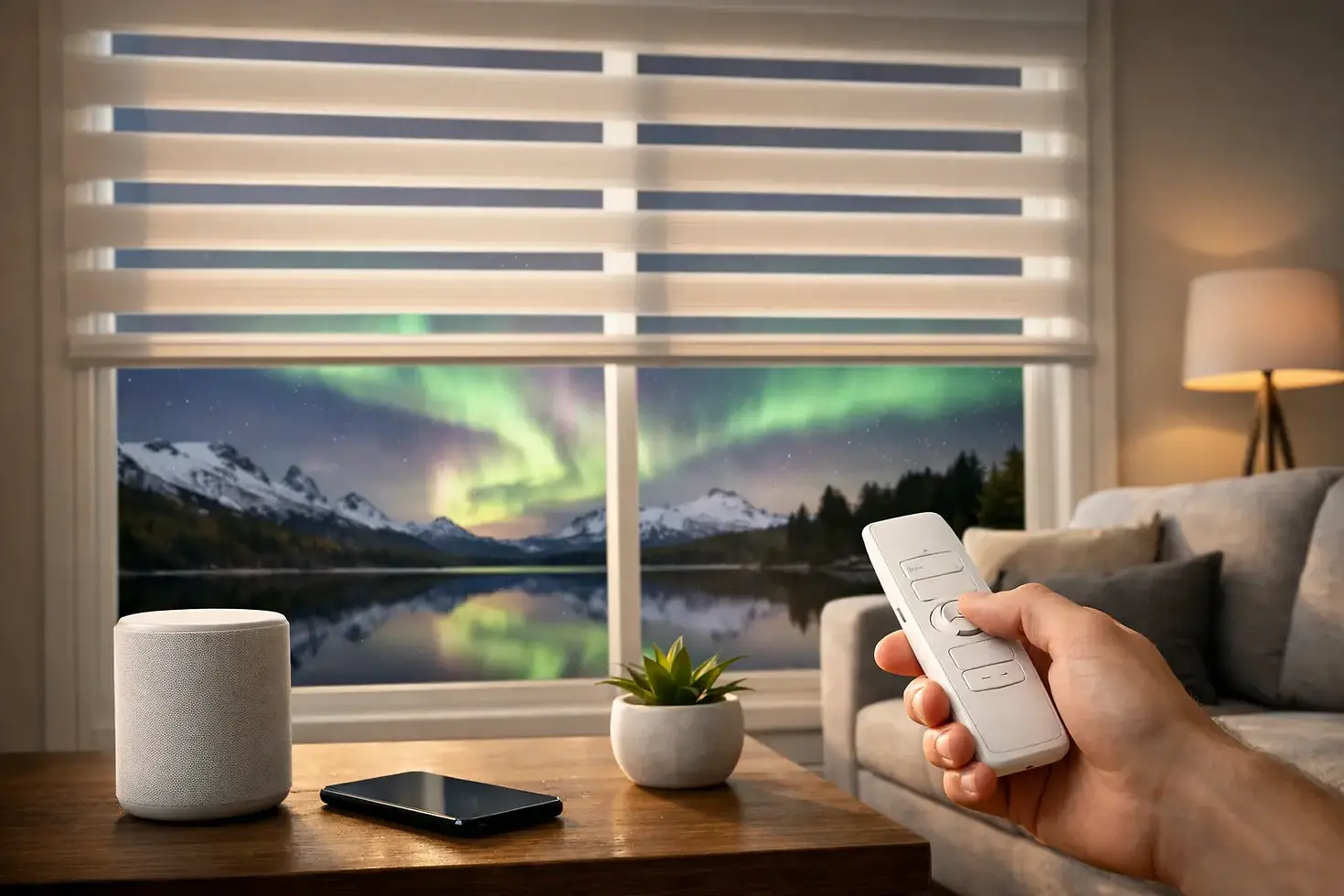
How to Automate Blinds for Aurora Homes
- Millhaüs Blinds
- Aug 4
- 5 min read
A south-facing living room can be bright and inviting at 9 a.m., then uncomfortably warm by mid-afternoon. A bedroom that needs blackout privacy at night may need gentle light first thing in the morning. Learning how to automate blinds in Aurora gives you a practical way to manage those daily changes without adjusting every window by hand.
Motorized blinds are not only about convenience. When the right fabric, control system, and installation method are selected for each room, automated window coverings can improve privacy, light control, comfort, and energy efficiency. The key is to plan the system around how you actually use your home, rather than choosing a motor because it sounds like the most advanced option.
How to Automate Blinds in Aurora: Start With the Room
Every automated blind project should begin with the window and the purpose of the space. In an Aurora primary bedroom, blackout roller shades can be programmed to lower for privacy in the evening and rise gradually in the morning. In a main-floor family room, sunscreen blinds may reduce glare and help protect furnishings while preserving a view outside.
Think through the moments when you most often adjust your current blinds. Are you closing them when afternoon sun hits the television? Do you need privacy as soon as exterior lights come on? Is a tall stairwell window difficult to reach? Those answers determine whether a simple remote control, wall-mounted control, scheduled operation, or smart-home connection makes the most sense.
A well-planned system also avoids over-automating. A small guest-room window used occasionally may only need a straightforward motorized shade with a remote. A row of large windows in a busy open-concept space may benefit more from grouped controls and programmed schedules.
Choose a Blind Style Before Choosing Controls
Automation works with several custom window-covering styles, but the shade itself must still perform well when the motor is off. Start with privacy, room-darkening needs, view preservation, and the look you want in the room.
Roller shades are a clean choice for contemporary interiors and are available in light-filtering, sunscreen, and blackout fabrics. They suit bedrooms, media rooms, kitchens, and living areas because the design stays compact and easy to coordinate. For windows that receive strong sun, sunscreen roller shades can soften glare while maintaining daytime visibility.
Zebra blinds offer a different kind of flexibility. Their alternating sheer and opaque bands allow you to move between filtered daylight, a more open view, and privacy. Motorization makes these transitions especially convenient on wide windows or in rooms where the light changes noticeably throughout the day.
For larger windows and doors, the best choice depends on the opening, the fabric weight, and clearance around the frame. Custom measuring matters here. A treatment that looks right in a sample book can operate poorly if it is not properly sized, aligned, or mounted for the window.
Pick the Right Power Option
The motor needs reliable power, and this decision is best made early. Battery-powered motors are popular when you want a clean appearance without a nearby outlet. They are often a practical option for individual windows and can be a good fit for completed rooms where minimal disruption is preferred.
Plug-in motors are another straightforward option when an outlet is conveniently located and the cord can be positioned neatly. For new construction, major renovation work, or multiple shades controlled as one system, a wired power plan may be worth considering. It provides a permanent power source and can be especially useful for high-use window coverings.
There is no single best option for every Aurora home. Battery power offers flexibility, while wired systems can be ideal for larger, more integrated installations. During a consultation, the location of outlets, the number of windows, access to power, and your preferred controls should all be reviewed before the blinds are ordered.
Select Controls That Match Your Routine
The simplest motorized blinds use a handheld remote. This is a dependable solution for a single room, a hard-to-reach window, or homeowners who want convenience without adding more technology to the house. You can usually control one shade at a time or place several shades into a group.
Wall controls are useful where the same shades are adjusted at predictable times, such as a dining room, nursery, or home office. They keep the command in a familiar spot and make the system easy for guests and family members to use.
Smart controls add scheduling and app-based operation. You might set bedroom blackout shades to close at bedtime, have living-room shades lower during peak afternoon sun, or open selected blinds before you arrive home. Some systems can also work with compatible voice-control platforms. The value is not the app itself. The value is removing small, repetitive tasks and making the house more comfortable on a consistent schedule.
Before selecting smart controls, be realistic about how much automation you want. Reliable, simple controls are often more useful than an elaborate setup that no one uses. Ask for a demonstration of the available options, then choose the level of control that feels natural for your household.
Measure, Build, and Install for Reliable Movement
Motorized blinds require accurate measurements and careful fitting. The width, drop, mounting position, window depth, trim, and any handles or cranks can affect how the shade sits and operates. This is particularly significant with blackout shades, where small gaps can allow in unwanted light, and with wide shades, where alignment is critical.
Professional installation also helps ensure that motors, brackets, and control components are positioned correctly. A made-to-measure shade should raise and lower evenly, clear the window hardware, and look finished from every angle. For grouped shades, proper setup ensures that the coverings respond together instead of moving at noticeably different speeds or stopping at different levels.
Millhaüs Blinds provides factory-direct custom window treatments with professional installation included, helping homeowners make decisions with the actual windows in view. That direct approach can make the process more controlled, from accurate quoting and fabric selection through to final installation.
Use Schedules to Support Comfort and Efficiency
Once your blinds are installed, begin with two or three useful schedules rather than programming every possible scenario. In a bedroom, schedule blackout blinds for sleep and morning light. In a sun-exposed room, use a daytime setting that reduces heat and glare before the room becomes uncomfortable. In a street-facing area, set privacy shades to close around the time you normally turn on interior lights.
Seasonal adjustments are worthwhile. Winter sunlight may be welcome in a living area, while summer afternoon sun often calls for more coverage. Your fabric selection matters just as much as the schedule. A sunscreen shade may be excellent for daytime glare, but it will not replace a dedicated blackout treatment where complete darkness is the goal.
For condo owners, automation can also make tall or wide glazing easier to manage. For property managers and commercial spaces, grouped controls can bring consistency to common areas, meeting rooms, and offices where manual adjustments would otherwise be repeated throughout the day.
Plan the Project Around Your Priorities
The most successful automated blind systems are tailored, not generic. A budget can be focused on the rooms where automation has the greatest impact: hard-to-reach windows, bedrooms, media areas, sun-heavy rooms, and large banks of glazing. You can automate those priority areas first while keeping other rooms simple.
Bring photos of the windows, note where sunlight enters, and consider how you want each room to feel at different times of day. That preparation makes a consultation faster and helps identify the right combination of fabric, power, and controls.
A custom motorized blind system should make your home easier to live in, not more complicated to operate. Choose practical controls, durable made-to-measure shades, and professional fitting, then let your windows respond to the way you live.


Comments