
Best Window Coverings for Privacy at Home
- Millhaüs Blinds
- Jul 14
- 6 min read
A street-facing living room can feel beautifully open at noon and uncomfortably exposed after dark. That is why the best window coverings for privacy are not simply the darkest option available. The right choice blocks unwanted sightlines when you need it, manages daylight without making the room feel closed in, and suits the way you actually live.
For homeowners and condo owners in North York, privacy often has to work harder. Nearby houses, busy sidewalks, balcony-to-balcony views, and large modern windows can all create exposure at different times of day. A made-to-measure treatment gives you control without sacrificing the clean, considered look of the space.
What Makes a Window Covering Private?
Privacy depends on more than fabric opacity. Window direction, floor level, interior lighting, and the distance to the nearest neighbour all matter. A sunscreen shade can reduce daytime visibility from outside while preserving the view out, but it does not provide reliable privacy at night when indoor lights are on. A blackout shade, on the other hand, is designed for a far more complete visual barrier.
The fit matters just as much. Gaps at the sides, top, or bottom of a window can create sightlines even when the material itself is opaque. Custom measurements allow the covering to sit where it needs to sit, whether that means a wider roller shade, a closely fitted blind, or drapery that extends beyond the window frame.
Before choosing a style, consider when privacy matters most. Is the concern daytime passersby, evening visibility, sleep, glare from a neighbouring building, or all of the above? Your answer usually points to the most practical product.
Best Window Coverings for Privacy by Room
Blackout roller shades for bedrooms and media rooms
Blackout roller shades are one of the strongest choices when dependable privacy is the priority. Their opaque fabrics prevent views through the shade and significantly reduce incoming light, making them especially effective in bedrooms, nurseries, shift-worker spaces, and media rooms.
They are also a smart fit for condo bedrooms where another tower faces the window. Select a cassette or carefully planned mounting approach to reduce edge gaps and create a more finished appearance. Keep in mind that blackout describes the fabric; the final light control also depends on how the shade is measured and installed.
For a softer room, pair blackout shades with decorative drapery. The shade handles privacy and room darkening, while the drapery adds texture and visual warmth.
Zebra blinds for flexible daily control
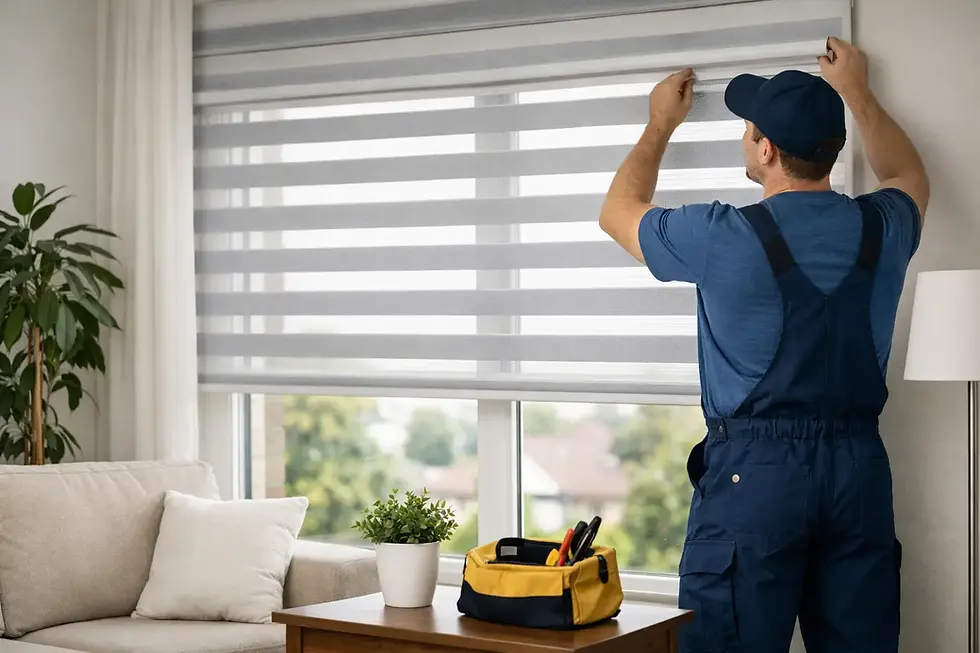
Zebra blinds use alternating sheer and opaque fabric bands. By shifting the bands, you can filter light, allow a softened view outward, or align the opaque sections for greater privacy. This makes them a popular choice for living rooms, kitchens, and home offices where the room is used throughout the day.
Their advantage is flexibility. You are not choosing between a fully open window and a fully covered one every time. The trade-off is that zebra blinds are not the same as a dedicated blackout system. They offer excellent everyday control, but a bedroom requiring near-total darkness will generally benefit from blackout fabric or a layered solution.
Silhouette blinds for softened views and privacy
Silhouette blinds offer a refined way to diffuse daylight while reducing direct views into the home. Their fabric vanes sit between sheer panels, creating a gentle, filtered effect that works well in formal living rooms, dining spaces, and areas where natural light is part of the design.
They are particularly useful when harsh glare is a concern but you do not want the window to feel covered by a heavy treatment. For evening privacy, choose the appropriate vane position and fabric specification during your consultation. As with other light-filtering products, indoor lighting after sunset changes how a window performs.
Drapery and curtains for broad coverage
Drapery provides some of the most adaptable privacy available, particularly on large windows, patio doors, bay windows, and irregular openings. A lined privacy fabric can create excellent coverage, while blackout lining offers more complete room darkening. Drapery also extends beyond the glass, which helps cover side sightlines that a narrow blind may leave exposed.
A double-track arrangement is especially effective: use a sheer layer for gentle daytime diffusion and a heavier curtain for nighttime privacy. This is a practical choice in principal bedrooms and living rooms where the goal is both comfort and a more finished interior.
Drapery requires enough wall and ceiling space for proper stacking when open. It is also a more fabric-forward look than a roller shade, so it should complement the scale and style of the room rather than compete with it.
Sunscreen blinds for daytime privacy
Sunscreen blinds are ideal when you want to cut glare, soften intense sun, and maintain a connection to the outdoors during the day. They are often selected for offices, kitchens, and living areas with broad views. The openness factor of the fabric affects both visibility and light transmission: a tighter weave offers more privacy and glare reduction, while a more open weave preserves a clearer outward view.
The limitation is straightforward: sunscreen blinds are for daytime privacy, not night-time privacy. Once interior lights are brighter than outside, silhouettes and room activity may be visible. They work best alone in low-exposure daytime spaces or layered with drapery, curtains, or a blackout shade when night privacy is necessary.
Privacy Is Often Better With Layers
One product does not need to do every job. In many homes, the strongest result comes from two complementary layers. A sunscreen blind may manage daytime glare and views, while drapery closes the room off in the evening. A zebra blind can handle changing light through the day, with blackout drapery added in a bedroom.
Layering is also useful for large, highly visible windows where a single opaque shade would feel too severe during the day. It gives the room a lighter daytime setting and a private evening setting without compromising either.
For condo owners, this approach can solve a common challenge: preserving daylight from a wall of glass while avoiding a fishbowl effect after sunset. Motorized blinds and drapery can make the routine even easier, allowing multiple treatments to close together at scheduled times or with a simple control.
Details That Improve Privacy Performance
The fabric is only part of the decision. Ask about these practical details before finalizing a custom treatment:
Mounting position: An outside mount can provide wider coverage over the window opening, while an inside mount delivers a more built-in appearance but may leave more edge light.
Side gaps: Wider shade coverage, side channels where appropriate, or drapery panels that overlap the frame can reduce exposed sightlines.
Bottom coverage: Consider how the treatment meets the sill, floor, or door threshold, especially for ground-level windows and patio doors.
Control method: Cordless and motorized options make it easier to close coverings consistently, which is often the difference between having privacy and remembering to use it.
For commercial spaces, the same details matter. Offices, clinics, meeting rooms, and street-facing retail areas may need privacy that supports customer comfort while still allowing useful daylight. Fire-retardant or antibacterial fabric options can be considered where the space and project requirements call for them.
Why Custom Measurement Changes the Result
Off-the-shelf coverings can appear adequate until the sun goes down or the first neighbour looks directly across. Standard sizes may leave uneven gaps, sit awkwardly around trim, or fail to cover an unusually wide or tall opening. Privacy is one area where close measurement pays for itself because every centimetre affects the final coverage.
Millhaüs Blinds provides factory-direct custom window treatments with professional installation included, helping clients choose the right fabric, opacity, mounting method, and control option for each room. That direct approach keeps the decision focused on performance and fit rather than showroom markups.
A consultation is also the right time to discuss how each space is used. A home office may need daylight and screen-glare control. A bedroom may need blackout performance. A front living room may need a treatment that looks polished from both inside and outside. There is no reason every window must receive the same covering.
The best choice is the one that lets you enjoy your windows on your terms. Start with the views you want to keep, the sightlines you want to block, and the times of day that matter most. From there, a properly fitted privacy solution becomes a daily comfort, not an afterthought.


Comments