
2026 Sustainable Blind Materials That Earn Their Keep
The best 2026 sustainable blind materials do more than make a room look responsibly finished. They can reduce solar heat gain, support better light control, last through years of daily use, and help homeowners make more informed choices about what enters their living space. For an Aurora home with large south-facing windows, that combination matters as much as colour or texture.
Sustainability in window coverings is not a single label. A fabric made with recycled content may be a strong choice, but so may a highly durable material that performs well for a long time and helps reduce heating and cooling demand. The right decision comes down to the material itself, how the blind is made, where it will be used, and whether it delivers the privacy, insulation, and finish the room requires.
What Makes a Blind Material Sustainable in 2026?
It is tempting to focus only on natural fibres or recycled content. Those factors count, but they are only part of the picture. A practical sustainable blind should be evaluated for its service life, indoor air quality, energy performance, maintenance needs, and suitability for the window.
Durability is especially important. A lower-cost blind that fades, warps, or loses its shape quickly creates more waste than a well-made custom product designed to hold up over time. Made-to-measure sizing also matters because accurate fitting improves operation, light control, and coverage at the window.
For many homeowners, the most useful question is not, “What is the greenest material?” It is, “What material will perform well in this specific room for years?” A blackout shade in a bedroom, a sunscreen blind in a bright great room, and moisture-tolerant coverage near a kitchen each need different properties.
Recycled polyester and technical fabrics
Recycled polyester is becoming more common in roller shades, sunscreen blinds, and select cellular-style fabrics. It offers a clean, contemporary appearance while giving post-consumer plastic a second use. For spaces that need crisp lines, easy operation, and dependable performance, recycled-content fabrics can be a practical option.
That said, recycled polyester is still a synthetic material. Buyers should look beyond the recycled-content claim and ask about fabric quality, coatings, odour, flame-performance requirements, and expected colour stability. In a high-sun room, a high-quality technical fabric with a longer lifespan can be the more responsible choice than a thinner fabric that needs replacing sooner.
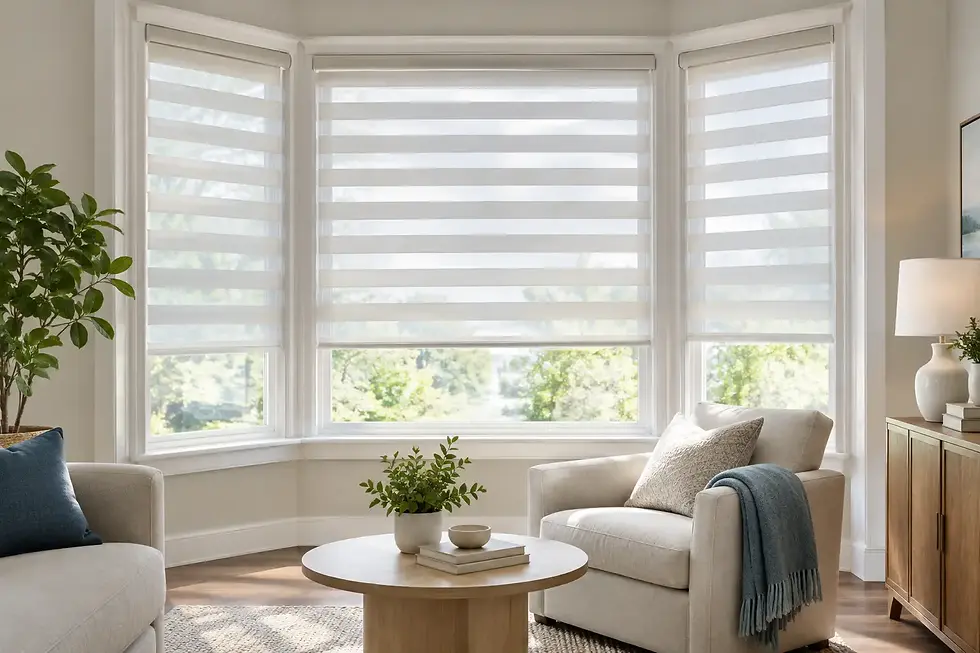
Sunscreen fabrics are particularly useful where the goal is to soften glare and manage heat without closing off the view. Openness factor affects both visibility and solar control. A more open weave preserves a clearer view but admits more light, while a tighter weave provides stronger glare and privacy control. There is no universal best choice - it depends on window direction, neighbouring homes, and how the room is used.
Natural woven materials and fibre blends
Woven wood, bamboo, jute, linen, and other plant-based materials bring texture that synthetic fabrics cannot fully replicate. They are often chosen for Roman shades, drapery accents, and warm, layered interiors. Bamboo can be fast-growing, while responsibly sourced wood materials can provide a strong renewable-material story.
Natural does not automatically mean low-impact. Fibre farming, dyes, liners, adhesives, and transport all affect the final footprint. Natural woven shades may also be less suitable for humid areas, rooms with heavy cooking exposure, or windows that receive intense afternoon sun. A well-selected liner can improve privacy and light control, but it changes the material mix and should be considered as part of the overall selection.
For homeowners who like the look of linen or woven texture but need easier care and more consistent performance, a high-quality blend may be the better fit. The aim is to choose a material that suits real life, not simply one that looks good on a sample card.
Responsible wood and composite options
Wood blinds remain a classic choice for offices, dining rooms, and homes that need adjustable light control with architectural presence. When considering wood, ask about responsible sourcing and finish quality. A durable finish can help the blind withstand everyday handling while keeping the material looking polished longer.
Faux wood and composite blinds have a different value proposition. They are not natural materials, but they can be a sensible choice in moisture-prone rooms because they resist warping and are easy to clean. Choosing a long-lasting option for the right environment is often more sustainable than forcing a natural material into conditions where it will not perform well.
For commercial properties, this calculation becomes even more practical. Property managers may prioritize consistent colour, easy cleaning, fire-rated specifications, and reliable operation across many windows. Sustainable purchasing at scale means selecting materials that meet the building’s actual performance requirements and maintain a professional appearance over the long term.
2026 Sustainable Blind Materials and Energy Savings
Window coverings can contribute to a more energy-conscious home, especially when they are fitted accurately and used consistently. In summer, solar-control fabrics and well-positioned shades help reduce harsh heat and glare. In winter, insulating shade styles and properly layered treatments can make window areas feel less exposed.
The material choice should follow the goal. Blackout fabrics are ideal where sleep, media viewing, or complete privacy is the priority. They are not automatically the best energy choice for every room, since a living area may benefit more from a sunscreen fabric that filters daylight while controlling glare.
Cellular and honeycomb-style constructions are often valued for insulation because their pockets hold air. They can be a strong option for bedrooms, home offices, and rooms with large expanses of glass. Roller shades in solar fabrics are excellent for contemporary spaces where daytime glare is the main concern. Roman shades and drapery can add softness and layering, with lining choices that improve privacy and help manage light.
Motorization can also support more consistent use. A shade that is scheduled to lower during the hottest part of the afternoon is more likely to deliver its intended performance than one left open because it is inconvenient to reach. For tall windows, condos, and commercial spaces, motorized blinds add safety and convenience while helping owners manage daylight more deliberately.
How to Choose Materials Without Greenwashing
Sustainability claims vary widely, so a few direct questions can make the decision clearer. Ask what the fabric is made from, whether recycled content is verified, what coatings or finishes are used, and how the product is expected to perform in your room. It is also reasonable to ask about care requirements and whether the selected material suits the level of sun, humidity, and daily use it will receive.
Avoid treating certifications or labels as the entire answer. They can be helpful, but they do not replace a conversation about fit, function, and longevity. A beautiful low-impact fabric that cannot deliver enough privacy in a street-facing bedroom is not the right material for that application.
Custom consultation is valuable here because samples reveal details that photos cannot: weave density, opacity, texture, backing colour, and how a fabric changes in natural light. Accurate measuring is equally important. A properly tailored blind closes more cleanly, looks more intentional, and avoids the wasted material and disappointing finish that can come from an incorrect fit.
The Material Should Fit the Room, Not a Trend
A sustainable window-covering decision should feel practical rather than restrictive. In a family room, that may mean a recycled-content sunscreen roller shade that protects furnishings while maintaining the view. In a primary bedroom, it may mean a durable blackout fabric with motorization for reliable darkness. In a dining room, responsibly sourced wood or a textured Roman shade may provide the warmth and control the space needs.
Millhaüs Blinds helps homeowners and project buyers compare premium custom options based on performance, finish, and budget, with factory-direct pricing and free professional installation. That hands-on process makes it easier to select materials with confidence instead of relying on broad environmental claims.
The most responsible choice is usually the one you will be happy to live with for a long time: accurately fitted, easy to use, appropriate for the space, and made from materials that earn their place at the window every day.


Comments